

NEWS
By Emma Blane |
15 Jul 2026
An Introduction to WILLIAM GRIMALDI (1751-1830)
Grimaldi’s Studio
The following set of miniatures represent the varied output of William Grimaldi. Known for his work on both ivory and enamel, he gained fame in the late 18th and early 19th centuries for his ability to copy full-scale paintings in a miniature format. Four of the six works in this group demonstrate his adeptness in doing so. Two others are original compositions and tell another important part of the story of William’s life as an artist.
Brought-up a Copyist?
In 1684, William’s grandfather, Alessandro Grimaldi, left his native Genoa for England. He was an artist himself, though there are very few extant works by him. In England, he brought up at least six children, including William’s father, Alexander (1714-1800), and Arabella. He also took on artistic pupils, including Thomas Worlidge (1700-1766), who became William’s uncle by marriage when he married Arabella. Worlidge appears to have promoted artistic development in both William and his father. Though there is no visual evidence, it is said that he encouraged Alexander to travel to Birmingham with him to bring back the art of painting on glass. It is not certain whether this simply refers to painting on glass or the medium of fixé sous verre, in which the artist paints on the reverse side of the glass. He then trained William from a young age. Worlidge’s artistic output is important in understanding William’s art. He became known as ‘the English Rembrandt’ because of his prolific copying of the Dutch Master’s works. He did not just copy these verbatim, but added his own details and minor tweaks. The same changes can be seen in many of William’s later works. Importantly, however, Worlidge appears to have taught William how to directly emulate the style of those he was copying, a skill that allowed William to gain popularity and respect later in his career.
Recognised for (not) his Own Work
The earliest works in this group date from after William’s return from France, where he lived between 1777 and 1783. Before this point, he had briefly exhibited at the Free Society of Artists (1768-1770) and the Incorporated Society of Artists (1772), but appears to have been relatively unknown as a miniature painter. He was commissioned to paint portraits whilst in Paris, but it is obvious from the catalogue of his works, published by his descendant in 1873, that his artistic output began to increase tenfold from around 1787 onwards. It was in this year that the watercolour on ivory miniature of Miss Herbert (fig. 1) was painted. Though it has not been possible to trace the original, it is said that this portrait was copied from a work by Sir Joshua Reynolds (1723-1792), marking the start of a significant new category of works within his oeuvre.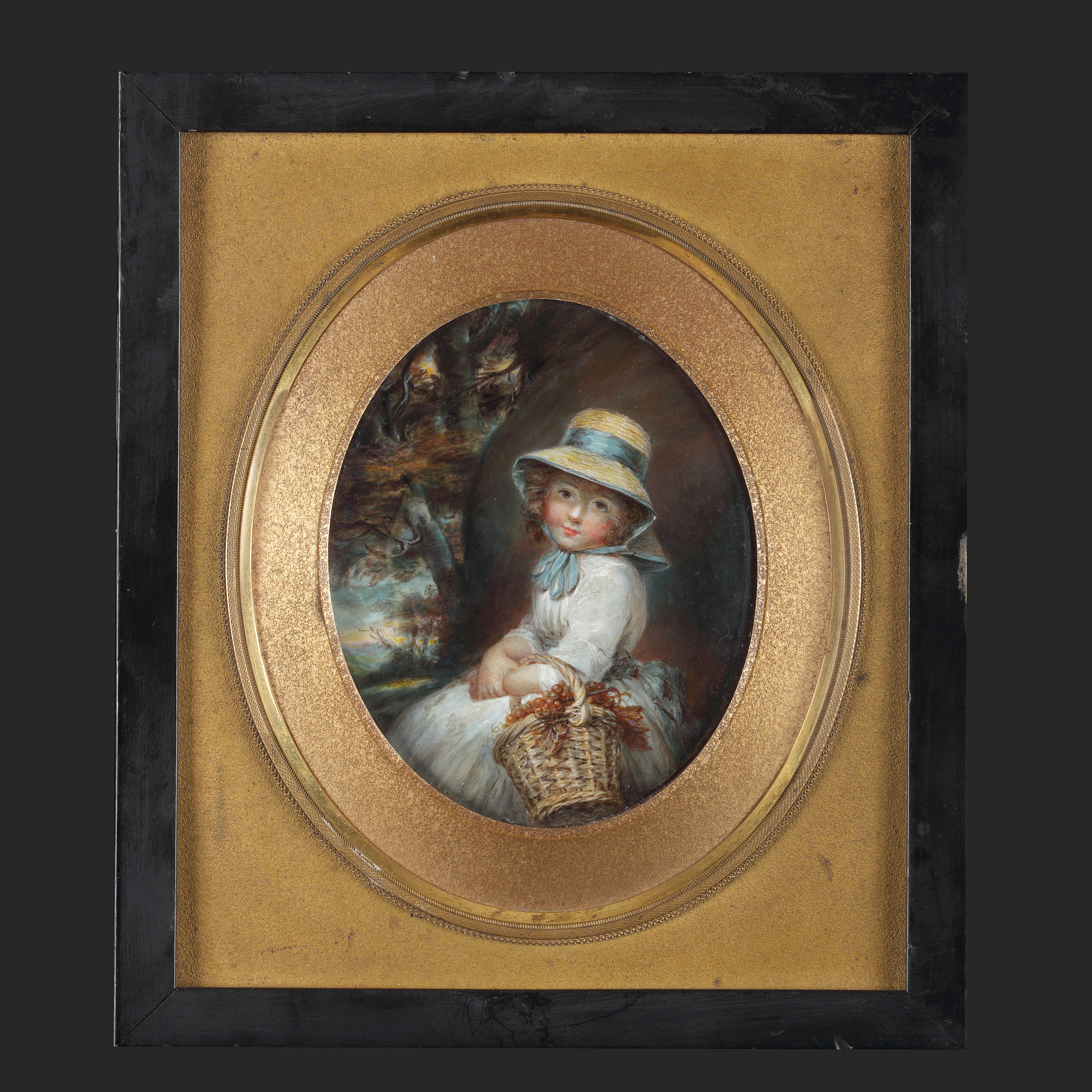
It almost seems from this moment onwards that the increase in his production increased. Not only was William copying the great Reynolds, but he had been recognised by him and had gained an important connection with the upper echelons of British society. It may have been through this very interaction that he was commissioned by George, Prince of Wales, later George IV (1762-1830), to paint his companion and ‘wife’[2], Maria Fitzherbert (1756-1837; fig. 3). Such a commission was career-shaping, and in William’s case, helped with his appointment as enamel painter to the Duke and Duchess of York in 1791, and to George IV when Prince of Wales in 1806, and then when King in 1824.
It should be noted that William continued to produce original works throughout his career, for example, fig. 4. Other original works, such as his portraits of Arthur Wellesley, 1st Duke of Wellington (1769-1852), (fig. 5), became some of his most important commissions and demonstrate his equal ability in both copying and painting from life, even if he gained his renown through the former.
Copying his Copies
Compared to the 440 watercolour miniatures listed in the 1837 catalogue, only 38 enamel miniatures are listed. Painting in enamel was a difficult undertaking and Grimaldi records himself having struggles with cracking and spending months at a time producing these works. In order to paint in this medium, layers of paint had to be individually fired to achieve the correct temperature for each colour to be set. It is not surprising, then, that William limited himself to only painting his ‘best’ clients in this medium. These included Reynolds, and even more notably Arthur Wellesley, 1st Duke of Wellington, of whom William painted ten enamel miniatures, including fig. 5.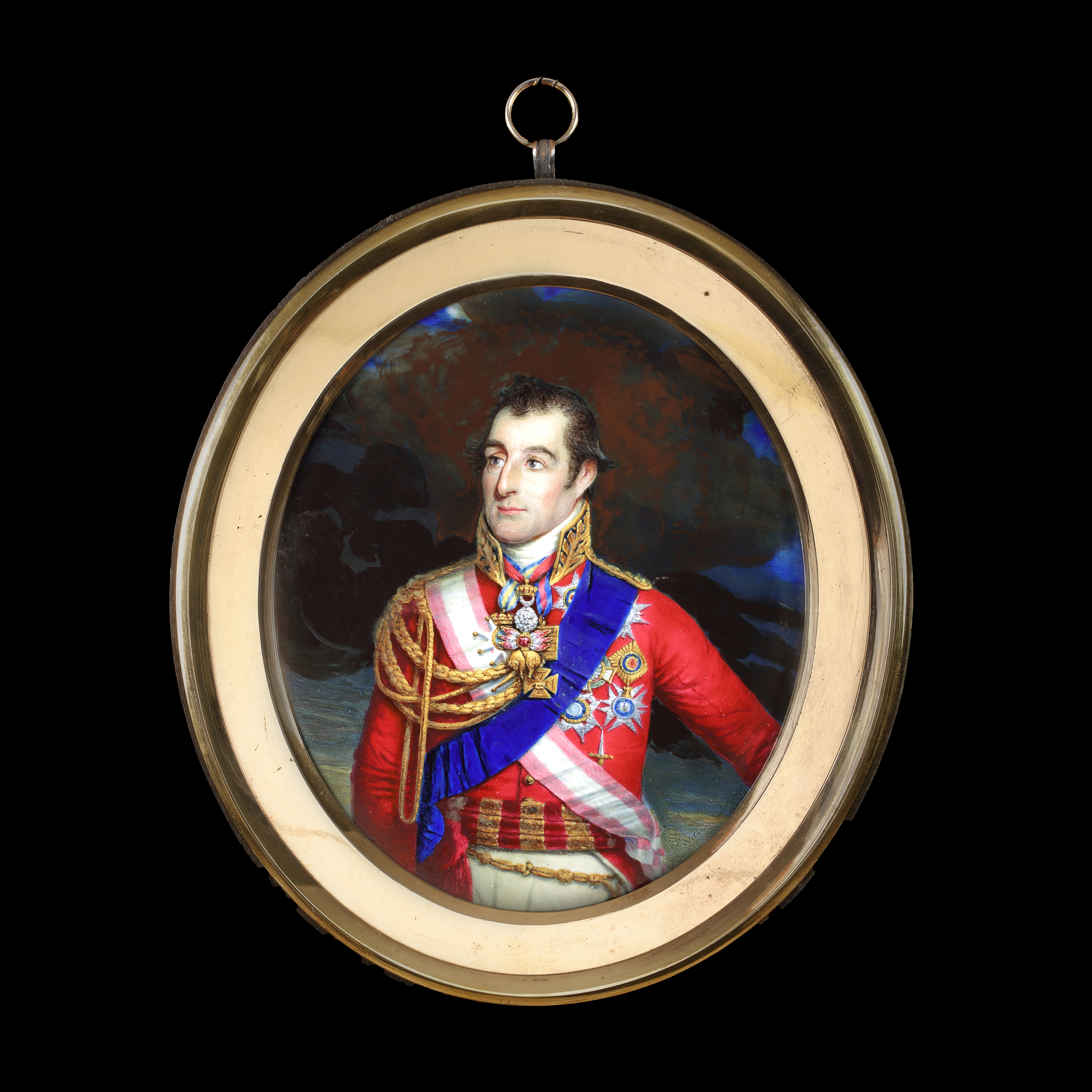
Grimaldi’s Legacy
In 1821, William and his son, Stacey (1790-1863), published ‘The Toilet’ in 1821, a lift-up flap book with illustrations of various items found at a woman’s toilet. Each item could be lifted to reveal the virtue it was thought to represent. This may seem a surprising addition to Grimaldi’s oeuvre, though given his history with entrepreneurship, especially in producing small-scale enamel copies of full-scale oil paintings, it is perhaps not surprising that he ventured into a new artistic form towards the end of his life.
By this point, Grimaldi’s wife had died, and he had begun a relationship with the young Elizabeth Dawe, who was also said to have been his niece and to have been living in his home. Elizabeth was one of three women through whom Grimaldi’s artistic legacy was apparently continued - the other being Mary Ann Grimaldi (née Knapp; 1803-1877), Stacey’s wife and William’s daughter-in-law. A self-portrait in miniature by Elizabeth Dawe can now be found in the Royal Ontario Museum[3]. A drawing by Mary, after William’s daughter, Louisa Frances (1785-1873), of William sitting at his desk, can be found in the National Portrait Gallery, London (NPG 3114). Around the age of seventy, he is pulled flush to his desk, concentrating on his latest composition. Through his teachings, William continued the tradition of copying the works of others. The fact that one student has copied another here only emphasises the important position that this mode of production held within his practice.
[1] A.B. Grimaldi, ‘A Catalogue, Chronological and Descriptive,of Paintings, Drawings, & Engravings by and after William Grimaldi’, p. 15, under no. 34.
[2] See cataloguing for Grimaldi’s portrait of Maria Fitzherbert for details on their complicated relationship.
[3] Collection no. 981.214.2.
The following set of miniatures represent the varied output of William Grimaldi. Known for his work on both ivory and enamel, he gained fame in the late 18th and early 19th centuries for his ability to copy full-scale paintings in a miniature format. Four of the six works in this group demonstrate his adeptness in doing so. Two others are original compositions and tell another important part of the story of William’s life as an artist.
Brought-up a Copyist?
In 1684, William’s grandfather, Alessandro Grimaldi, left his native Genoa for England. He was an artist himself, though there are very few extant works by him. In England, he brought up at least six children, including William’s father, Alexander (1714-1800), and Arabella. He also took on artistic pupils, including Thomas Worlidge (1700-1766), who became William’s uncle by marriage when he married Arabella. Worlidge appears to have promoted artistic development in both William and his father. Though there is no visual evidence, it is said that he encouraged Alexander to travel to Birmingham with him to bring back the art of painting on glass. It is not certain whether this simply refers to painting on glass or the medium of fixé sous verre, in which the artist paints on the reverse side of the glass. He then trained William from a young age. Worlidge’s artistic output is important in understanding William’s art. He became known as ‘the English Rembrandt’ because of his prolific copying of the Dutch Master’s works. He did not just copy these verbatim, but added his own details and minor tweaks. The same changes can be seen in many of William’s later works. Importantly, however, Worlidge appears to have taught William how to directly emulate the style of those he was copying, a skill that allowed William to gain popularity and respect later in his career.
Recognised for (not) his Own Work
The earliest works in this group date from after William’s return from France, where he lived between 1777 and 1783. Before this point, he had briefly exhibited at the Free Society of Artists (1768-1770) and the Incorporated Society of Artists (1772), but appears to have been relatively unknown as a miniature painter. He was commissioned to paint portraits whilst in Paris, but it is obvious from the catalogue of his works, published by his descendant in 1873, that his artistic output began to increase tenfold from around 1787 onwards. It was in this year that the watercolour on ivory miniature of Miss Herbert (fig. 1) was painted. Though it has not been possible to trace the original, it is said that this portrait was copied from a work by Sir Joshua Reynolds (1723-1792), marking the start of a significant new category of works within his oeuvre.
Fig. 1. WILLIAM GRIMALDI, R.A. (1751-1830), Portrait miniature of a young girl, called the Honourable Miss Esther Herbert, 1787. For sale with The Limner Company.
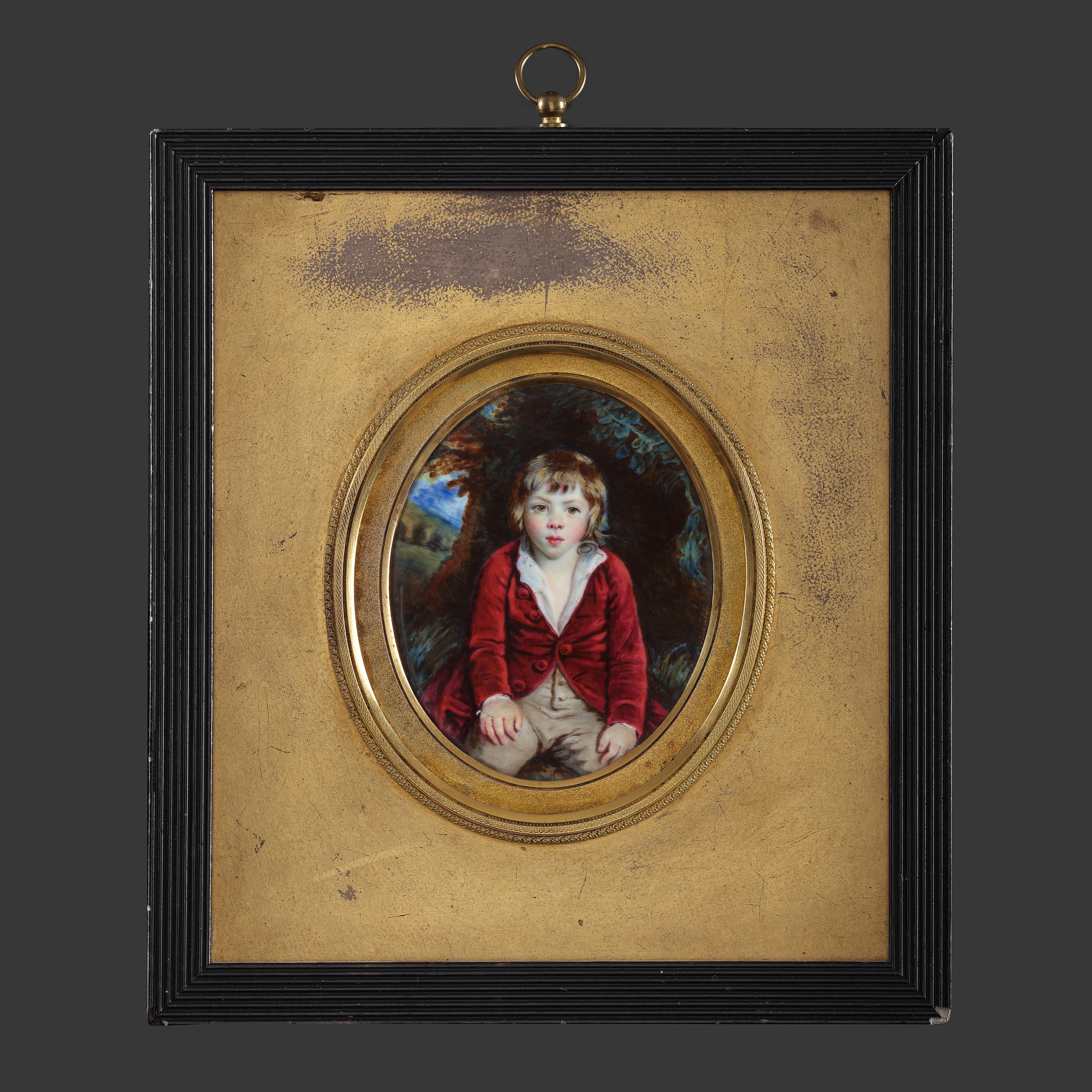
In 1789, William painted a copy of Reynolds’s portrait of Henry Edward Bunbury, which he would later copy again in enamel (fig. 2) . According to the 1873 catalogue, Reynolds himself saw the picture, and stated: ‘that he had never seen such a miniature, he did not know how it was painted, nor how he had given the force of oil, to watercolour.’[1]
Fig. 2. WILLIAM GRIMALDI, R.A. (1751-1830) after Sir Joshua Reynolds P.R.A. (1723-1792), Portrait enamel of Master Henry Edward Bunbury (1778-1860), 1830. Sold with The Limner Company.
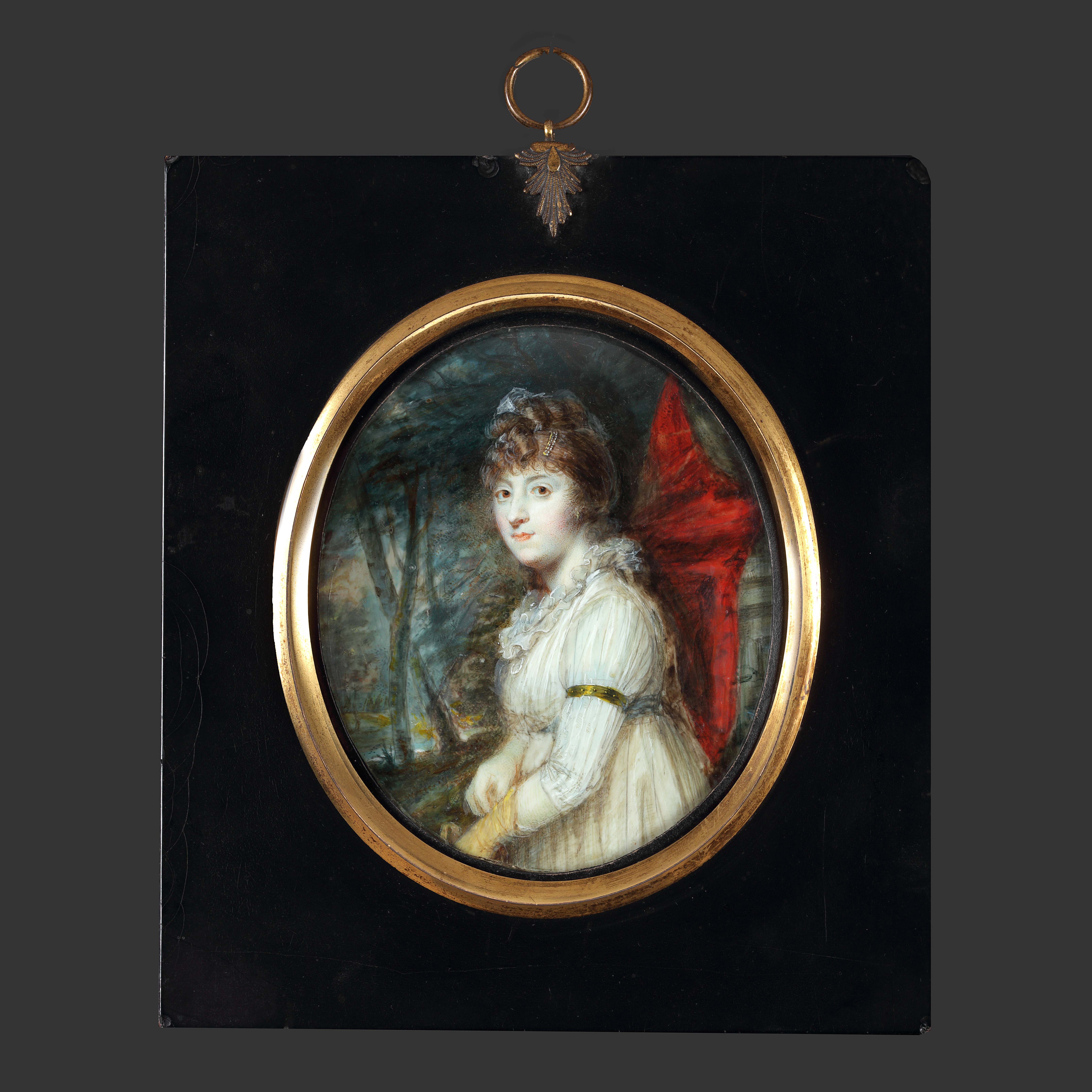
It almost seems from this moment onwards that the increase in his production increased. Not only was William copying the great Reynolds, but he had been recognised by him and had gained an important connection with the upper echelons of British society. It may have been through this very interaction that he was commissioned by George, Prince of Wales, later George IV (1762-1830), to paint his companion and ‘wife’[2], Maria Fitzherbert (1756-1837; fig. 3). Such a commission was career-shaping, and in William’s case, helped with his appointment as enamel painter to the Duke and Duchess of York in 1791, and to George IV when Prince of Wales in 1806, and then when King in 1824.
Fig. 3. WILLIAM GRIMALDI, R.A. (1751-1830), Portrait miniature of Maria Anne Fitzherbert (née Smythe; earlier married name Weld; 1756-1837), wearing white dress, with gold band and gloves, stood in front of a column with red drapery and a landscape background, 1789. Sold with The Limner Company.

It should be noted that William continued to produce original works throughout his career, for example, fig. 4. Other original works, such as his portraits of Arthur Wellesley, 1st Duke of Wellington (1769-1852), (fig. 5), became some of his most important commissions and demonstrate his equal ability in both copying and painting from life, even if he gained his renown through the former.
Fig. 4. WILLIAM GRIMALDI, R.A. (1751-1830), Portrait miniature of a Gentleman, wearing blue coat with yellow waistcoat and white stock and cravat, circa 1800. Sold with The Limner Company.
Copying his Copies
Compared to the 440 watercolour miniatures listed in the 1837 catalogue, only 38 enamel miniatures are listed. Painting in enamel was a difficult undertaking and Grimaldi records himself having struggles with cracking and spending months at a time producing these works. In order to paint in this medium, layers of paint had to be individually fired to achieve the correct temperature for each colour to be set. It is not surprising, then, that William limited himself to only painting his ‘best’ clients in this medium. These included Reynolds, and even more notably Arthur Wellesley, 1st Duke of Wellington, of whom William painted ten enamel miniatures, including fig. 5.
Fig. 5. WILLIAM GRIMALDI, R.A. (1751-1830), Portrait enamel of Arthur Wellesley, 1st Duke of Wellington (1769-1852), in field marshal’s uniform, 1818. Sold with The Limner Company.
Perhaps most intriguing about these miniatures is that some were copied after his own copies. The clearest example of William doing this is in the last enamel he ever painted, of Master Bunbury (fig. 2). As Worlidge had probably told him in his training, copying was not only something that artists could do to learn. Copied works of art could have as much intrinsic value as originals, especially when they were painted with as much skill as Grimaldi’s were.Grimaldi’s Legacy
In 1821, William and his son, Stacey (1790-1863), published ‘The Toilet’ in 1821, a lift-up flap book with illustrations of various items found at a woman’s toilet. Each item could be lifted to reveal the virtue it was thought to represent. This may seem a surprising addition to Grimaldi’s oeuvre, though given his history with entrepreneurship, especially in producing small-scale enamel copies of full-scale oil paintings, it is perhaps not surprising that he ventured into a new artistic form towards the end of his life.
By this point, Grimaldi’s wife had died, and he had begun a relationship with the young Elizabeth Dawe, who was also said to have been his niece and to have been living in his home. Elizabeth was one of three women through whom Grimaldi’s artistic legacy was apparently continued - the other being Mary Ann Grimaldi (née Knapp; 1803-1877), Stacey’s wife and William’s daughter-in-law. A self-portrait in miniature by Elizabeth Dawe can now be found in the Royal Ontario Museum[3]. A drawing by Mary, after William’s daughter, Louisa Frances (1785-1873), of William sitting at his desk, can be found in the National Portrait Gallery, London (NPG 3114). Around the age of seventy, he is pulled flush to his desk, concentrating on his latest composition. Through his teachings, William continued the tradition of copying the works of others. The fact that one student has copied another here only emphasises the important position that this mode of production held within his practice.
[1] A.B. Grimaldi, ‘A Catalogue, Chronological and Descriptive,of Paintings, Drawings, & Engravings by and after William Grimaldi’, p. 15, under no. 34.
[2] See cataloguing for Grimaldi’s portrait of Maria Fitzherbert for details on their complicated relationship.
[3] Collection no. 981.214.2.




