
NEWS
By Rebecca Ingram |
26 Jan 2026
The Face of Fashion: Portrait Miniatures Centre Stage at Dior Haute Couture
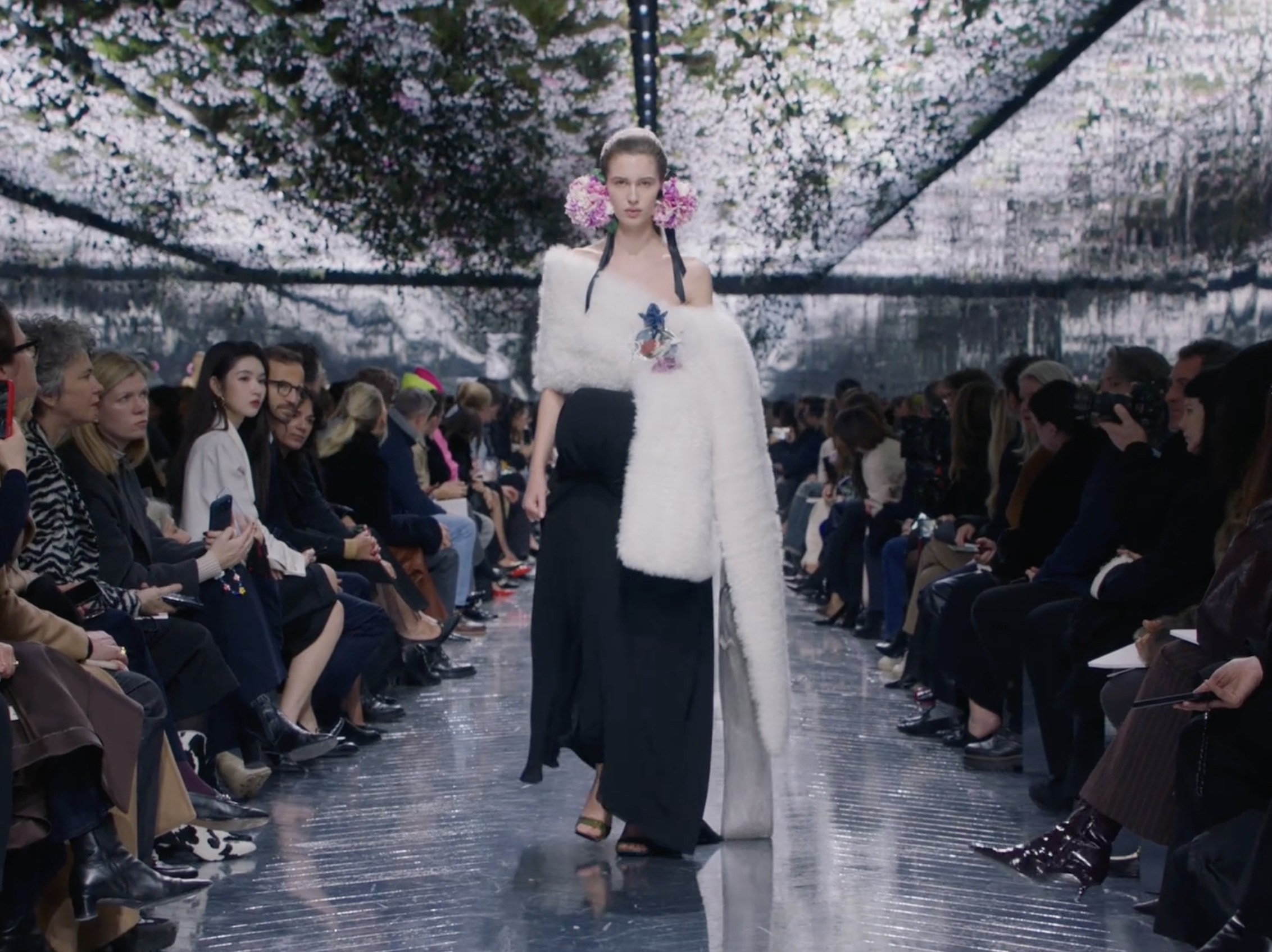
Today at the at the Musée Rodin in Paris, centuries-old art and contemporary fashion fused on the Dior runway which featured portrait miniatures recently sourced and sold by The Limner Company. Dior’s new Creative Director and leading light of British designers, Jonathan Anderson incorporated miniatures in his first women's haute couture show for the iconic fashion house, titled 'A Wunderkammer of Artefact and Nature'.
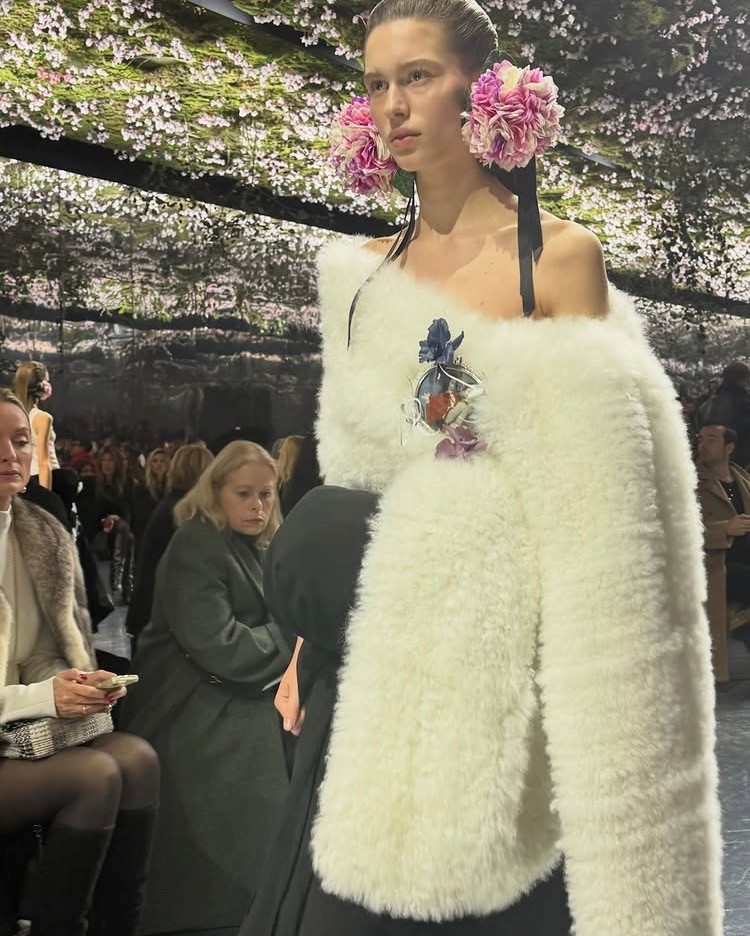
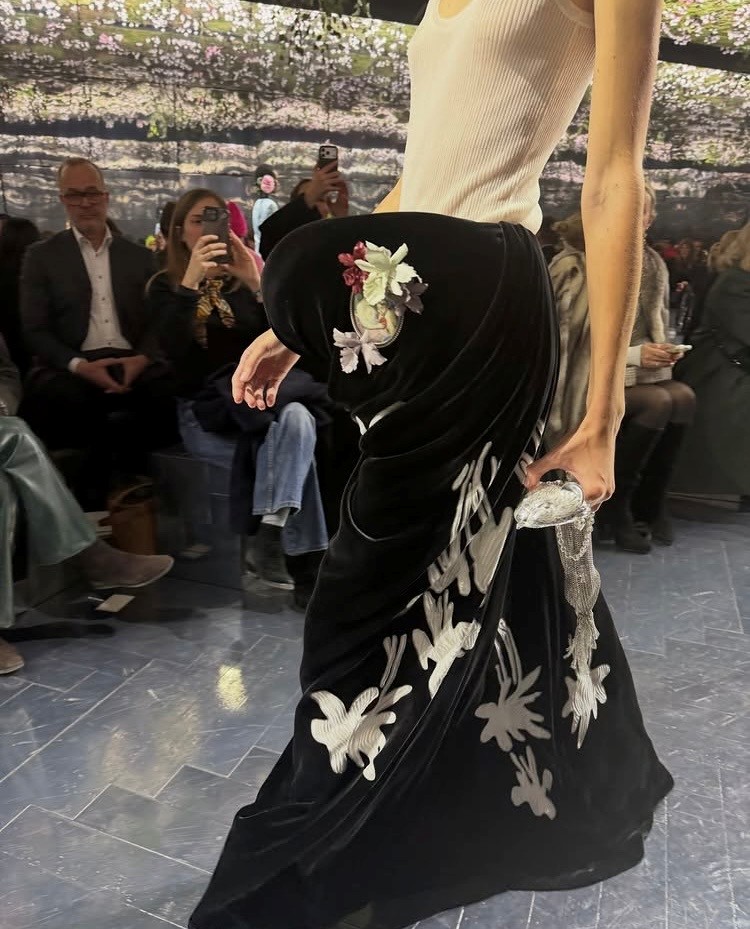 Instagram @vogueitalia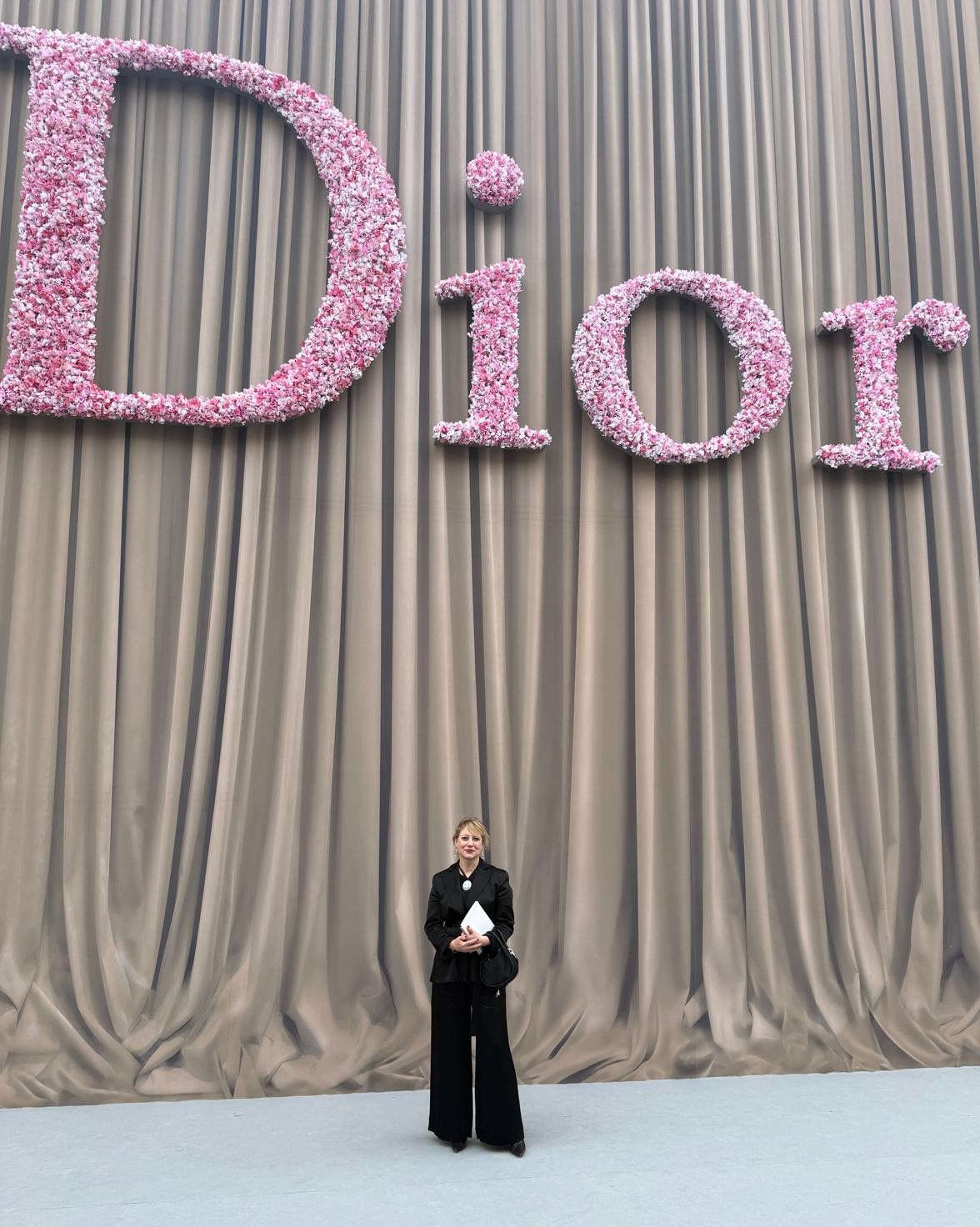
The Limner Company's director, Emma Rutherford, was a front-row guest at the show: "Today's Dior show has been a career highlight. To see portrait miniatures once again as wearable art, in this sophisticated, contemporary context reflects the visionary nature of Jonathan Anderson."
Get an exclusive look at the at the Dior miniatures below:
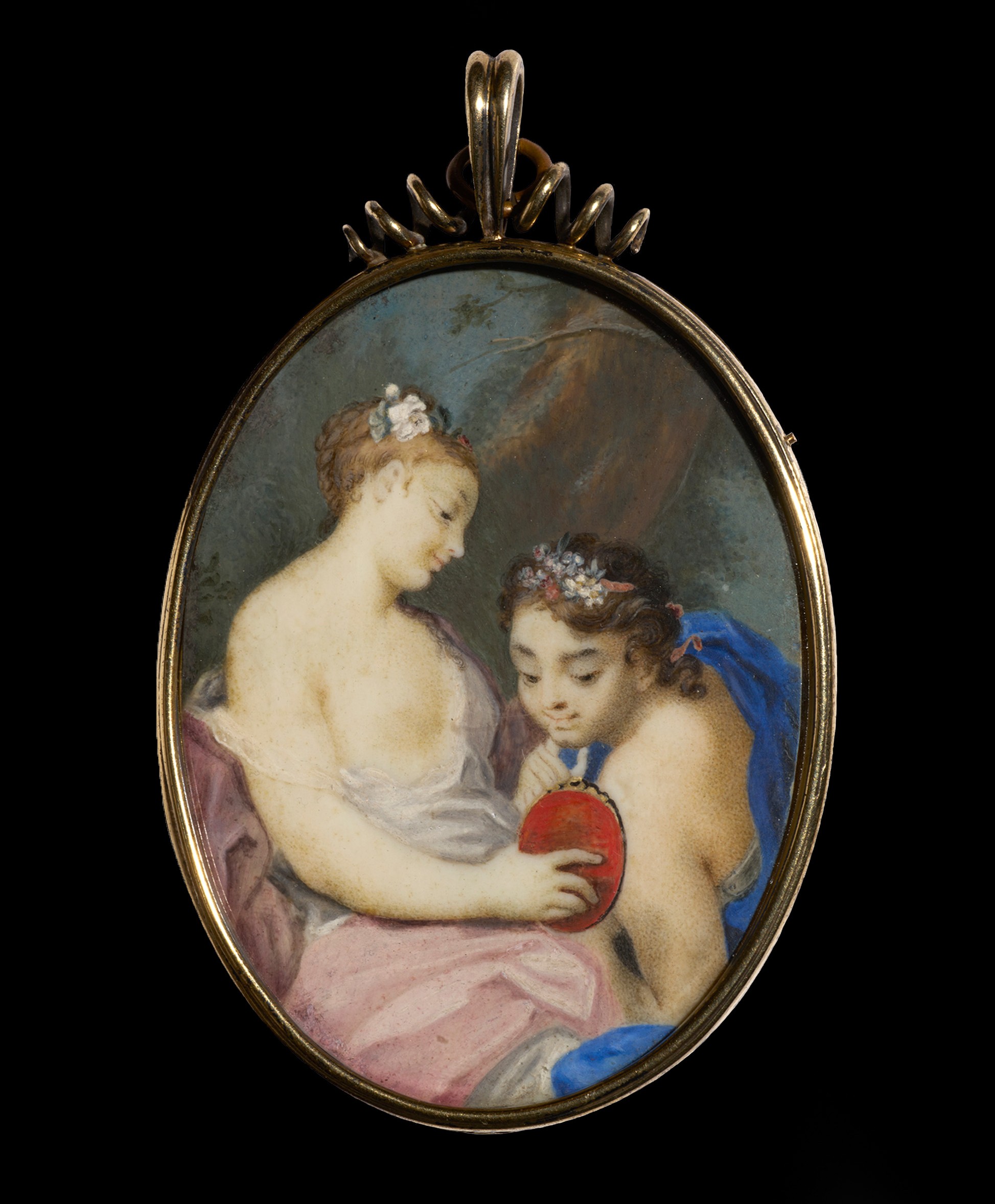 ROSALBA CARRIERA (1673-1757) Rinaldo and Armida; circa 1715 – recently sold by The Limner Company. More information in our new blog here.
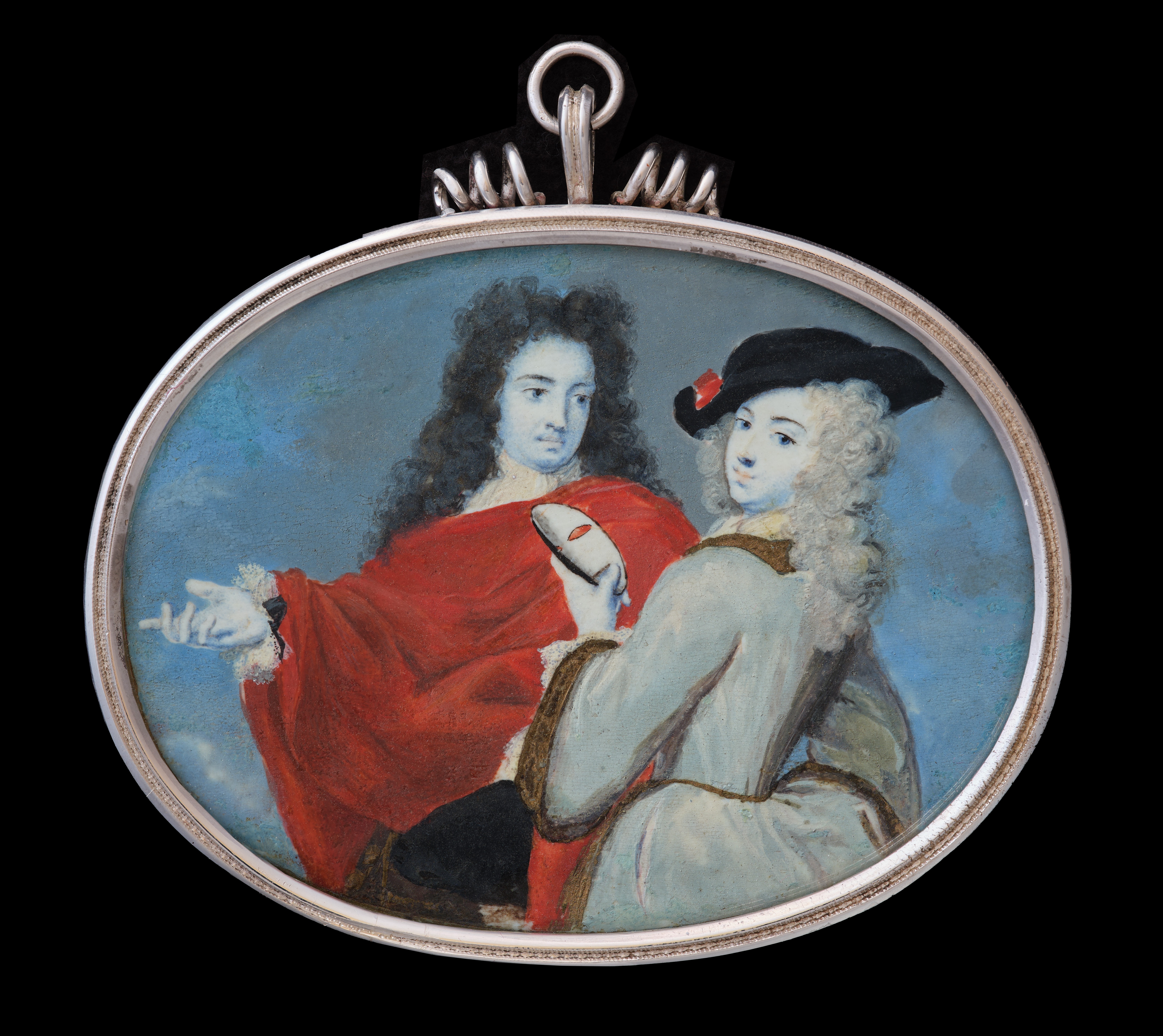 ROSALBA CARRIERA (1673-1757) Portrait miniature of Joseph Smith and Catherine Tofts as Thalia – recently sold by The Limner Company. More information in our new blog here.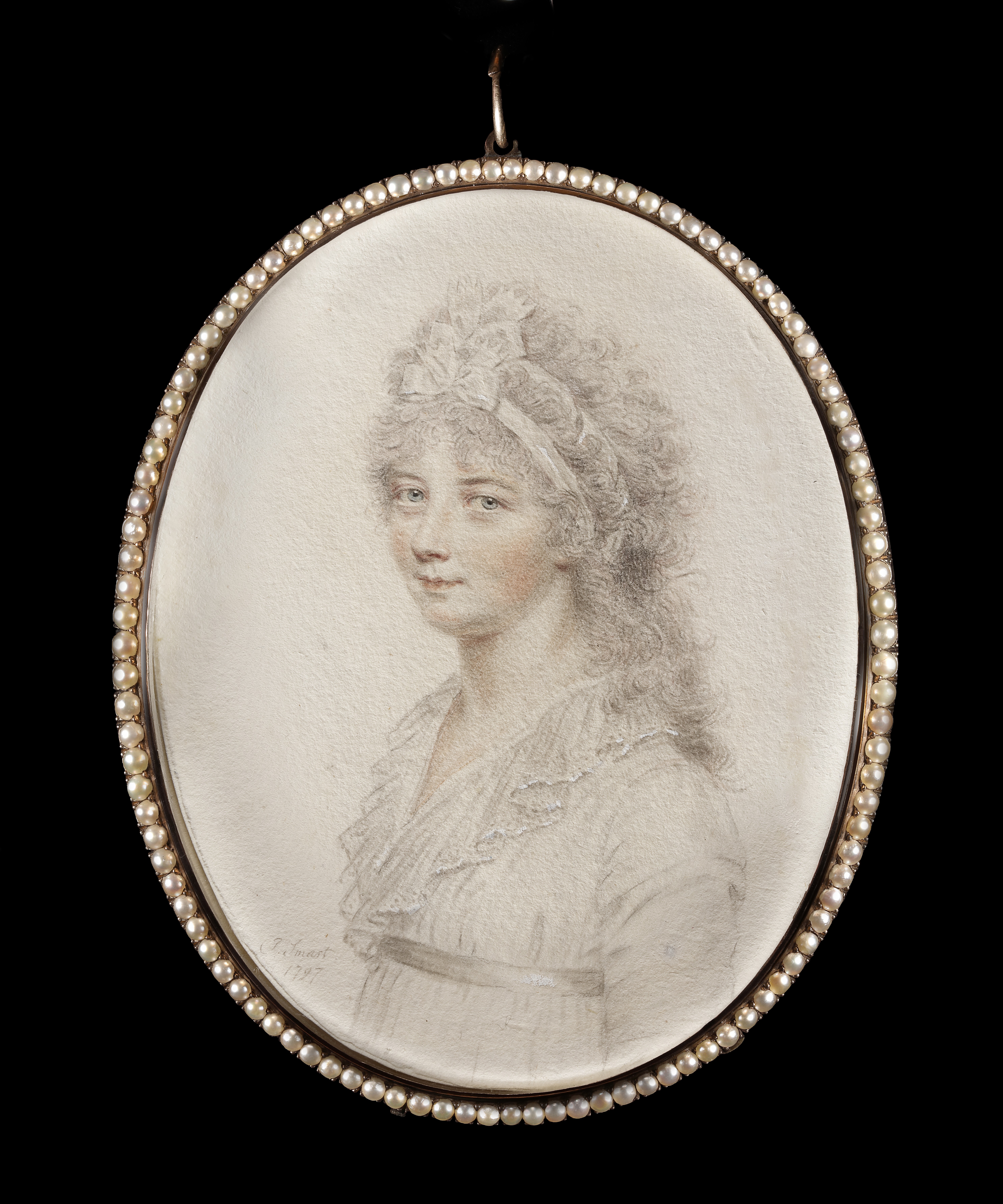
JOHN SMART (1741-1811) Portrait drawing of Mrs Parker of Bath, wearing white muslin dress and two bows of white silk ribbon in her powdered hair; 1797 - recently sold by The Limner Company, more information in our archive here.
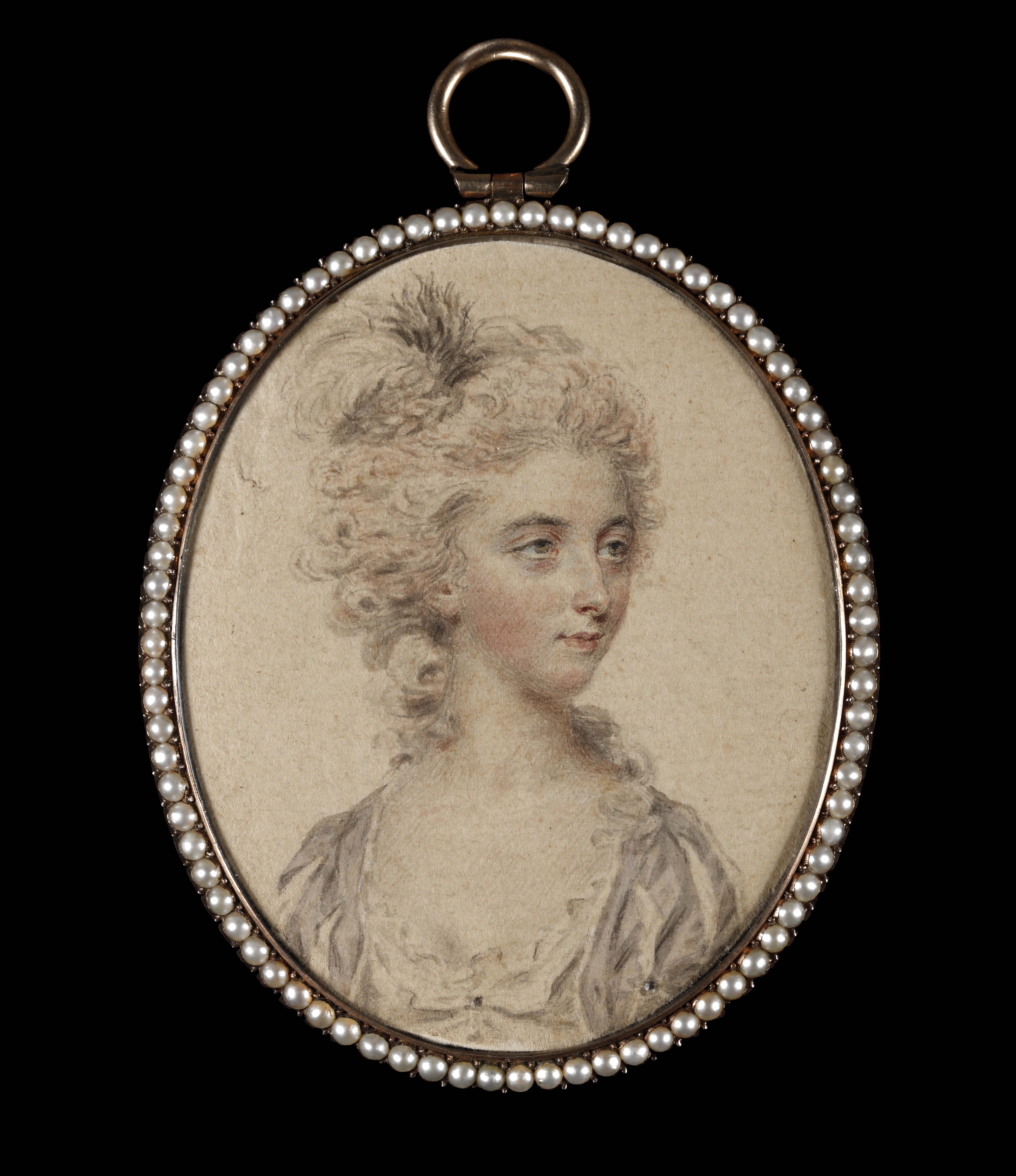 JOHN SMART (1741-1811) Portrait drawing of Mrs Elizabeth Shippey of Sloane Street, Knightsbridge, wearing a grey dress, black and white feathers in her powdered hair; 1784 - recently sold by The Limner Company, more information on our archive here.
 Why Miniatures?
"Once again, I looked to the past to shape the future, this time with a greater sense of playfulness and the unexpected." - Jonathan Anderson [1]
Anderson frequently employs cultural touchstones in his work with a special interest in historical British art and craft. While Creative Director for Loewe, Anderson included several miniatures in his 2019 autumn/winter womenswear show titled, ‘The Best Self’ [pictured below]. Loewe had acquired a number of miniatures ahead of the runway show to which The Limner Company’s director, Emma Rutherford was invited.
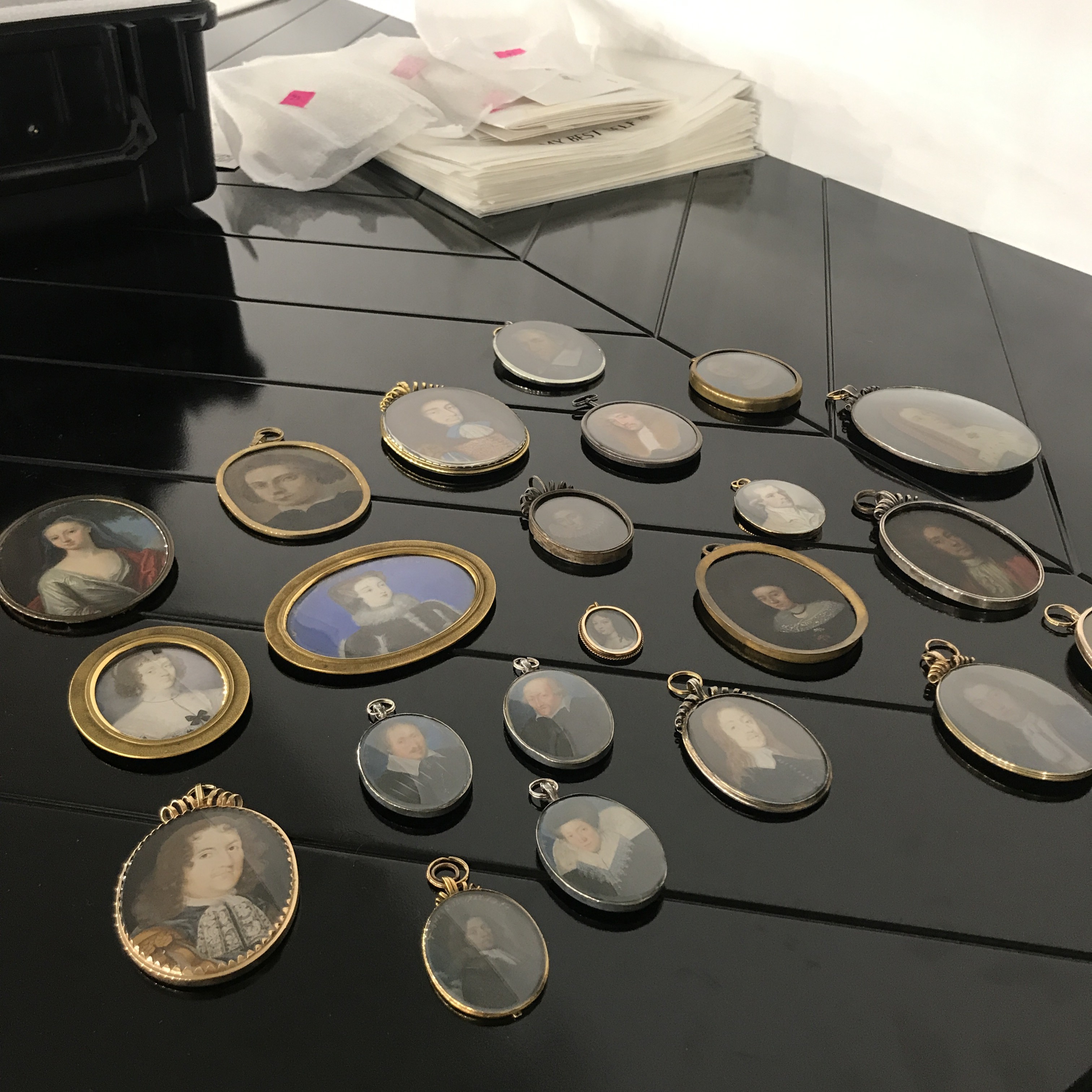
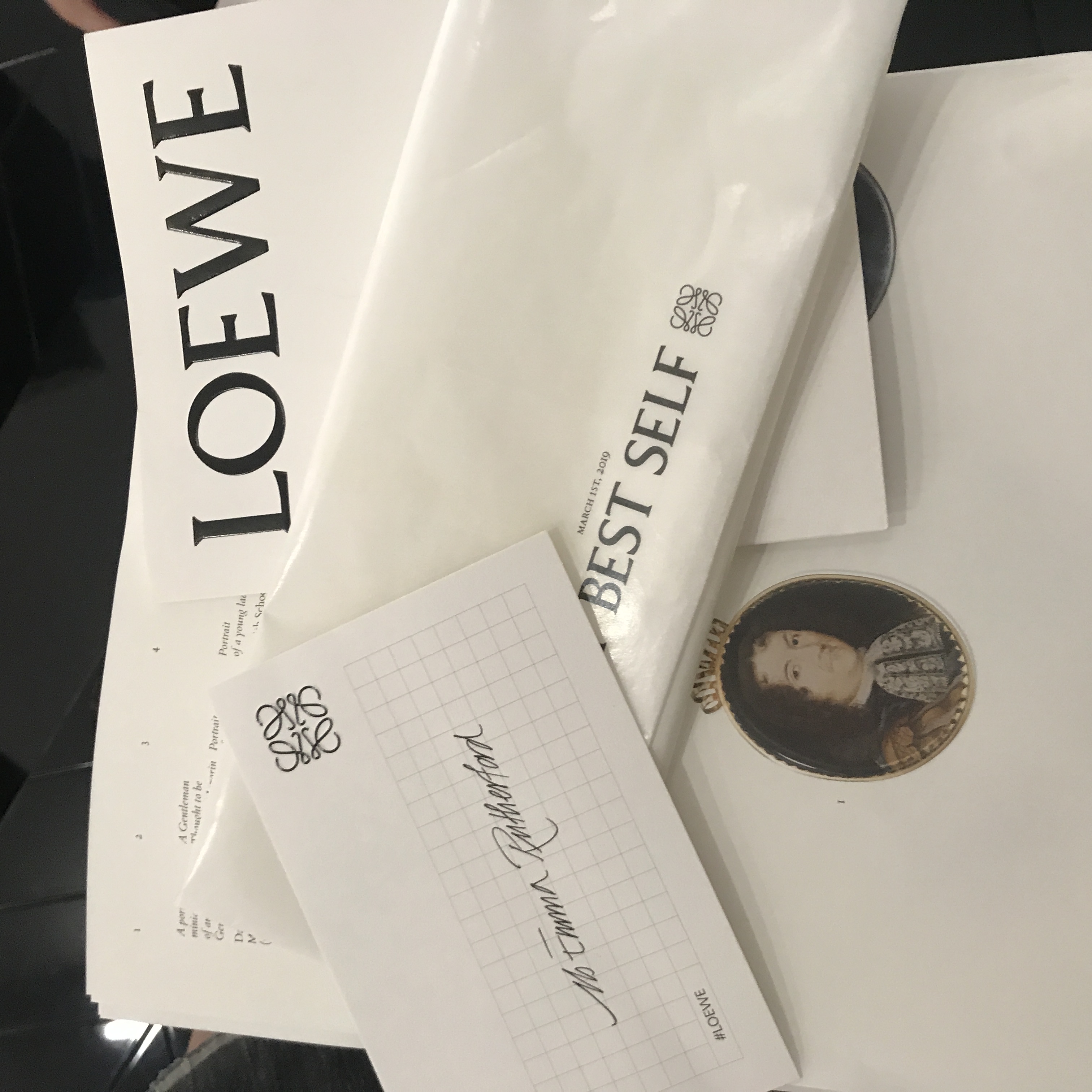
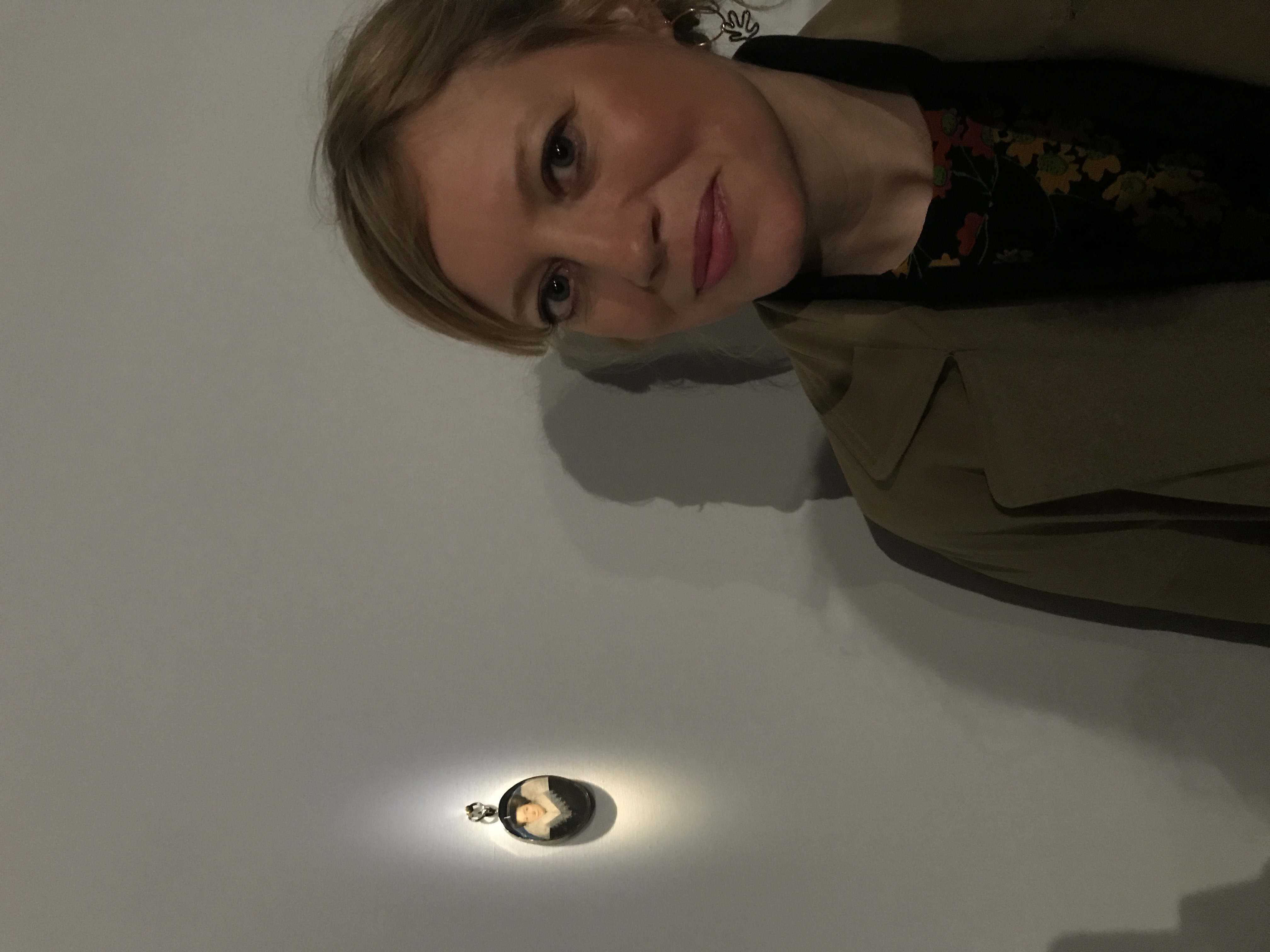
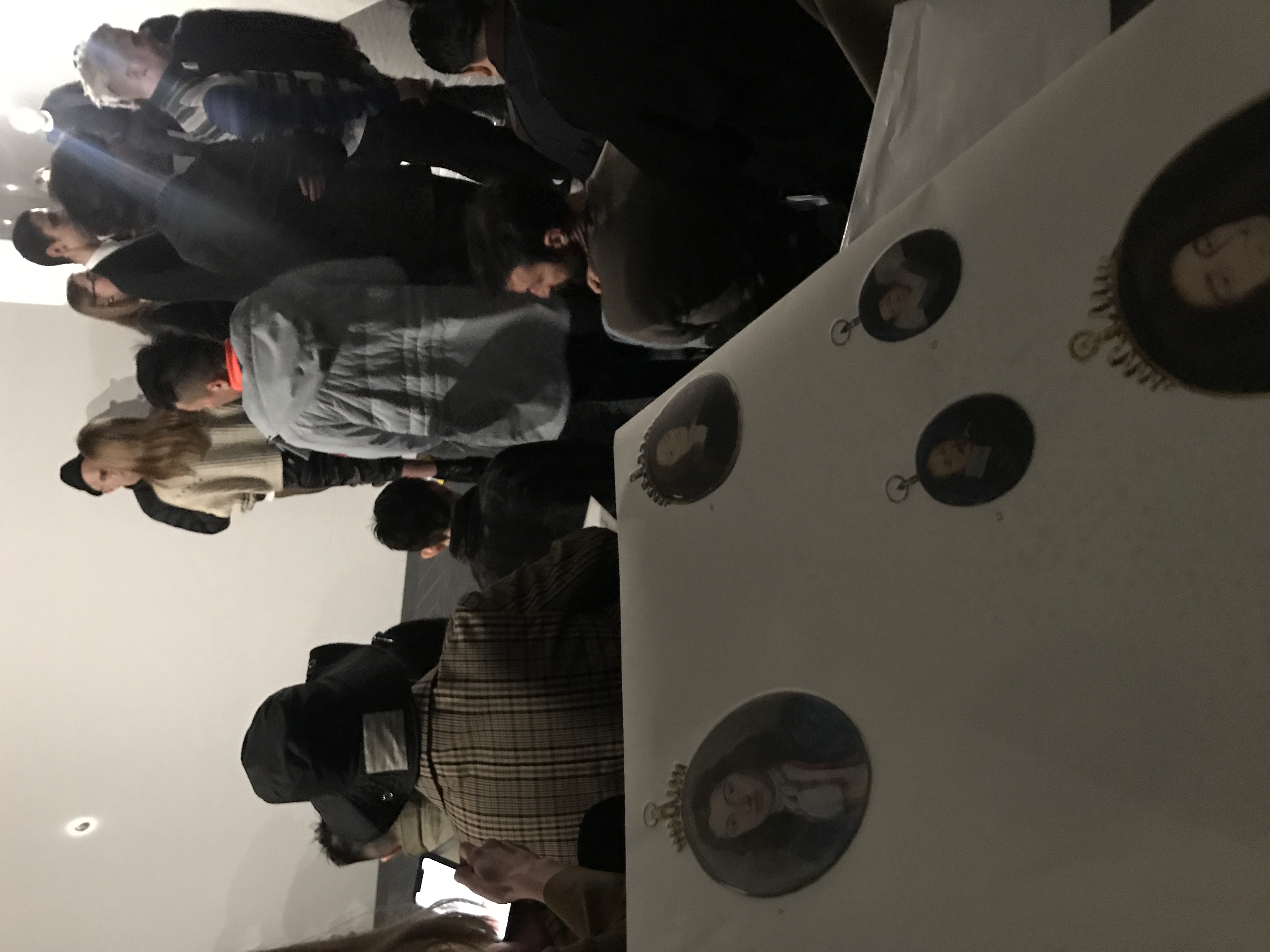
In this context miniatures should not be mistaken for a gimmick, here they are prized in the multifaceted ways they were historically: personal expression and jewel-like beauty as well as artistry. As wearable art, they also align contemporary fashion design with one of the finest and oldest modes of self-presentation.
At once timeless artworks and intimate artefacts, portrait miniatures, eye miniatures, silhouettes and cameos have been increasingly catching the eye of the fashion world. Alessandro Michele, Italian fashion designer and Creative Director at Gucci (2015-2022), appears to be a collector of portrait minaitures which he wears frequently.
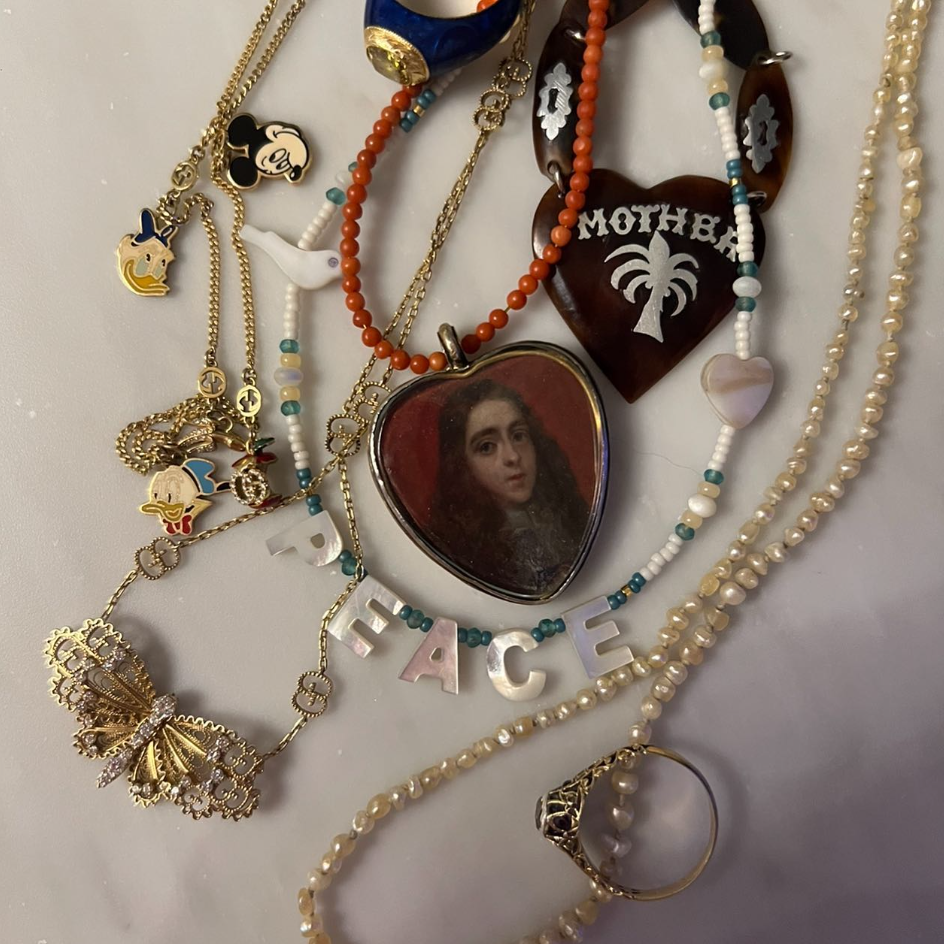 Instagram @alessandro_michele, 2022
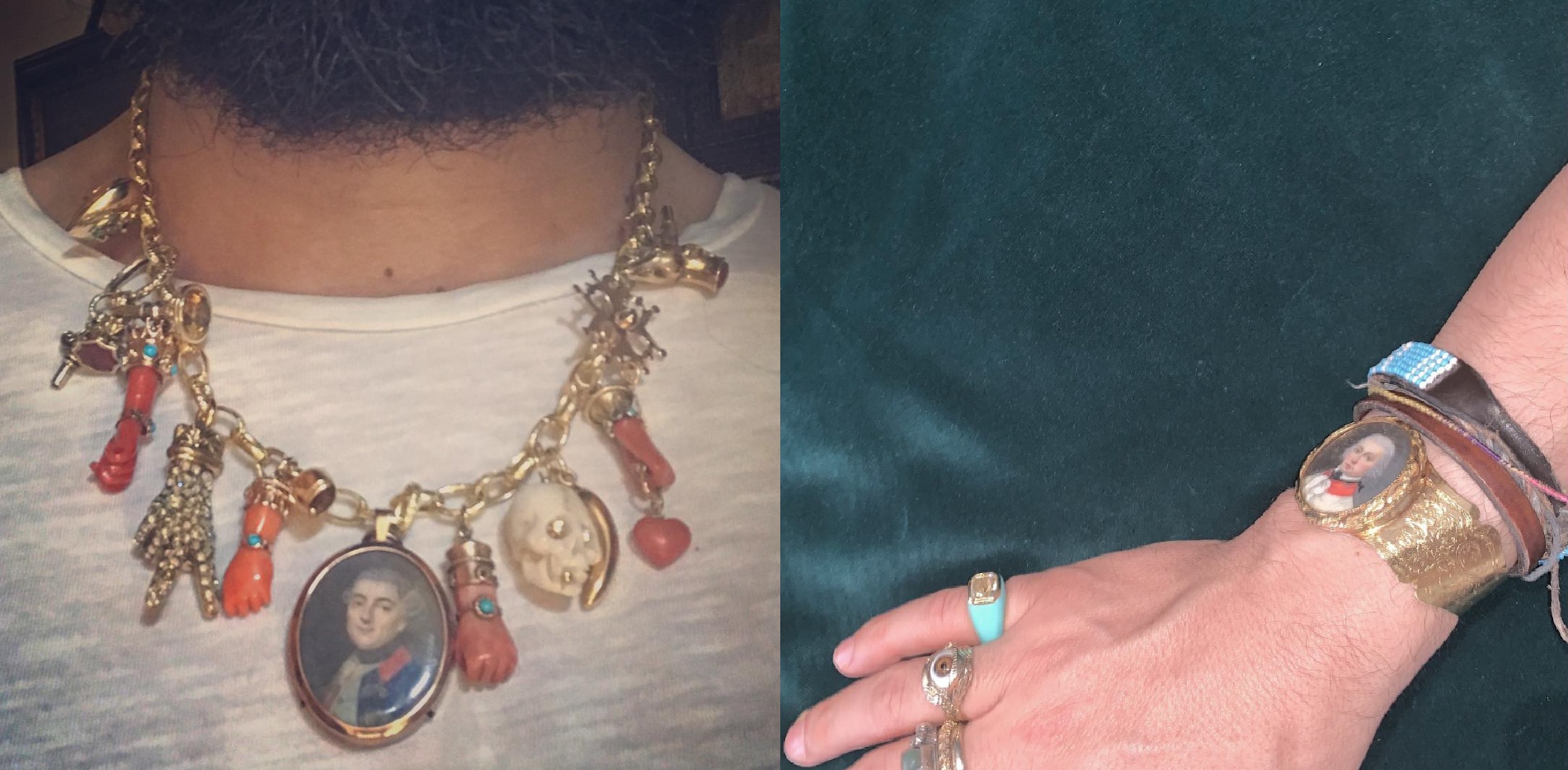 Instagram @alessandro_michele, 2017 & 2019
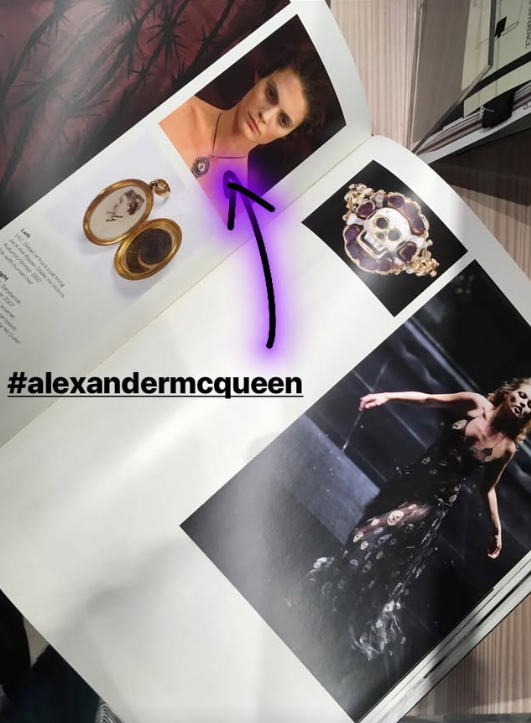
Alexander McQueen often referenced memento mori in his work, including portrait miniatures and hair jewellery - see the Victoria & Albert Museum's online 'Museum of Savage Beauty' dedicated to the late deisgner.
Singer and beauty mogul, Rihanna has been influential in the 'cameo comeback'. Rihanna has long been wearing vintage jewellery but in 2019 she launched her own cameo collection with her brand, Fenty. The three pieces - a ring, a pair of earrings, and a pendant /brooch - were profile portraits of black women and described as 'miniature works of art that Rihanna hopes will be passed down through generations'.[1]
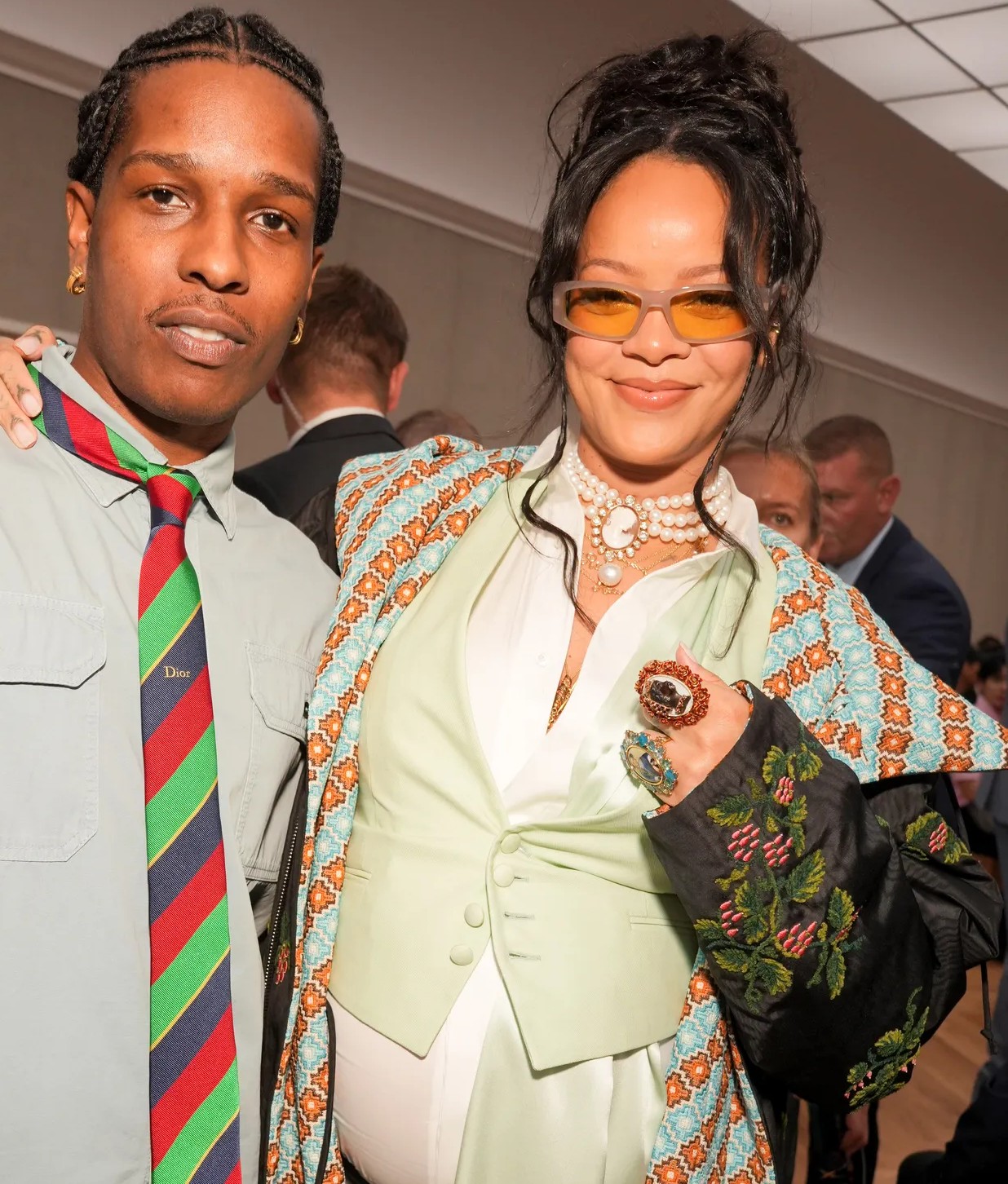
Rihanna wearing the cameo Artemis Necklace from Marlo Laz and a cameo ring at Dior Homme Menswear Spring/Summer show, Paris Fashion Week, 27 June 2025.
What is a Portrait Miniature?
Typically fitting into the palm of one’s hand, these small portraits have a long history dating back to the late 15th century (read more in our previous blog, 'Up Close and Personal: Portrait Miniatures in Context'). Most portrait miniatures were intended to be worn by both women and men, whether secretly or openly. Miniatures were usually commissioned by the sitter of the portrait with an intended recipient in mind.
Worn outwardly they displayed connections to loved ones, possibly a family member, spouse / betrothed, or a friend.Mothers and children...
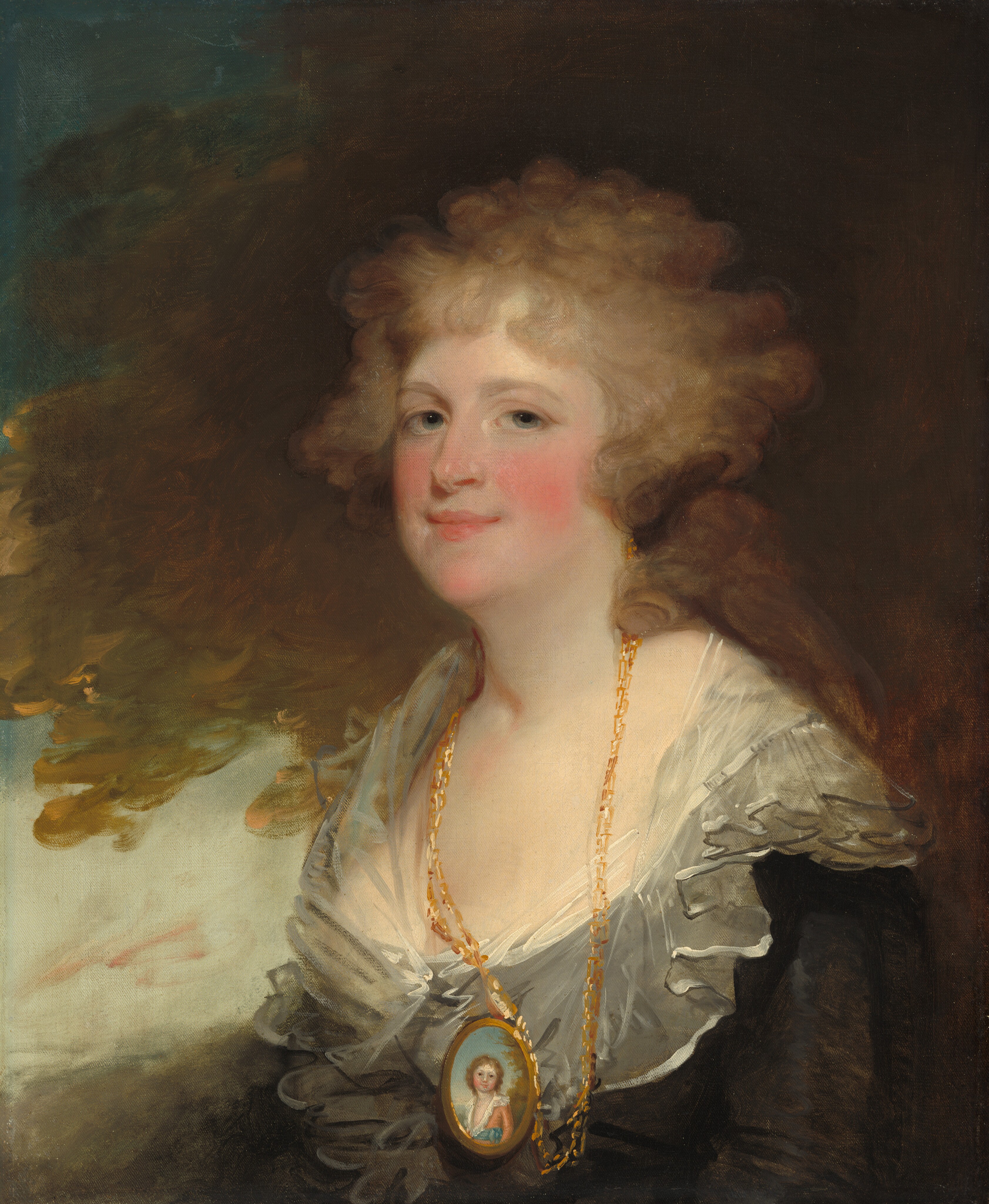
GILBERT STUART (1755-1828) Sarah Shippen Lea (Mrs Thomas Lea) wearing a portrait miniature of a young boy; c.1798 - National Gallery of Art, Washington, USA [2014.136.137].
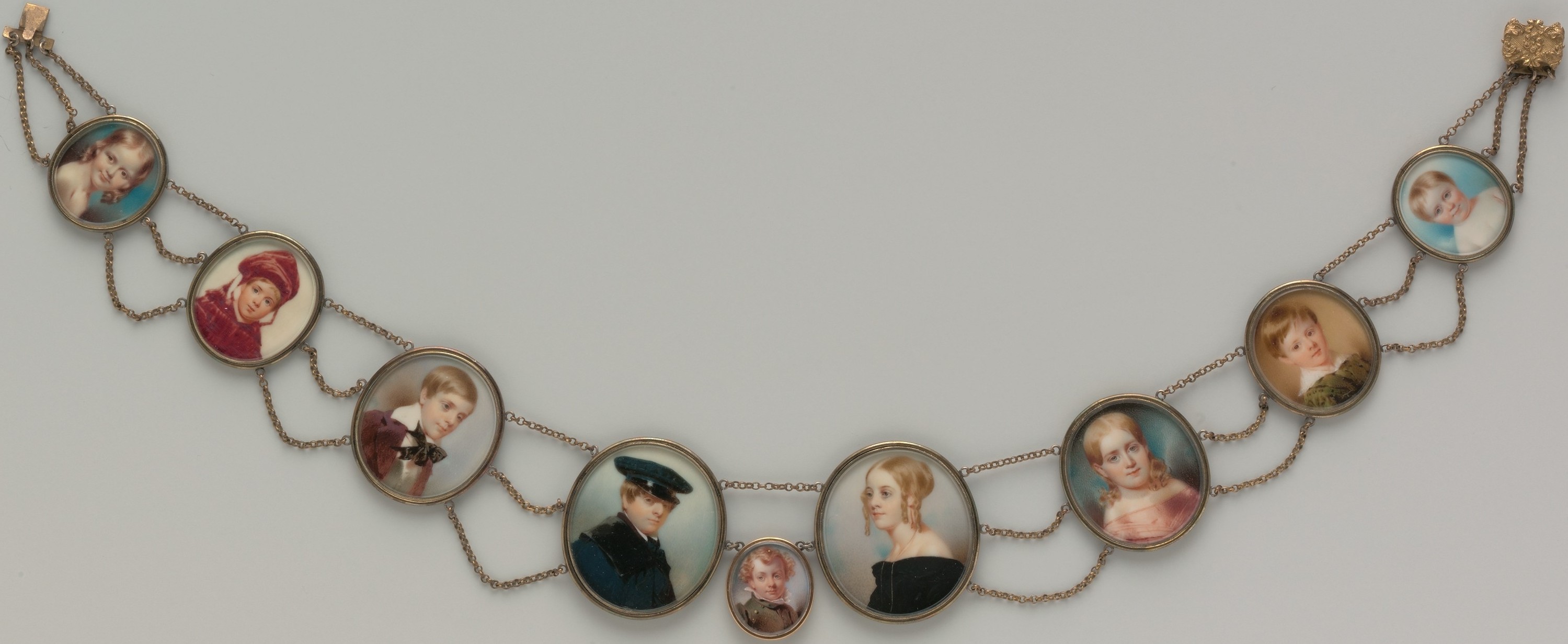
THOMAS SEIR CUMMINMGS (1804-1894) 'A Mother's Pearls', the artist composed this festoon necklace from portraits of his children, nine ivory ovals linked as a necklace for his wife, Jane Cook (1806-1889) - The Met, New York, USA [28.148.1].
Spouses...
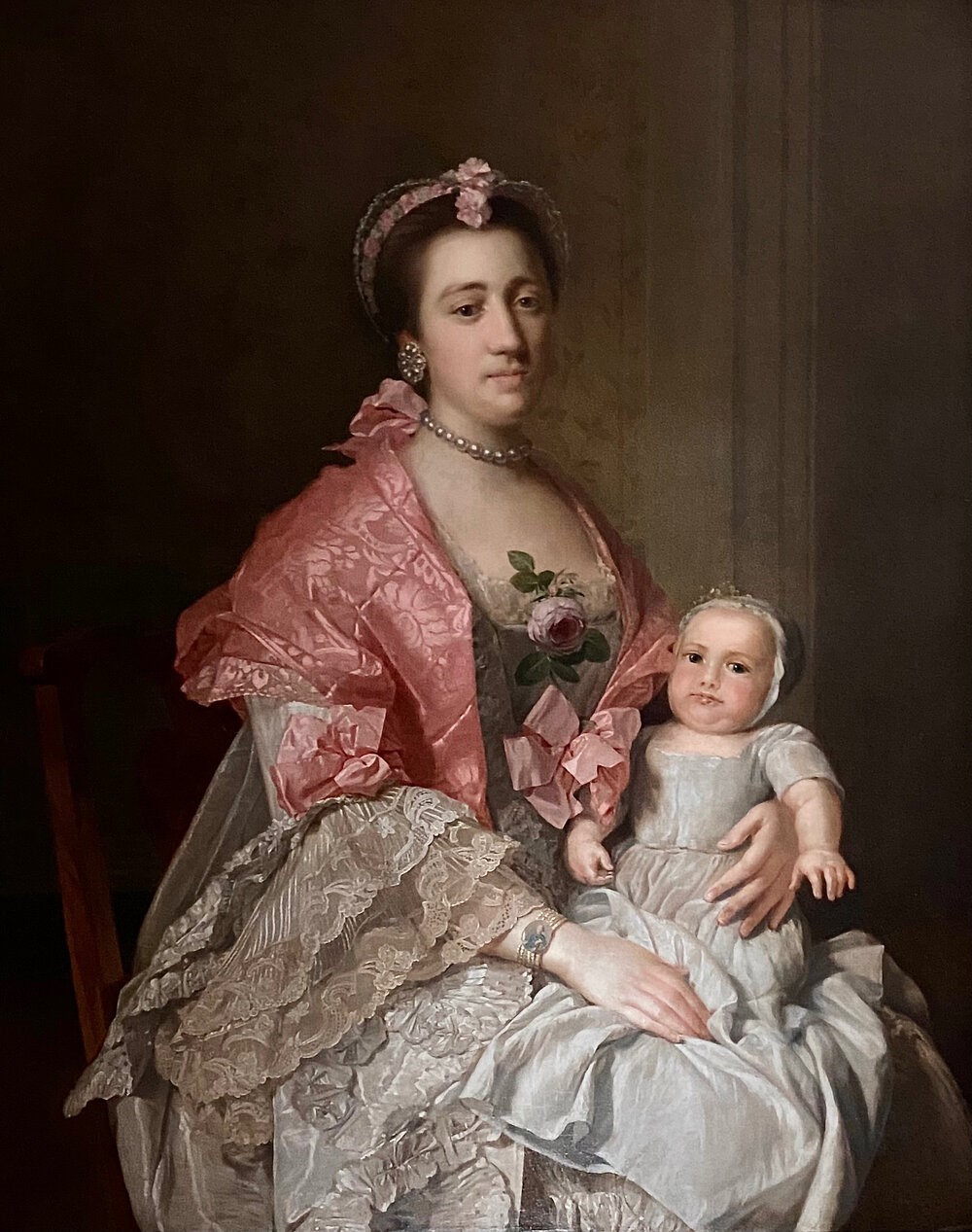
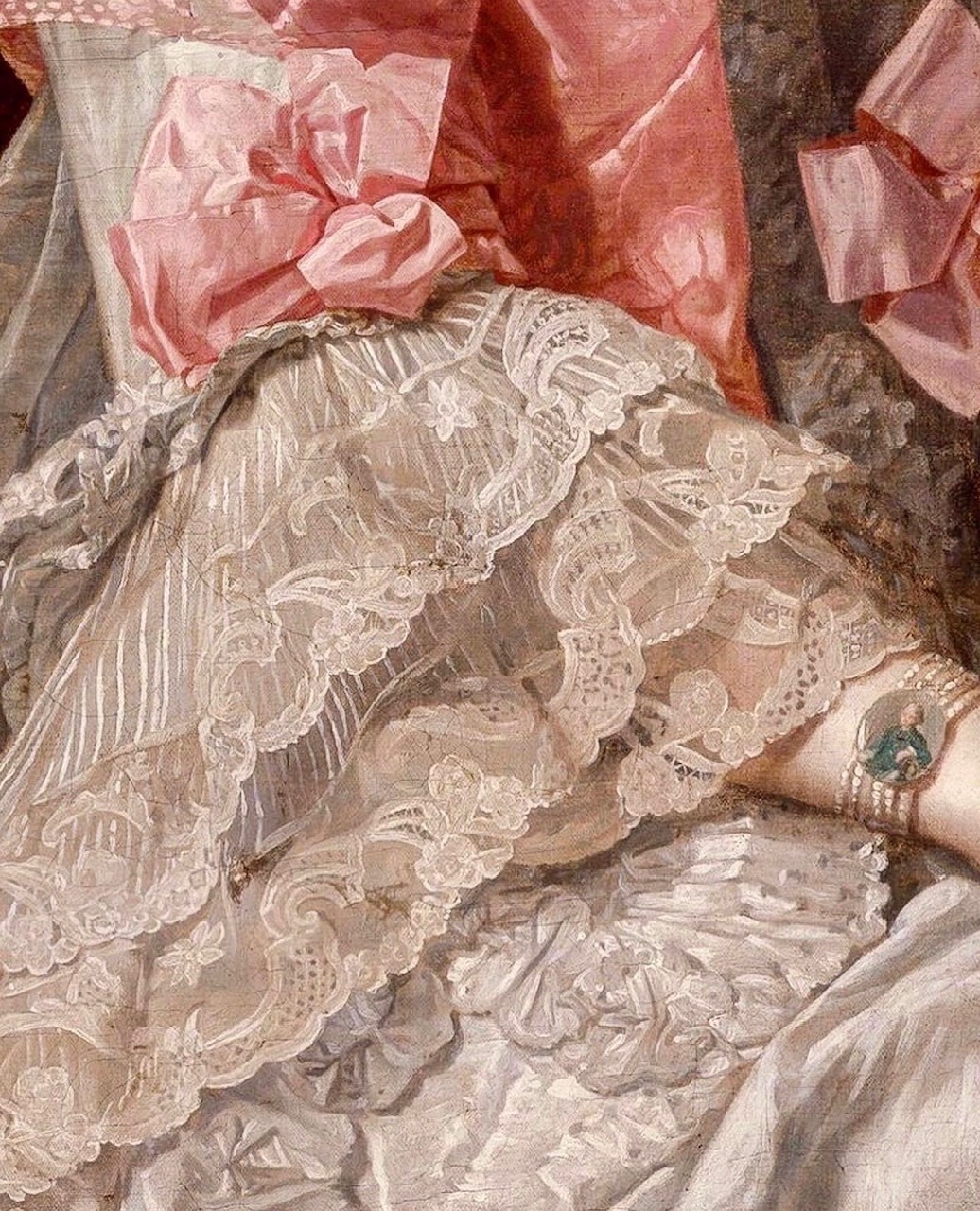 Studio of SIR ALLAN RAMSAY 91713-1784) Portrait of a Lady, wearing a portrait miniature bracelet, and her Child; c.1760 - For sale with Period Portraits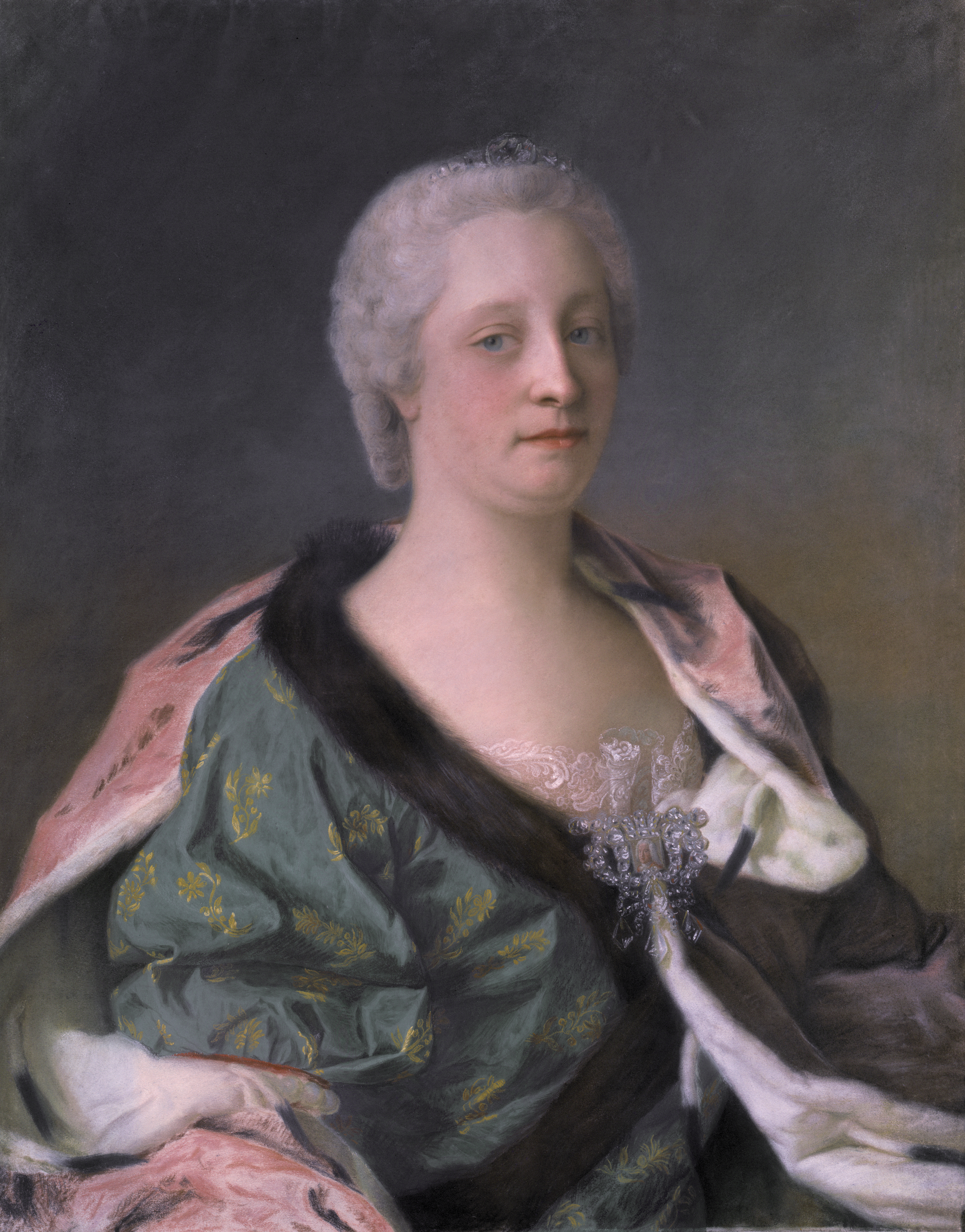
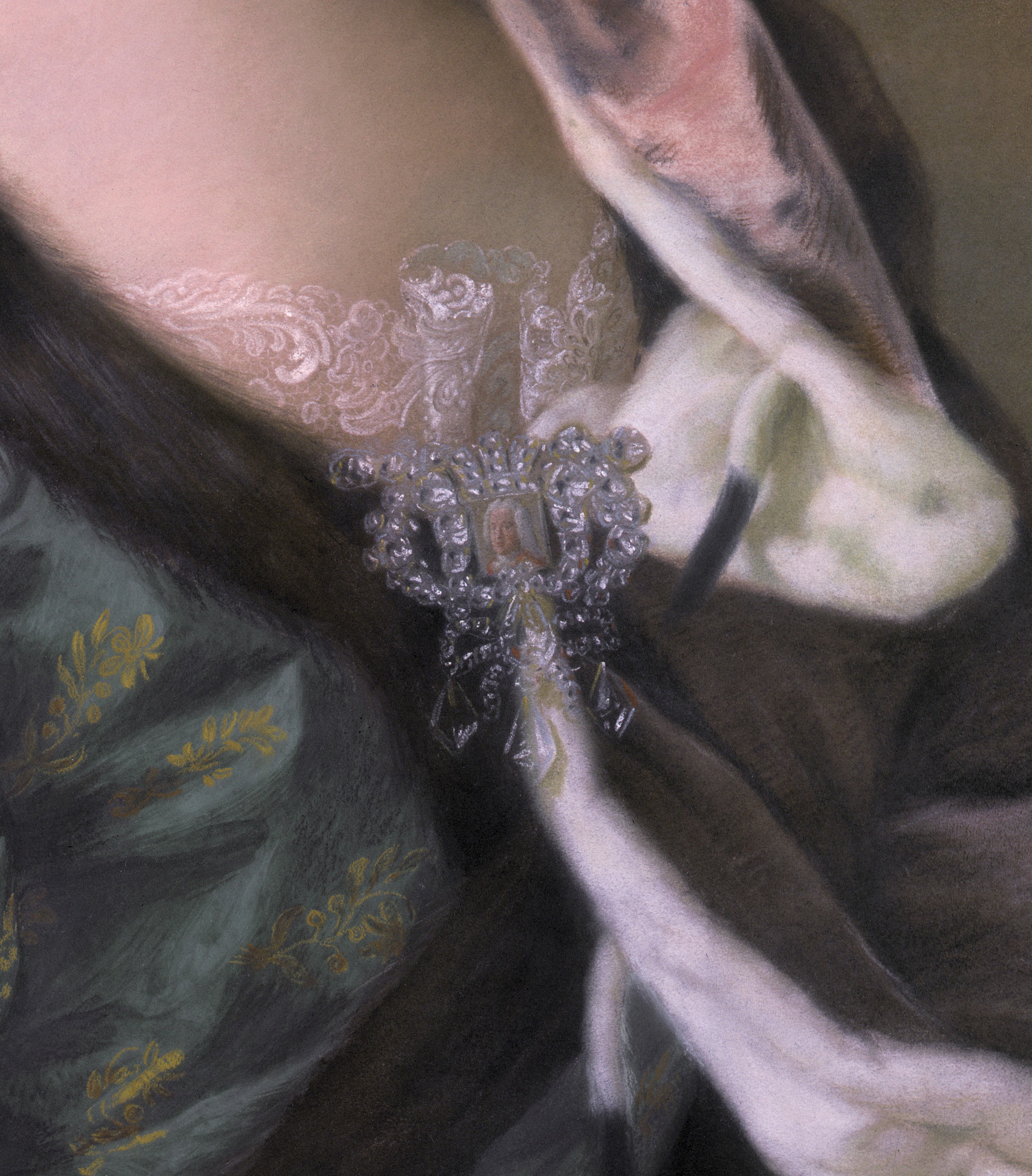 JEAN-ETIENNE LIOTARD (1702-1789) Maria Theresa, Archduchess of Austria, Queen of Hungary and Bohemia, and Holy Roman Empress, wearing a portrait miniature of husband Francis Stephan; c.1745 - Herzog Anton Ulrich Museum, Germany.
They were also often worn outwardly for diplomatic reasons, showing allegiance to a sovereign...
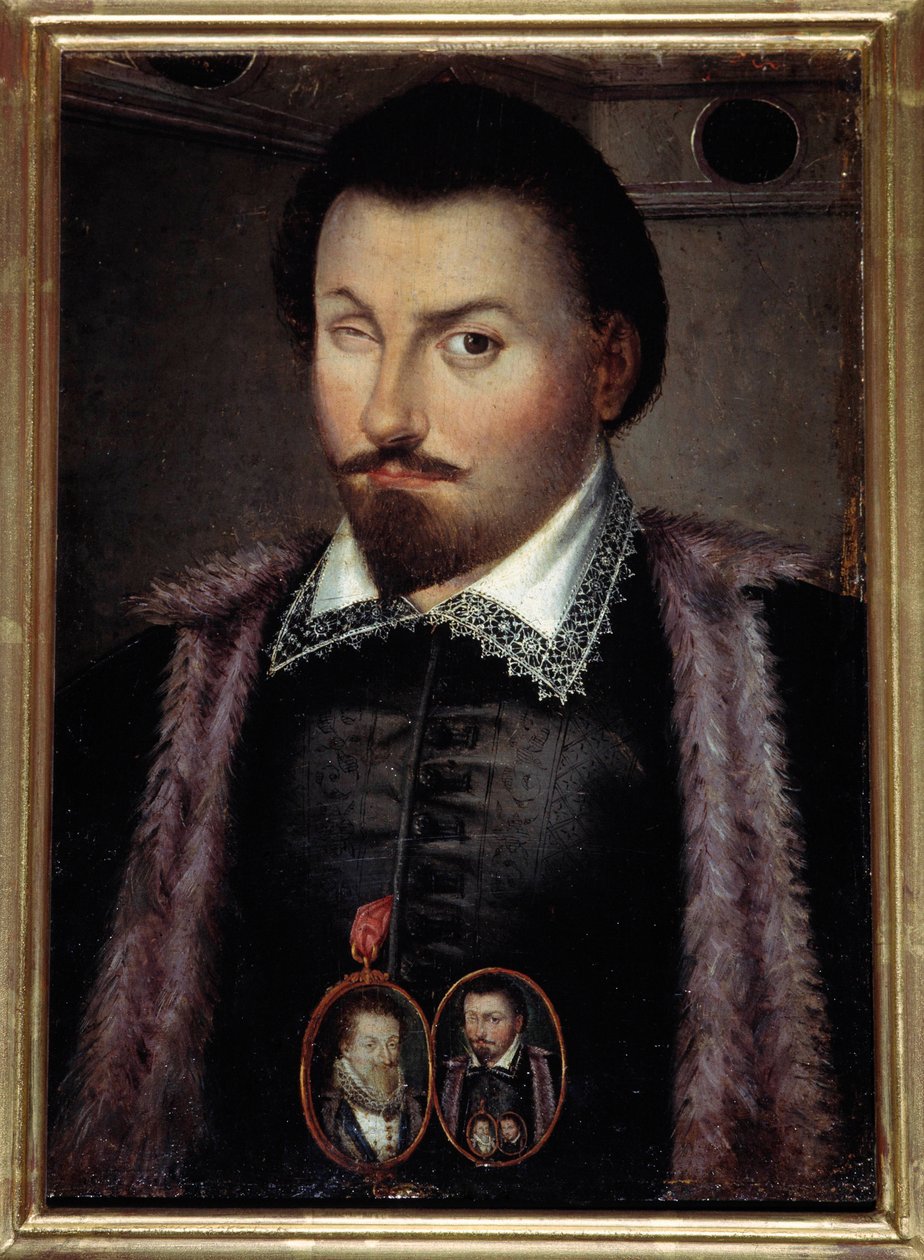
Attributed to DANIEL DUMONSTIER (1574-1646) Portrait of Baron Jean d'Harambure called the one-eyed (1553-1630), wearing a locket housing a portrait miniature depicting King Henry IV of France opposite his own portrait - Château de Versailles, France [1022152].
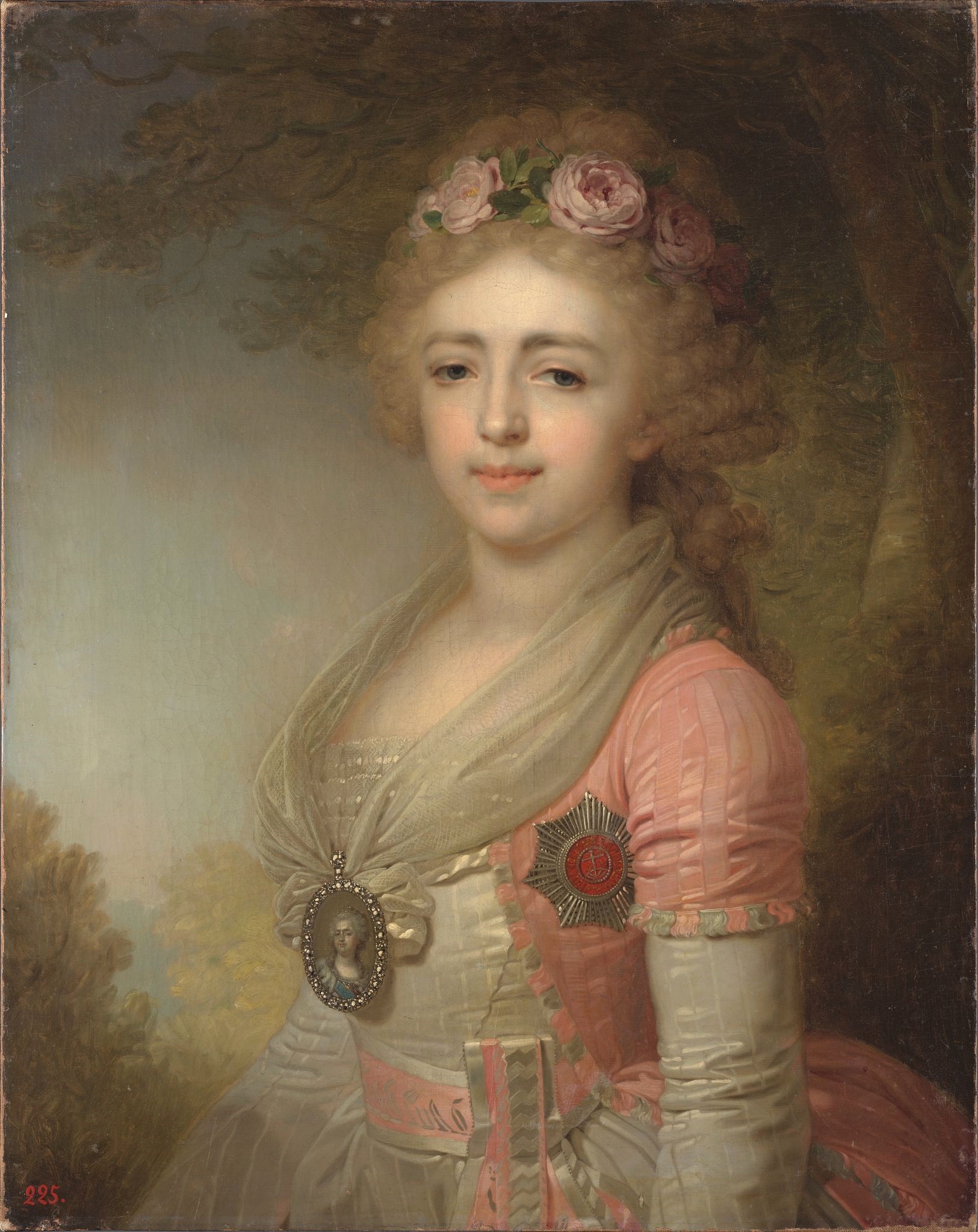
VLADIMIR BOROVIKOVSKY (1757–1825) Portrait of Grand Duchess Alexandra Pavlovna of Russia (1783-1801), Palatina of Hungary, daughter of tsar Paul I of Russia, wife of Archduke Joseph Anton Johann of Austria, Palatin of Hungary, wearing a portrait miniature of Catherine the Great; 1790s - Tretyakov Gallery, Russia.
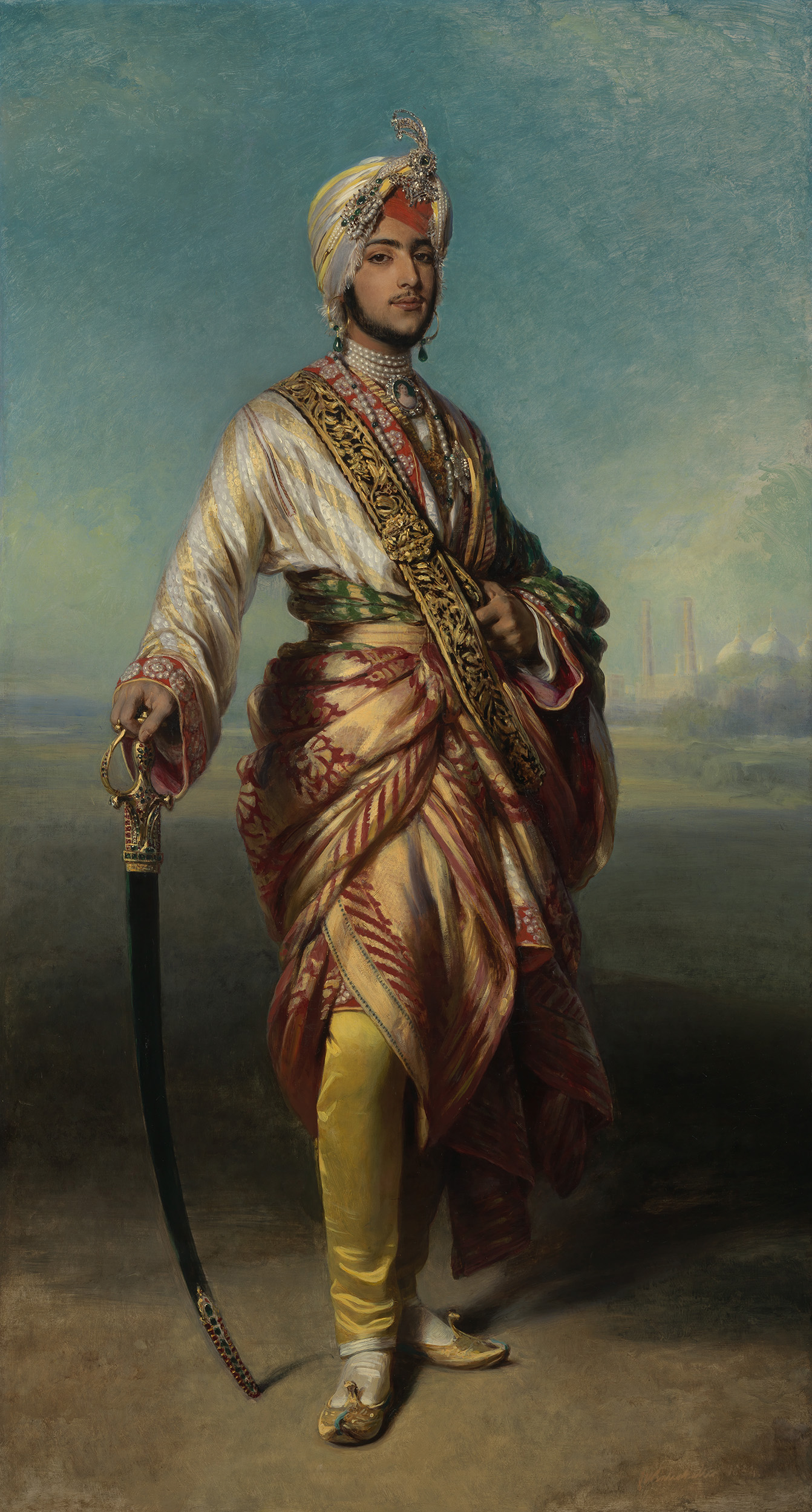
FRANZ XAVER WINTERHALTER (1805-73) The Maharaja Duleep Singh (1838-93) wearing a portrait miniature of Queen Victoria by Emily Eden; 1854 – Royal Collection Trust [ RCIN 403843].
...a tradition which continues to this day...
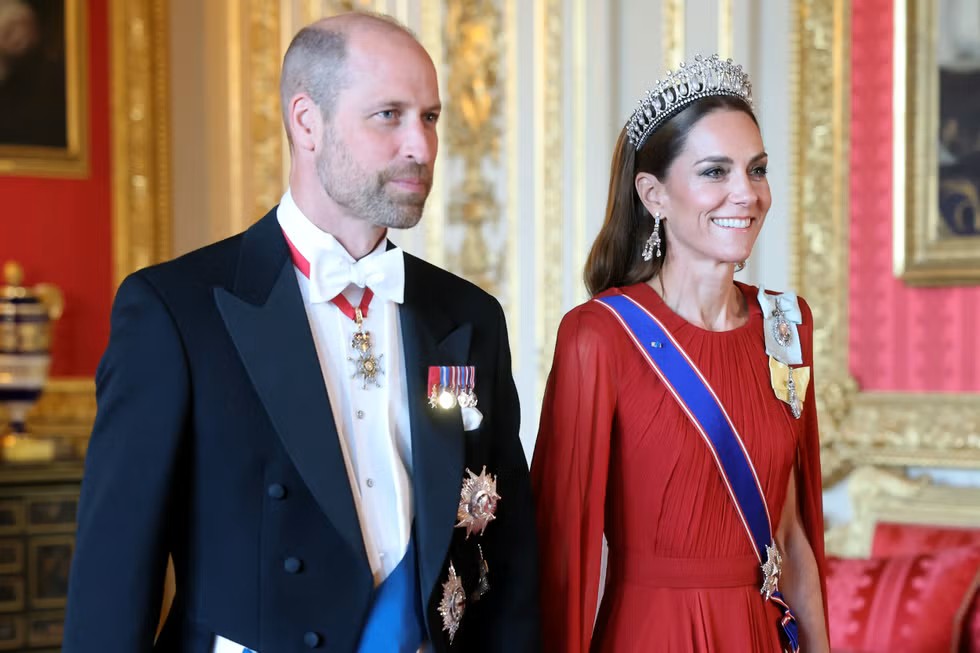
The Princess of Wales wearing the King Charles and Queen Elizabeth family orders at the French State Banquet in July 2025.
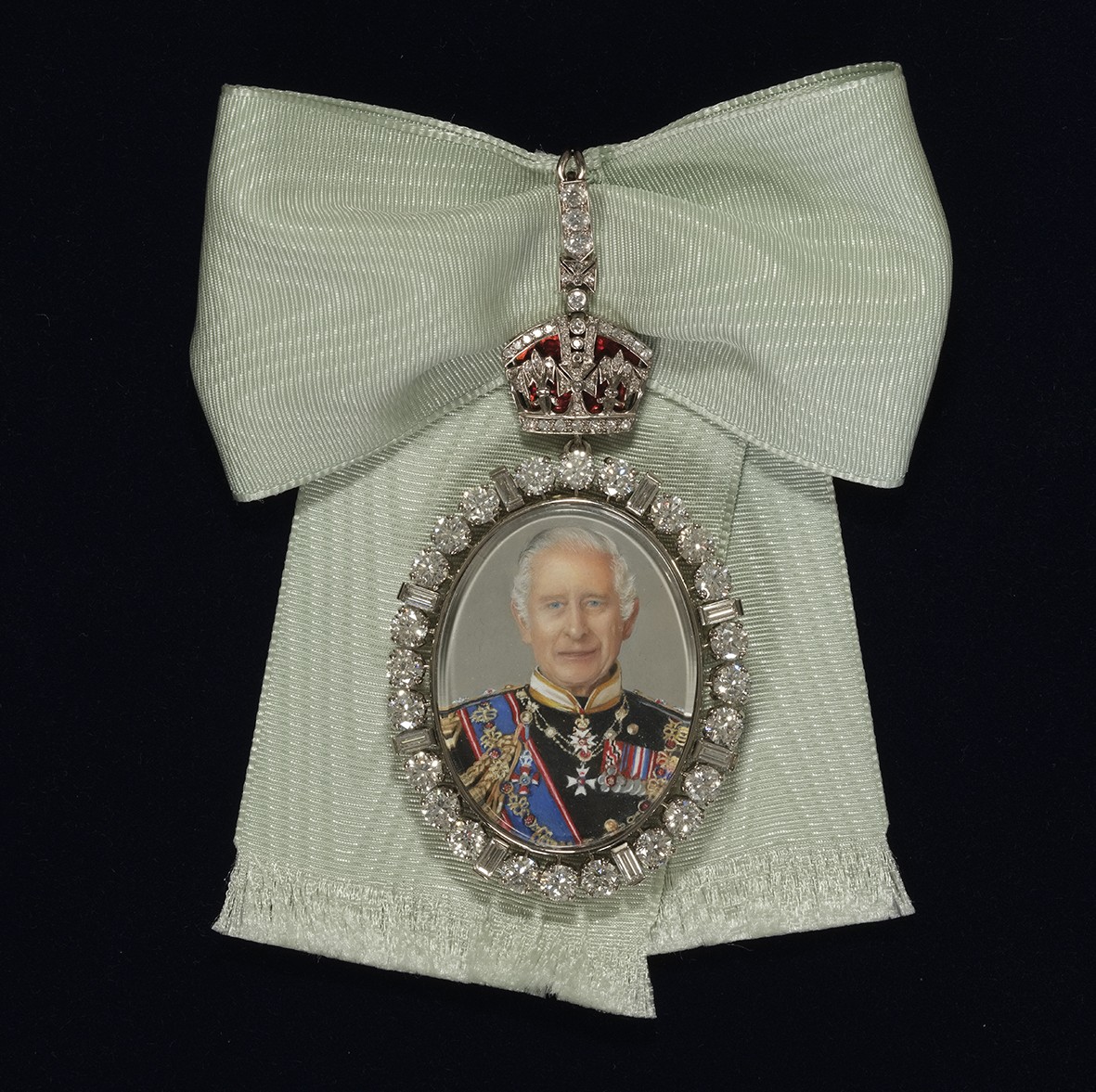
The King Charles III Family Order with a portrait miniature of the King by Elizabeth Meek.
In both these contexts, miniatures could also be concealed on the body, perhaps a talisman or token of loyalty to political cause - during the English Civil War for example or the Jacobite Rebellion.
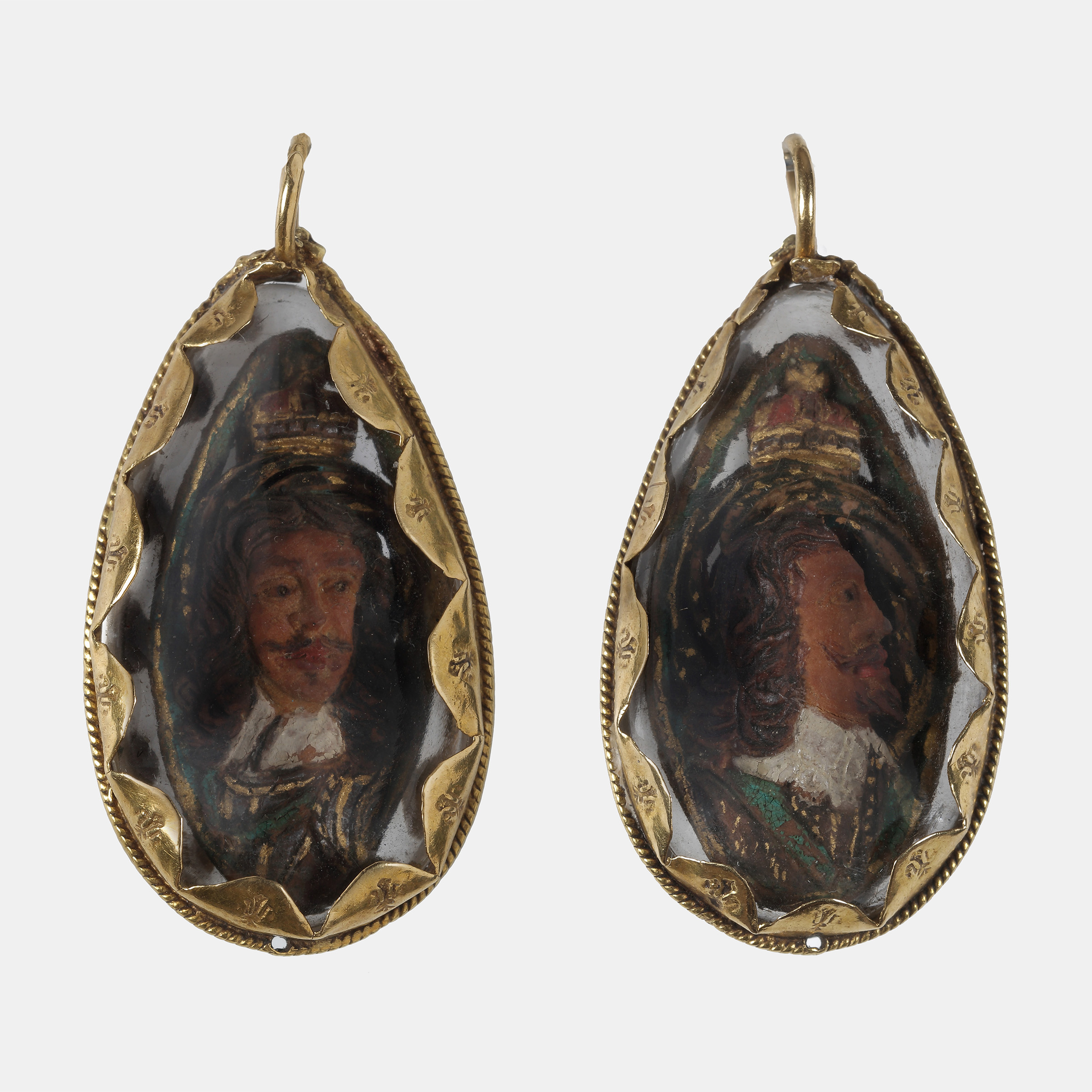
Attributed to THOMAS RAWLINS (1620?-1670) A fruit stone (probably a plum or peach stone) carved on both sides with portraits of King Charles I and King Charles II, with royal insignia - For sale with The Limner Company, more information here.
They may also be exchanged and concealed as part of a clandestine love affair. In the case of the latter, they could be secreted in the bodice of a women’s dresses in the 16th and early 17th centuries - only a tantalising suggestion visible by the neck cord from which they hung disappearing into the wearer’s decolletage. In the 18th and early 19th centuries, lovers might wear a miniature depicting just the eye of their beloved. Often in highly bejewelled settings, a ‘lover’s eye’ as they became known, could be worn openly with the identity of the individual remaining anonymous.
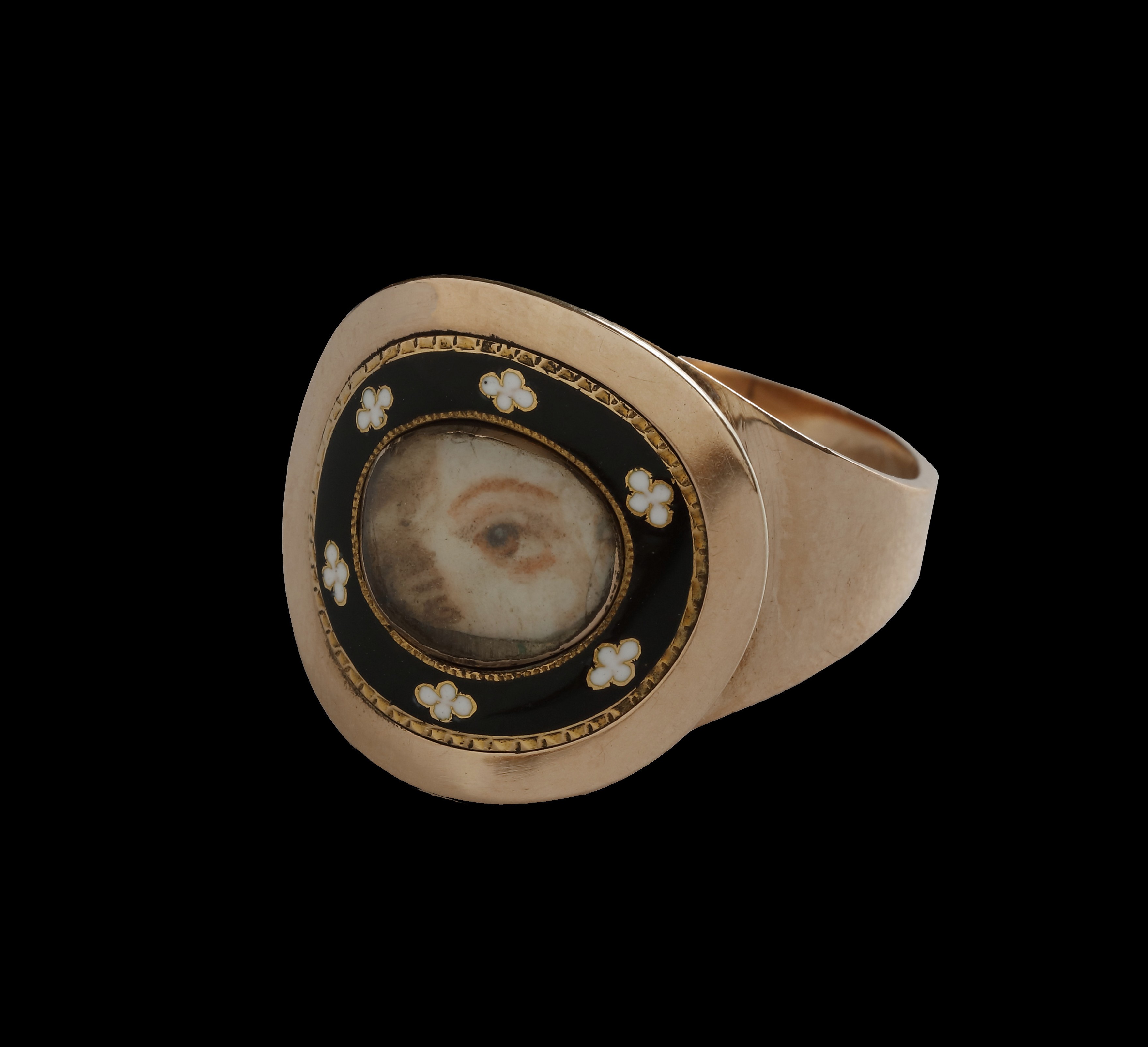
ENGLISH SCHOOL A ‘Lover's Eye’ miniautre of the hazel eye of Ellen Jane (d.1821), 1821 - Recently sold by The Limner Company, more information here.
The lover’s eye miniature must be a source of inspiration for Schiaparelli’s eye brooch ‘hero piece’[3]; a comparable 19th-century example can be found at the Victoria and Albert Museum [P.56-1977].
Highly-jewelled settings are often a giveaway for the intention of a miniature to be worn openly.
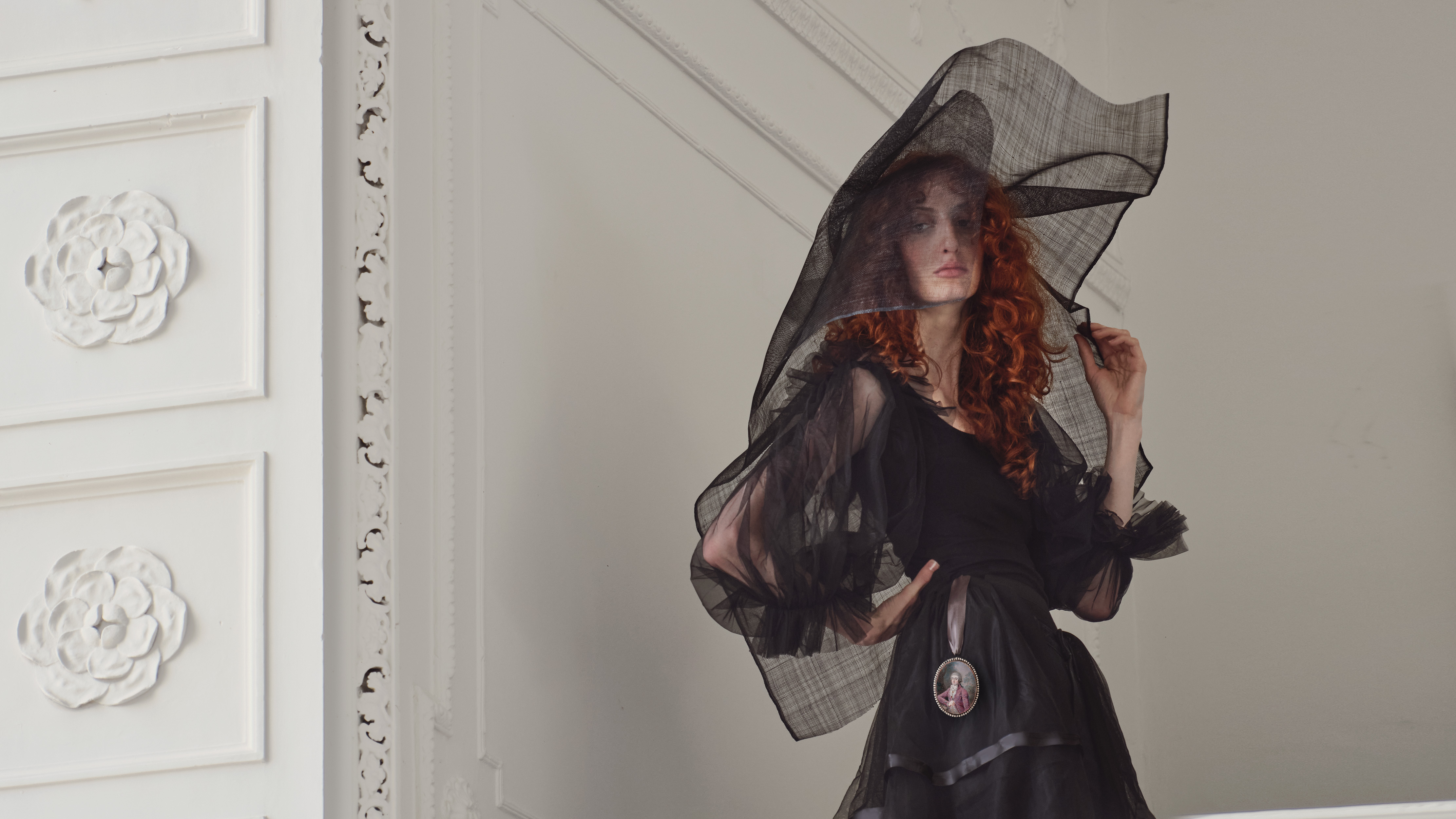
Model wears FRENCH SCHOOL Portrait miniature of a Gentleman, Mr ‘R’, circa 1785 - For sale with The Limner Company, more information here.
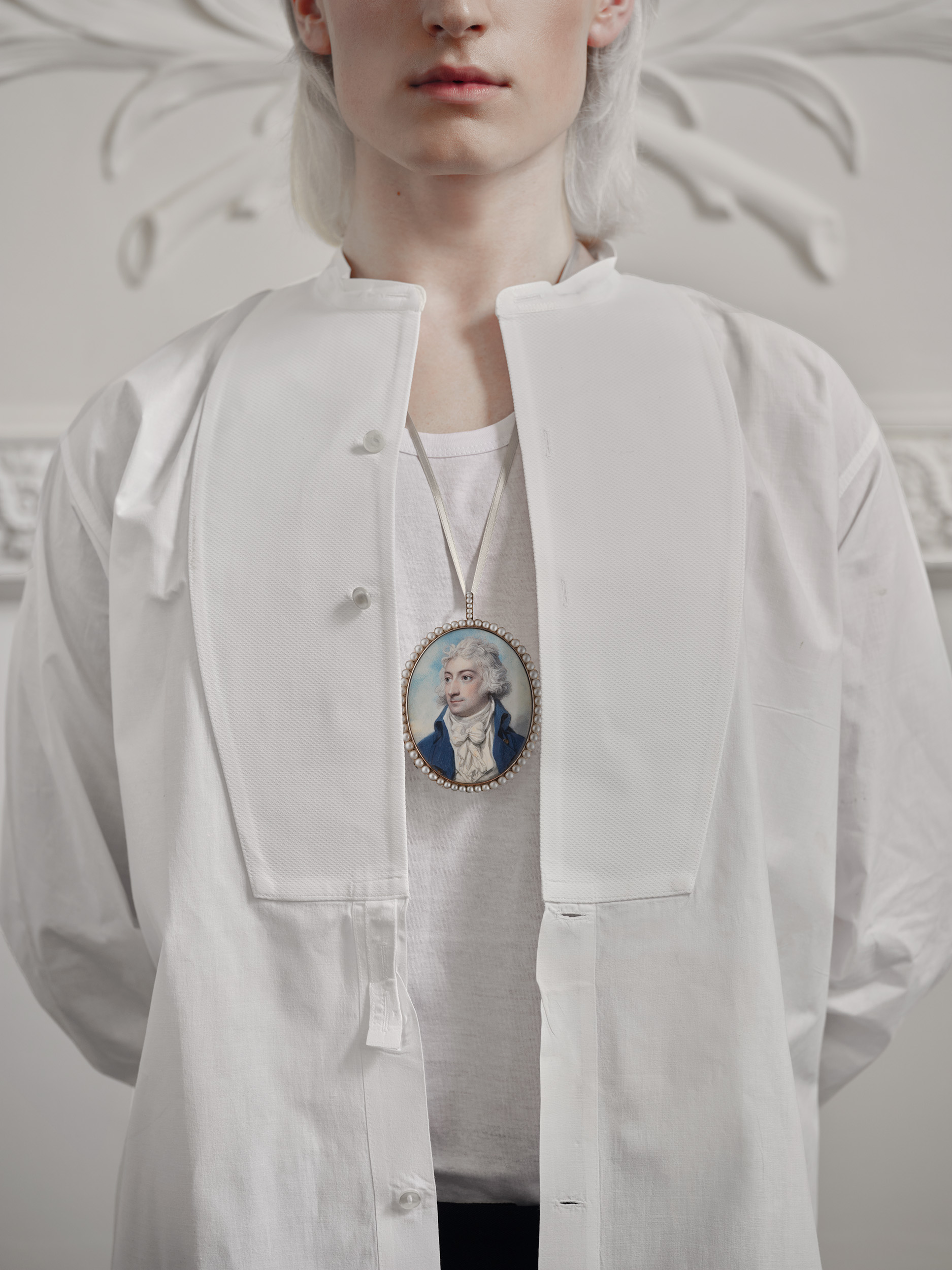 Model wears RICHARD COSWAY (1742-1821) Portrait miniature of a Gentleman, with the initials ‘CC’; circa 1790 - For sale The Limner Company, more information here.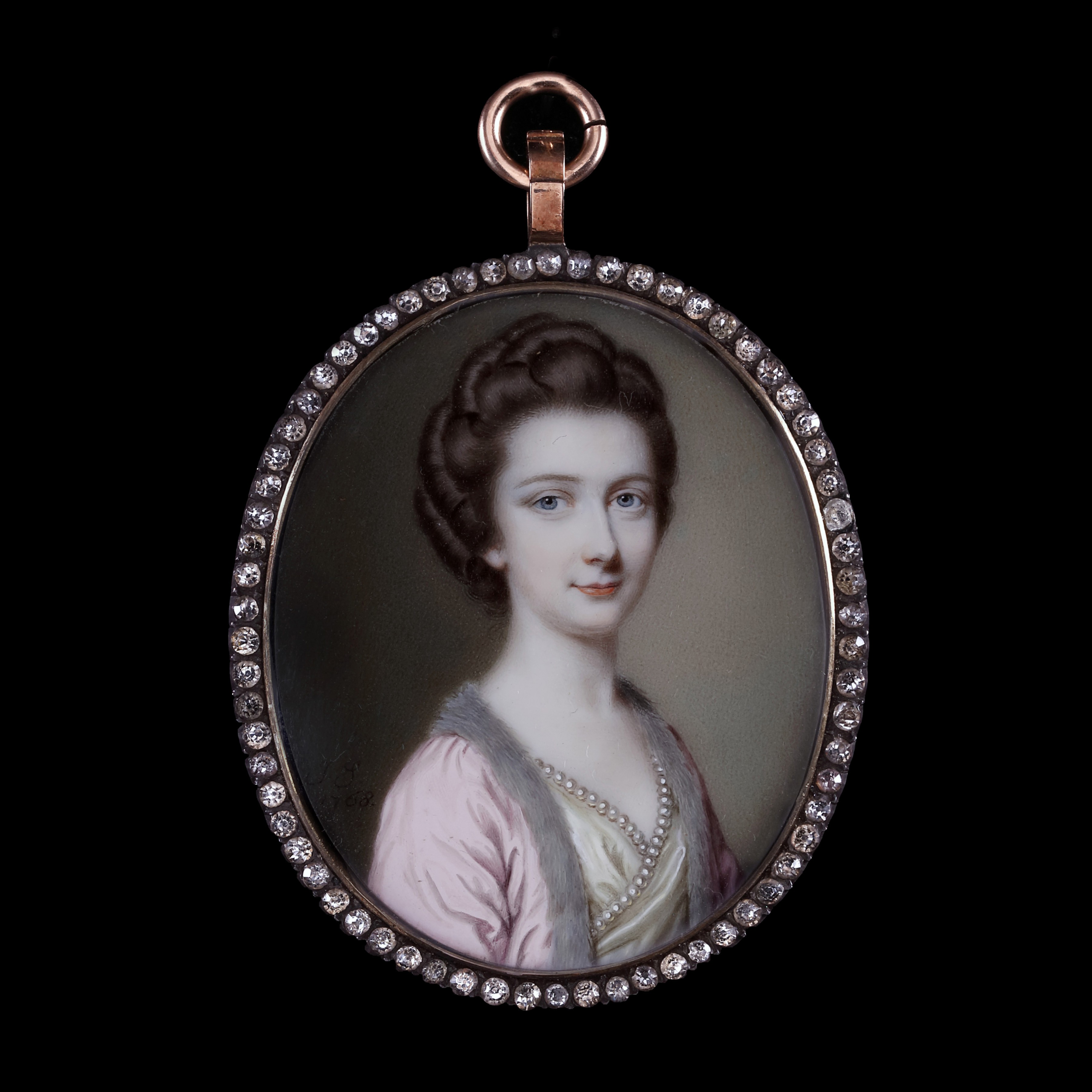
JOHN SMART (1741-1811) Portrait miniature of Elizabeth Anne (nee Cooke) Way (1746-1825); 1768 - For sale with The Limner Company, more information here.
Conclusion
The concept of the portrait miniature remains prevalent in our day to day lives, perhaps without us realising. It’s genesis from manuscript illumination > portrait miniature > early portrait daguerreotype > photograph in your wallet > smartphone homescreen. Yet the ‘original’ portrait miniature remains a striking adornment today.
Browse wearable miniatures available now here.
The concept of the portrait miniature remains prevalent in our day to day lives, perhaps without us realising. It’s genesis from manuscript illumination > portrait miniature > early portrait daguerreotype > photograph in your wallet > smartphone homescreen. Yet the ‘original’ portrait miniature remains a striking adornment today.
Browse wearable miniatures available now here.
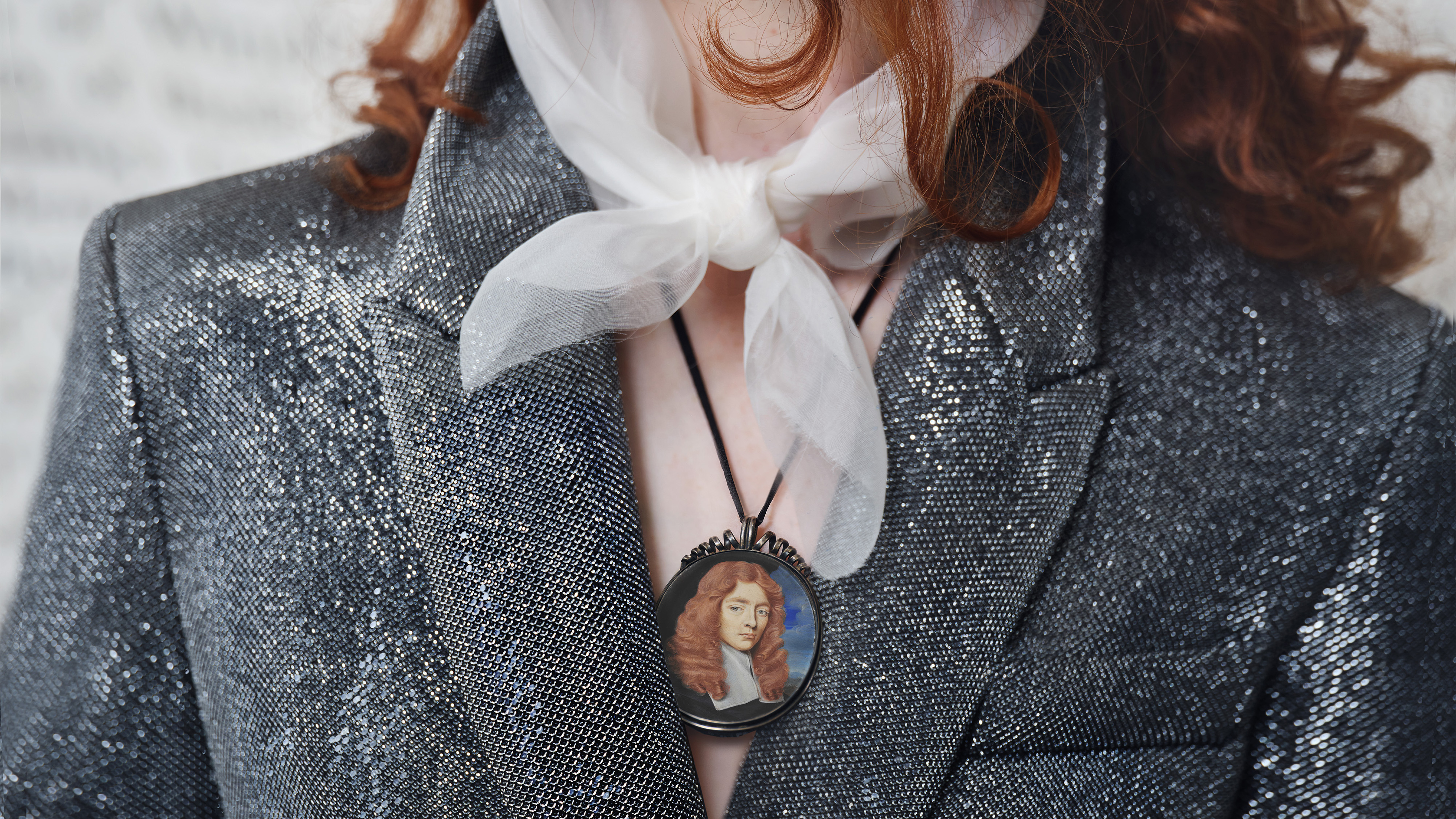
Model wears THOMAS FLATMAN (1635-1688) Portrait miniature of a Young Gentleman, 1668 - For sale with The Limner Company, more information here.
[1] https://www.dior.com/en_gb/fashion/accessibility
[2] https://www.naturaldiamonds.com/culture-and-style/cameo-jewelry-history/
[3] https://www.redonline.co.uk/fashion/buyers-guide/a70059010/brooch-trend/




