

NEWS
By Emma Blane |
11 Nov 2026
'Infinite Trouble': Portrait Enamels from the Seventeenth to Nineteenth centuries
“This plate gave me infinite trouble and labour, by cracking in the fire, then being mended, and at last lost. Never can be recovered.” – William Grimaldi, 1806 on an enamel he was producing of Sir Joshua Reynolds[1]
The Limner Company has been fortunate enough to handle a number of particularly exquisite portrait enamels this Autumn. These are highlighted below, along with a potted history of the use of enamel in miniature format.
Artists who chose to paint in enamel, applying layers of colour to a thin sheet of copper or gold, needed creativity, patience and an aptitude for chemistry. This challenging medium – which required successive firings in a kiln unregulated by today’s digital thermometers – likely yielded more failures than successes.
It is perhaps this combination of artistry and practical skill which makes this (virtually) lost art so valued today. This is exemplified by the recent attention given to collections such as The Rosalinde and Arthur Gibert Collection, now redisplayed (with an emphasis on technique) in the Victoria and Albert Museum, London.
Recent exhibitions such as Formed From Fire: Enamel Portrait Miniatures at the Nelson Atkins Museum of Art, Kansas (2022), drew crowds viewing artworks which would be virtually impossible to recreate today.
In our own research, we often discuss the difficulty of the medium and intricacy of its form and thought it was time that we bring focus to some fascinating enamels sold by and currently with The Limner Company.
A Quick note on Enamel Painting
Many sources reproduce and explain the process by which artists painted with enamel[2]. Enamel itself (a form of glass) is ground down and mixed with oils, which can then be painted onto a base, first a base layer, and then a series of layers of different colours. Each colour must be fired at a separate temperature, meaning the process of painting is long and laborious, and requires a detailed knowledge of how each colour reacts. Cracking is the usual issue faced by artists, and for this reason copper became a preferred metal base for portraits, as gold was too soft and could bend easily. Regulating temperatures would have been particularly difficult before electric furnaces, though even as technology developed into the nineteenth century, artists such as William Grimaldi (1751-1830) recorded facing the dreaded crack as demonstrated in the quote above.[3]
An early example of an Enamel Miniature
The first known signed and dated enamel portrait was painted by Henri Toutin (1614 - 1683) in 1636. That is a portrait of King Charles I (1600 - 1649), now in the collection of the Rijksmuseum, Amsterdam (SK-A-4370). Enamelling was used by the ancients, though here the portrait is being signed and dated as a work of art in its own right. Both the portrait and the frame are made from enamel, and the pattern of the frame surround is reflected in the King’s clothing. The enamel has been fired onto a base of gold, which reflects the origins of this form of painting- the work of the Fabriques in Geneva, or watchmaking and goldwork industries.
It should be noted that the art of the enamel miniature emerged separately from the art of the watercolour miniature; this was not an alternative for painting on vellum but instead emerged from the tradition of decorating watchcases and jewels. The Fabriques are the likely training ground for many of the first successful portrait enamellists, who decided they wanted to expand their subjects.[4] It is likely that this tradition resulted in the earliest miniatures being painted on gold.
Many of the earliest portrait enamels depict King Charles I and his family, and he appears to have been one of the earliest major patrons of this art form. A pendant recently sold by the Limner Company (figure 1) stands as an example of a slightly different portrait enamel to that painted by Toutin, painted by an anonymous hand.
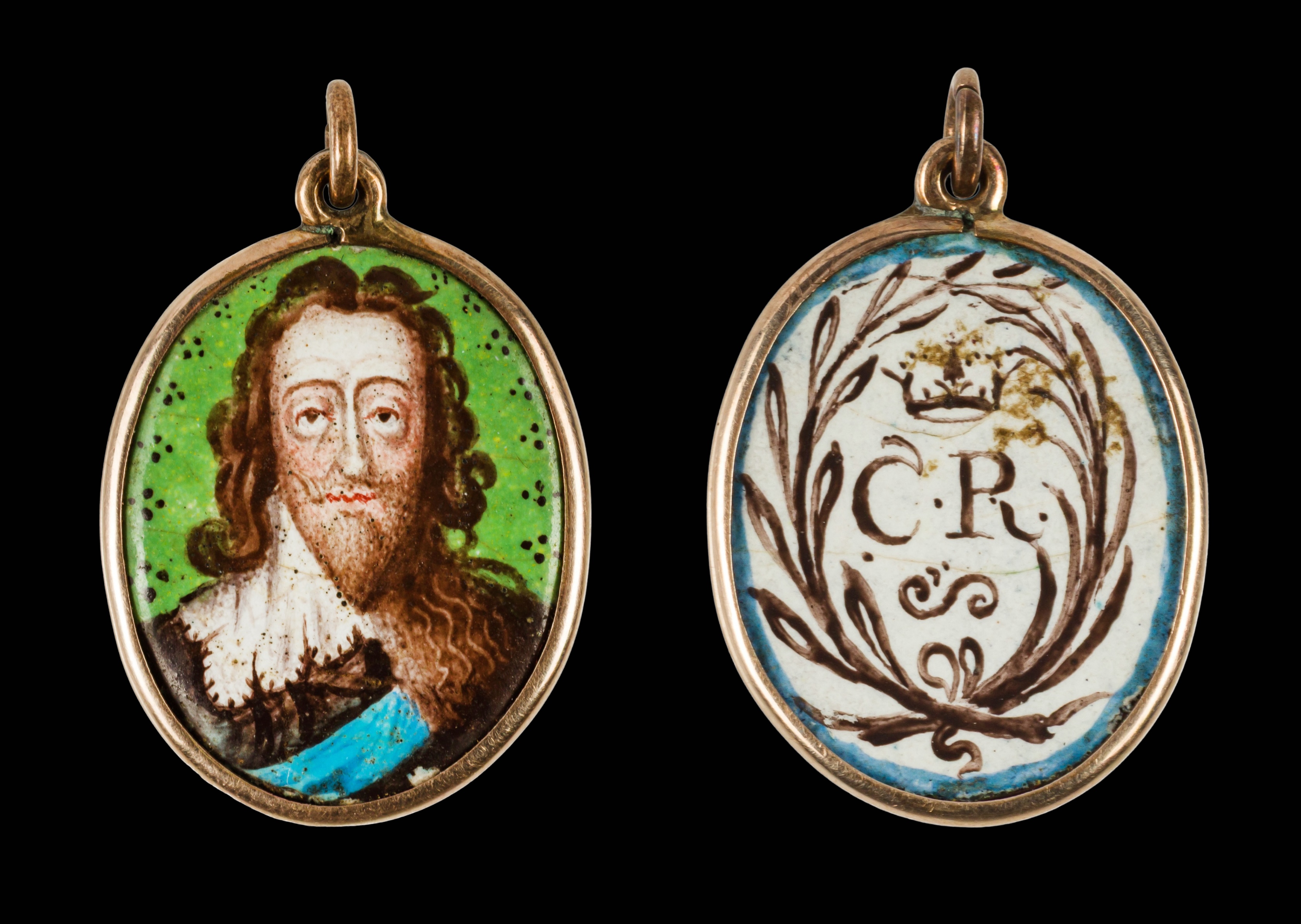
Fig. 1: BRITISH SCHOOL (18th century), portrait enamel of King Charles I (1600-1649), the double-sided enamelled copper plaque, depicting a portrait of King Charles I to one side, counter-enamel with royal cipher 'CR' surmounted with a crown and enclosed by martyr's palms, enamel on copper or gold, oval, 20 mm (0.8 inches) high, mounted in gold locket, later leather presentation box from D.S. Lavender Antiques. Previously with The Limner Company.
Charles I was keen on having his portrait distributed in a small format, and this played an important role in retaining his political influence whilst in exile. Portrait miniatures and jewels were easy to transport and hide and were therefore more fit for purpose than oil paintings. Toutin’s portrait would have been painted whilst the King was exiled in The Hague and could have been sent to a loyal follower anywhere. Easy transportation was also aided by the more robust nature of enamel, in comparison to vellum.
The work previously with The Limner Company would have been painted after the King’s execution in 1649, indicated by the palm leaves painted on the reverse. There are other very similar examples, set into pendants, as is the case here, but also rings, which would have been worn by Royalists following Charles’ martyrdom. Cromwellians were not fans of the form,[5] and miniatures from the Protectorate were instead painted on vellum, the British school at this point being led by artists such as Samuel Cooper (1609 - 1672) and John Hoskins the Elder (c.1590 – 1664).
Petitot and the Court of Louis XIV (1643 – 1715)
Petitot and the Court of Louis XIV (1643 – 1715)
The apparent rejection of enamel by Oliver Cromwell (1599-1658) and his followers meant that another of the most successful Carolean enamel painters, Jean Petitot (1607 – 1691), turned back to the continent to continue his practice. It was there that he produced the portrait of King Louis XIV recently sold by The Limner Company (figure 2). We meet Petitot here at the midpoint of his career: he is believed to have encountered Toutin and his family in Paris in 1633, following the completion of his goldsmith training in Geneva in 1626.[6] He worked for Charles I in England, and his first signed and dated miniatures depict King Charles I. Following his execution, it is suggested that the widowed Henrietta Maria (1609 – 1669) would have introduced him to the French King Louis XIV[7], and from there he became the enamel painter to a second king.
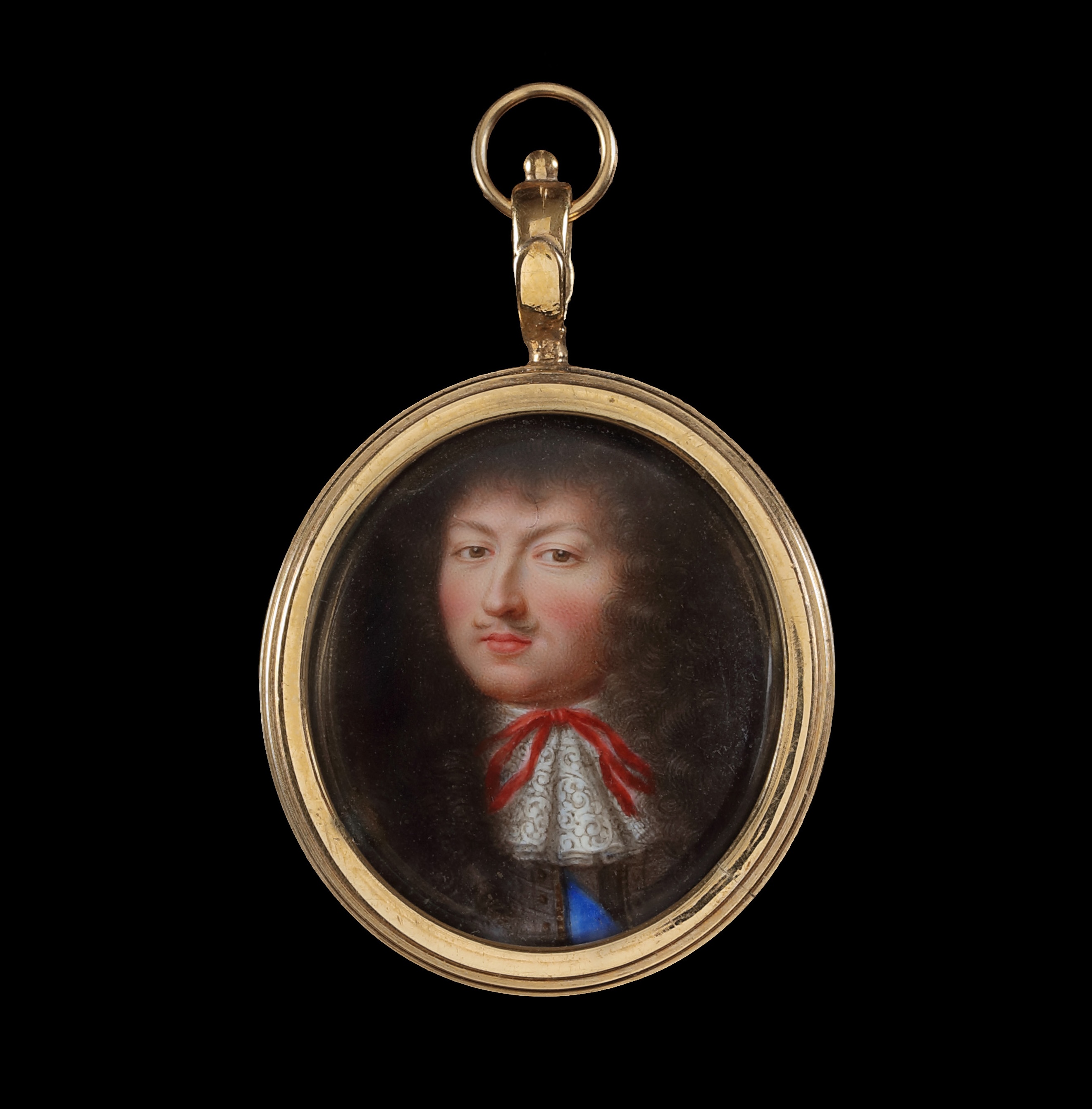
Fig. 2: JEAN PETITOT (1607-1691), portrait enamel of King Louis XIV (1643-1715), wearing gilt studded armour, the blue sash of l'ordre du Saint-Esprit, a lace jabot with a red ribbon bow; circa 1670, enamel, oval, 25 mm (1 in) high. Previously with The Limner Company.
There is no shortage of enamels by Petitot of the King, though this does not take away from their quality. In fact, Louis was so keen on having enamel portraits reproduced that Petitot had to hire a studio of artists. Many of these portraits were set into boîtes à portrait[8], or boxes and jewels that could be distributed as diplomatic gifts. These boxes and frames were often as elaborate as the enamel portraits themselves. Petitot was given an apartment in the Louvre, and a pension by the King, who let him take portraits ad vivum, but most compositions were taken from larger oil paintings, a tradition which would remain popular throughout the history of enamel painting.
A comparison of this version by Petitot with the 1636 portrait by Toutin demonstrates the development of techniques within enamel painting. Petitot is seen as the founder of the ‘Genevan School’ of Enamel painting, and it is not surprising. Toutin’s portrait of Charles is of a high quality; however, Petitot was able to produce much finer stipples (or the small dots of paint that can be seen when one examines these miniatures closely). The result is a much more fluid surface, closer to that of an oil painting.
Petitot’s career came to a halt in 1686, when he was imprisoned for his Calvinist beliefs. He denounced his faith and was allowed to move back to Geneva, where he died only a few years later. His artistic legacy was not forgotten, however. Petitot had taught many students who would develop their own established careers, including Jacques Bordier (1616 – 1684) as well as his own son Jean Petitot the Younger (1653-1702). After learning the trade from his father, he settled in London early in his career, remaining there until 1682, painting portraits of Charles II. He returned to Paris again until 1695, when he came back to London, remaining there until his death. An example of his later work was recently sold by The Limner Company (figure 3).
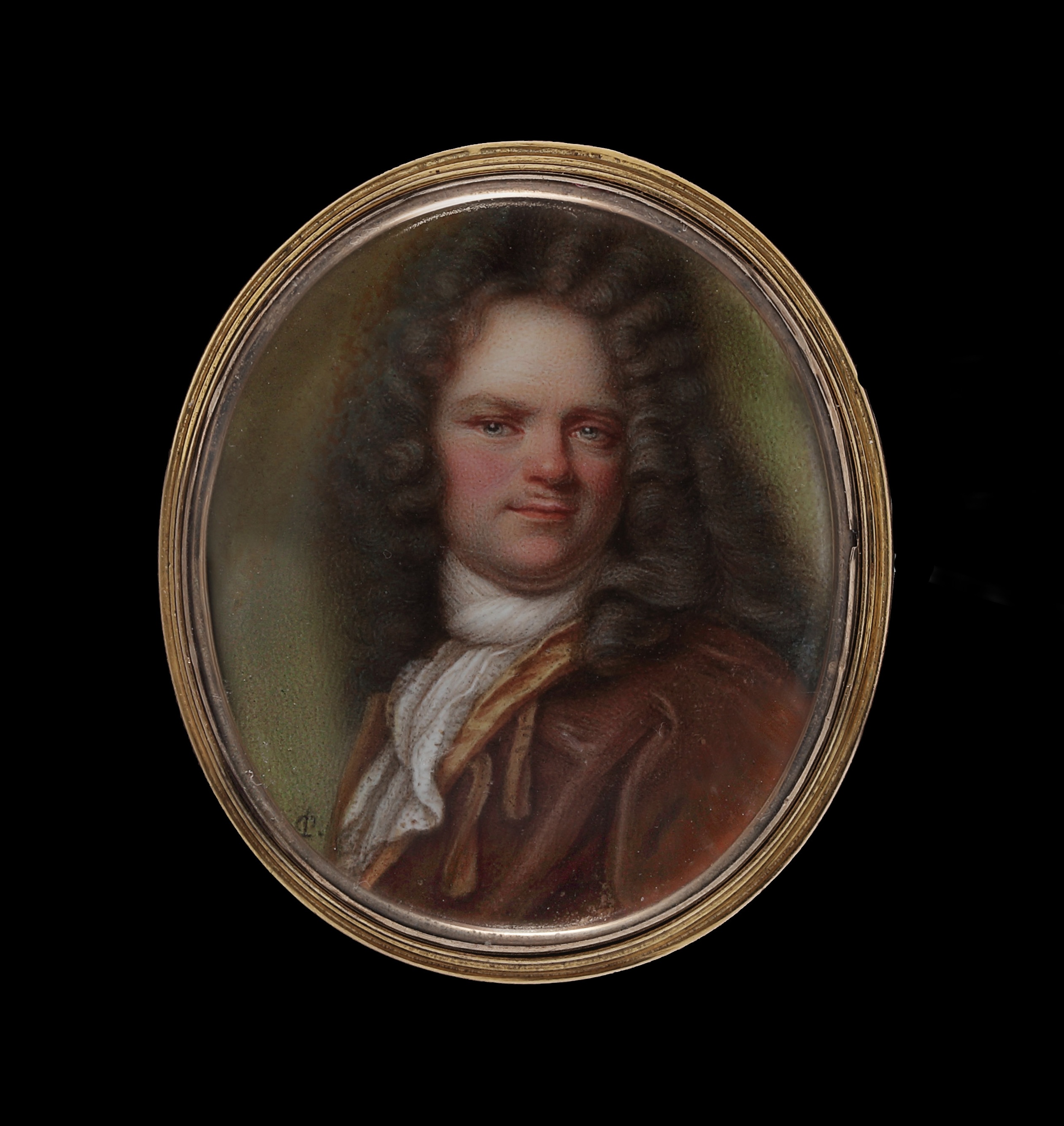
Fig. 3: JEAN PETITOT the Younger (1653-1702), Portrait enamel of a Gentleman, wearing yellow silk lined brown coat and white lace jabot, long powdered wig; 1699, enamel on gold, oval, 35 mm (1 ³/₈ in) high, signed on obverse ‘P’ and on counter enamel ‘Petitot/ 1699’, reeded gold frame. Previously with The Limner Company.
Enamelling outside of France in the late seventeenth century
The portrait enamellists of France were not the only artists working in the form in this period. Scandinavia, Germany, and Russia all saw the royal patronage of enamel painters, which led to the emergence of artists like Charles Boit (1662 – 1727) and Paul Prieur (c.1620 – 1687). Many enamellists were peripatetic, and as has been discussed, moved from Geneva, which remained a centre for watchmaking, and a place in which young men were often trained in working in this form.
Though the Protectorate had seen a decline in Enamel painting, the reign of Charles II and the beginning of the eighteenth century saw a re-emergence of the art form in Britain. Boit arrived in England in 1687 from his native Sweden, and in the following decade he became court enameller. He produced a variety of portraits of Queen Anne (1665 – 1714), including one previously sold by The Limner Company (figure 4).
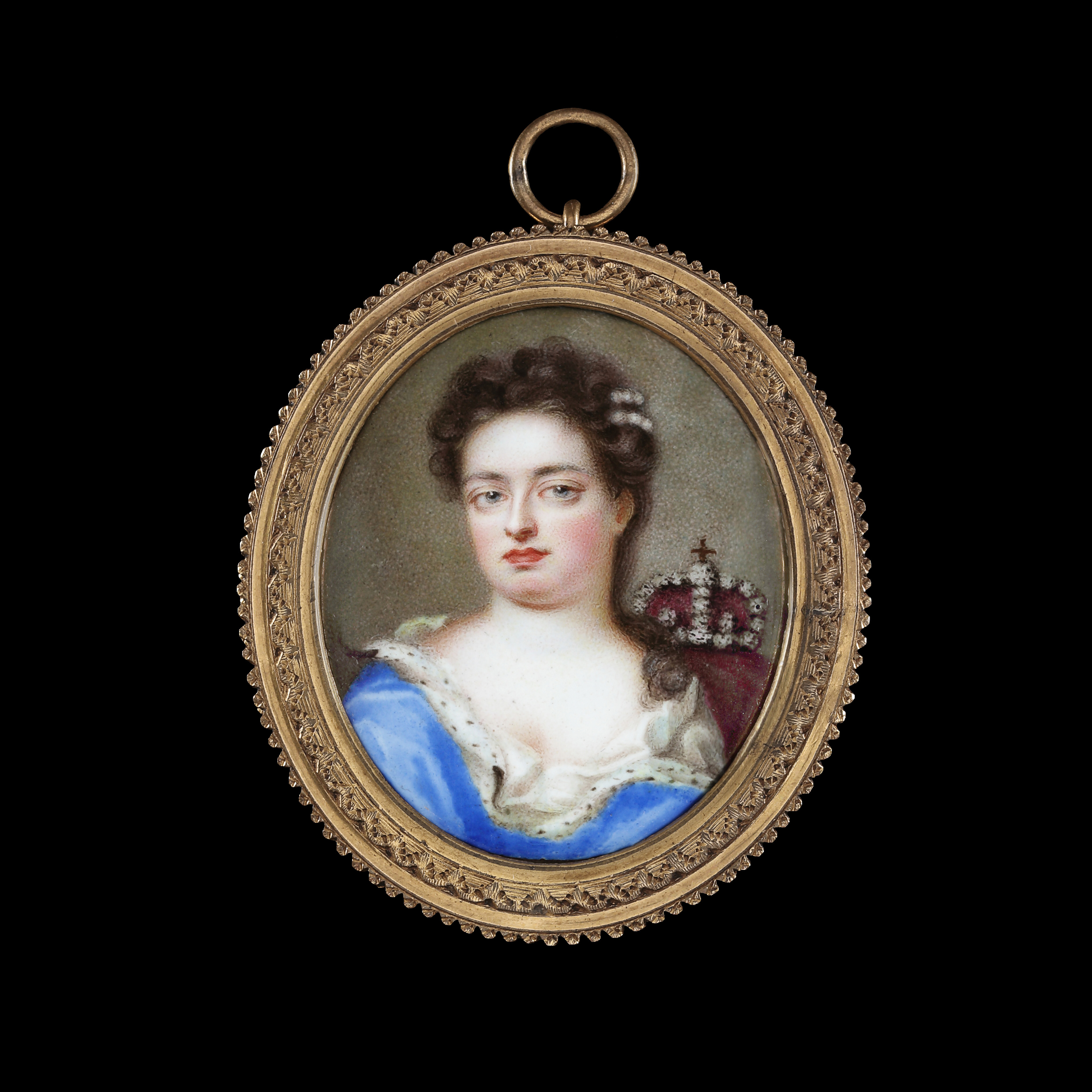
Fig. 4: CHARLES BOIT (1662-1727), portrait enamel of Queen Anne (1665-1714), wearing a blue ermine-trimmed coat with white chemise, her hair worn curled and dressed with pearls, with a crown on a pedestal against a brown background; circa 1706, enamel on metal, oval, 3.4 cm (1 ⅓ in) high, gilt-metal frame with sculpted detail. Previously with The Limner Company.
One of the distinctive features of Boit’s career was his attempt to increase the size of enamel miniatures. Historically, these had remained rather small, largely due to the increased risk of cracking the larger the base was. Furthermore, the number of additional colours and firings required to produce not only the sitter's portrait but also their background increased the overall risk. Despite this, Boit succeeded in completing large plaques, such as the 1706 portrait of Queen Anne and Prince George in the Royal Collection (RCIN 421497). However, he was not completely alone in his task. He had invited the Dresden-born Christian Friederich Zincke (1683/4 – 1767) to work with him in his studio[9], and he would go on to become one of the most successful enamellists working in Britain at the beginning of the eighteenth century.
Coffin (2016) emphasises that Zincke remained difficult to identify as an artist throughout his career; in the beginning, he is indistinguishable from Boit, though later his work was copied by so many artists, such as the follower who painted a gentleman in blue, previously with The Limner Company (figure 5), meaning that many works by him are misattributed.
Coffin (2016) emphasises that Zincke remained difficult to identify as an artist throughout his career; in the beginning, he is indistinguishable from Boit, though later his work was copied by so many artists, such as the follower who painted a gentleman in blue, previously with The Limner Company (figure 5), meaning that many works by him are misattributed.
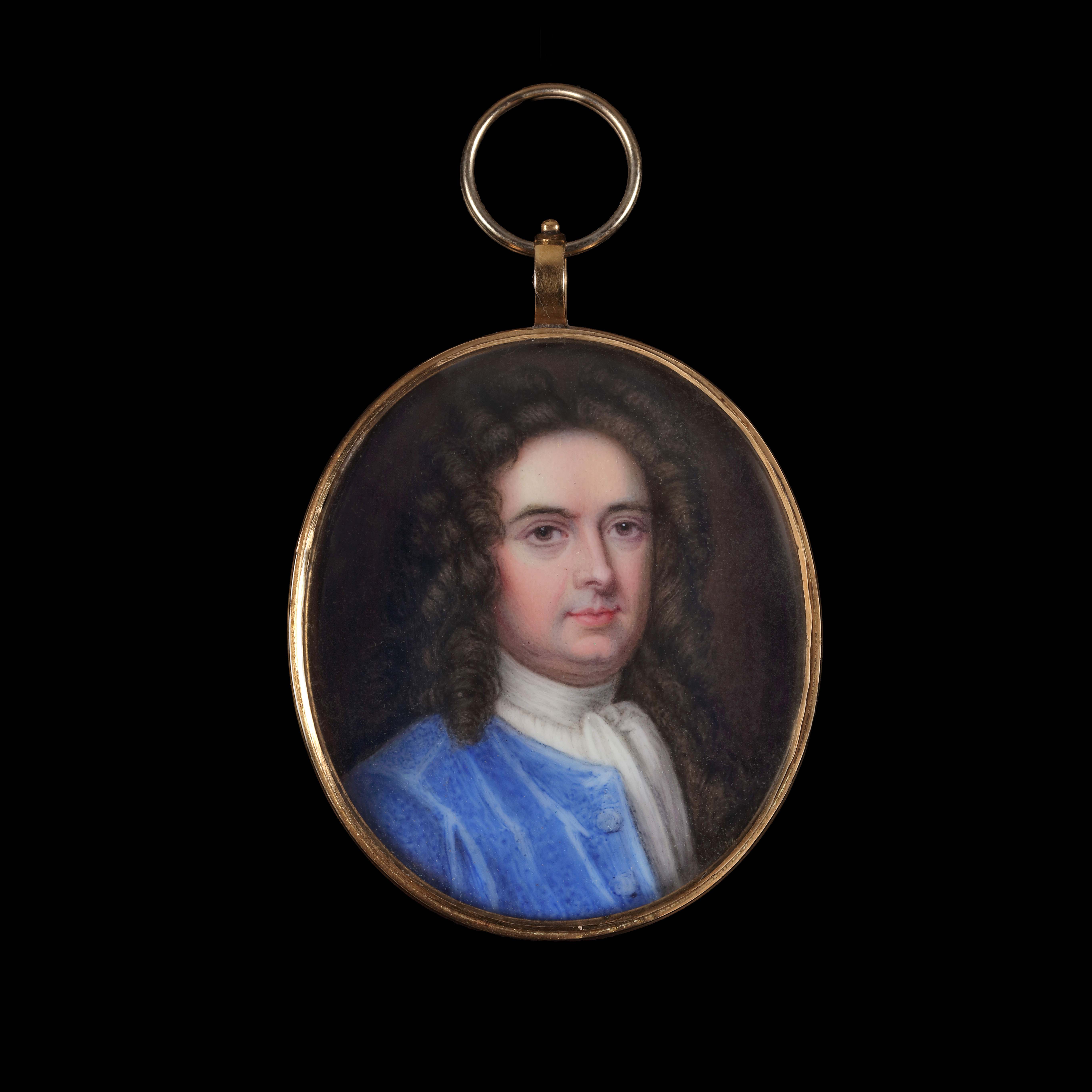
Fig. 5: After CHRISTIAN FRIEDRICH ZINCKE (1683-1767), portrait enamel of a Gentleman in blue coat with white jabot, enamel on copper, oval, 41 mm (1 ⁵/₈ in) high, signed and dated 'CF Zincke fecit/1716' on counter-enamel, gilt-metal frame with glazed reverse. Previously with The Limner Company.
The Legacy of Zincke
As with Petitot, Zincke had several students who continued the tradition of enamel portraits in England, and elsewhere. In France, Jean Andre Rouquet (1701 – 1758) painted in his style. In England, William Prewett (fl. 1735 – 1750), Jeremiah Meyer (1735 – 1789), and Gervase Spencer (c. 1715 – 1763) all continued to paint in this medium as the century progressed. William Prewett is perhaps the ‘smallest’ name amongst these students, but an enamel currently for sale with The Limner Company (figure 6) demonstrates his aptitude in the form. Little else is known about his life, though he did sign his works.
As with Petitot, Zincke had several students who continued the tradition of enamel portraits in England, and elsewhere. In France, Jean Andre Rouquet (1701 – 1758) painted in his style. In England, William Prewett (fl. 1735 – 1750), Jeremiah Meyer (1735 – 1789), and Gervase Spencer (c. 1715 – 1763) all continued to paint in this medium as the century progressed. William Prewett is perhaps the ‘smallest’ name amongst these students, but an enamel currently for sale with The Limner Company (figure 6) demonstrates his aptitude in the form. Little else is known about his life, though he did sign his works.
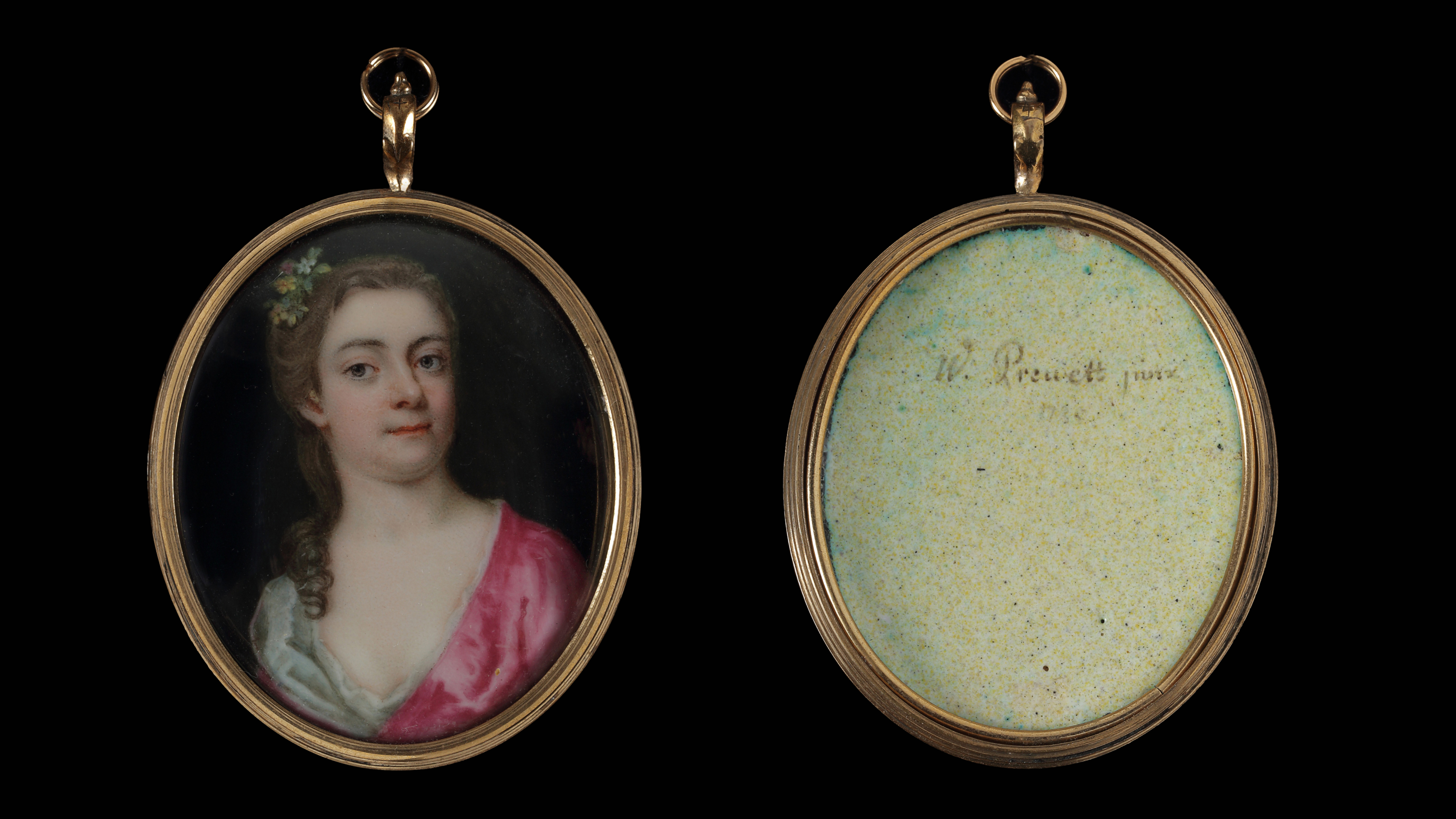
Fig. 6: WILLIAM PREWETT (fl.1735-1750), portrait enamel of a Lady, wearing pink and white dress with white underslip, her brown hair falling over her right shoulder, and decorated with a posy; 1735, enamel on metal, oval, 45 mm (1 ¾ in) high, signed and dated on the counter-enamel ‘W. Prewett pinx/ 1735’, gold plated frame with reeded edge
Gervase Spencer’s name is more widely recognised, not as a reflection of a difference in skill but rather a much higher output of portrait enamels. Another portrait currently for sale with The Limner Company (figure 7) serves as an example of a particular ‘trick’ being used by enamel painters in this period- the mix of ad vivum sittings with props and templates which could be quickly replicated.
Another portrait by Spencer in the Victoria and Albert Museum, London, also shows an unknown lady painted in Turkish Dress. This ‘costume’ was popular in the period, given the increase in conflict between the British and the Ottomans. A closer look at both portraits reveals that the women may be wearing the same waistcoat, of red and gold. It is probably that Spencer either had this piece of clothing on hand in the studio or had a reference picture[10] from which he could paint this layer onto his sitter’s portraits when they were not sitting in the studio, otherwise an in-person sitting would have taken a very long time. This was one way in which artists were navigating not simply painting enamels from a single, designated, composition, as Petitot and others had more commonly done. The repetition of props and clothing is common within miniature painting from the period, even in watercolour, and can sometimes be used to identify studios in which multiple artists were working, when the same items appear across portraits by various hands.
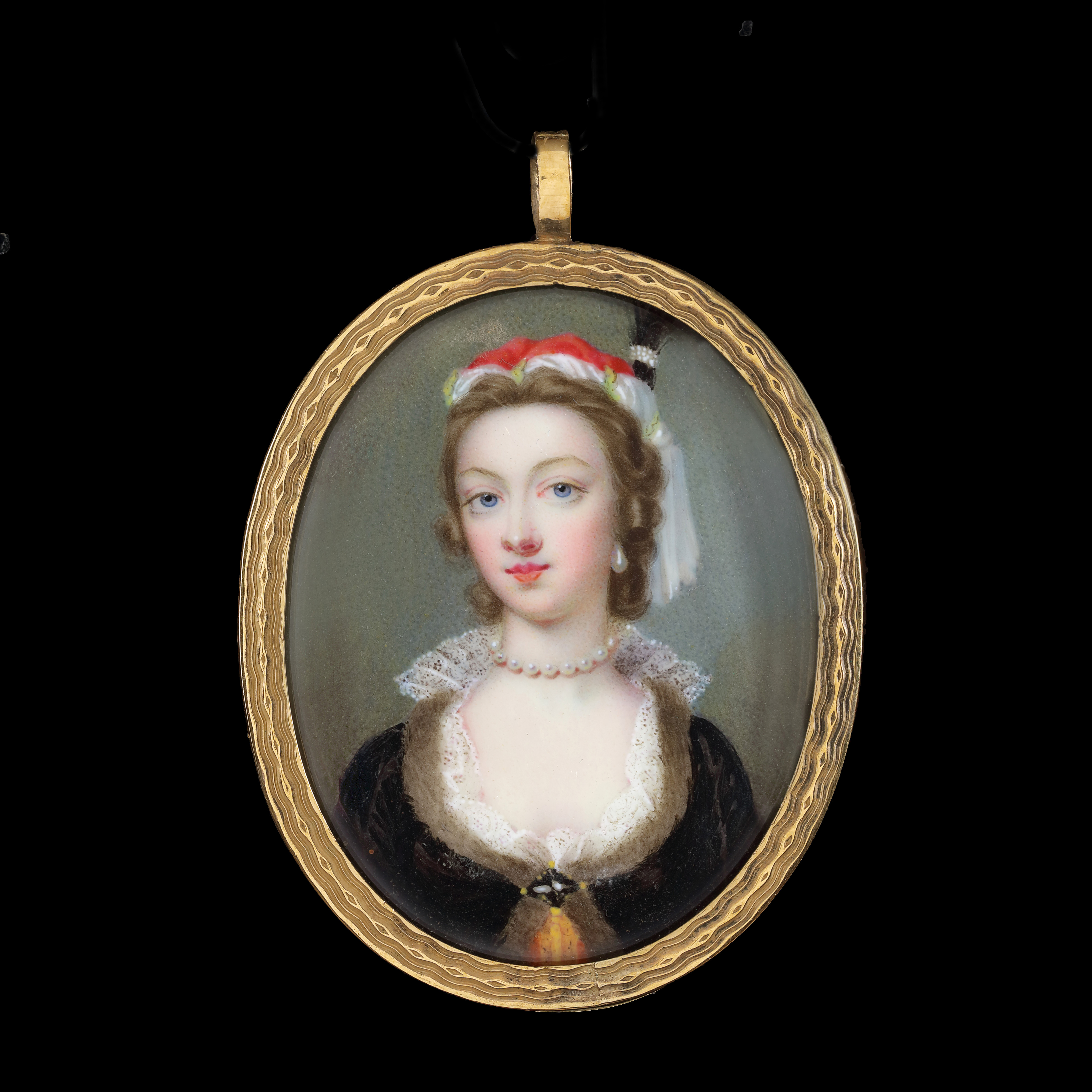
Fig. 7: GERVASE SPENCER (c.1715-1763), portrait enamel of a Lady, wearing ‘Turkish-style’ dress, 1748, enamel on copper, oval, 44mm (1.7in) high, signed and dated on the counter-enamel ‘G. Spencer. pinx./1748’, gilt metal mount with stamped detail. AVAILABLE with The Limner Company, £3,250
A final example for sale with The Limner Company from this period demonstrates the continued function of enamel portraits as ‘decorative’ objects. Portraits by the likes of Zincke and Spencer were still set into boxes and jewels, and many of these were produced or fitted by artists working nearby to artists. A portrait of Sir Richard Neave (1731 – 1814) by Jeremiah Meyer (figure 8), set into a highly decorative frame, shows how this tradition was carried on by owners.
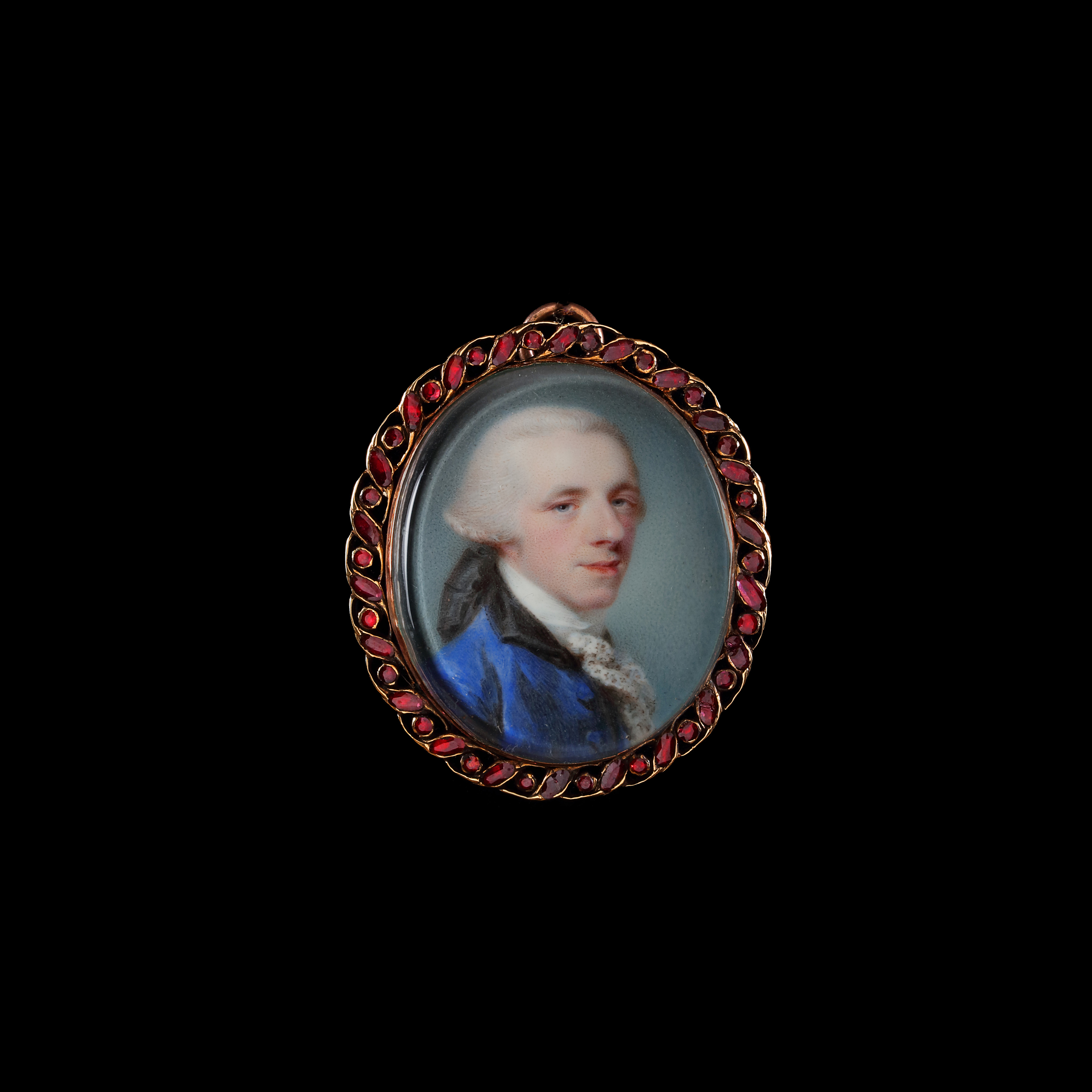
Fig. 8: JEREMIAH MEYER R. A. (1735-1789), portrait enamel of Sir Richard Neave, 1st Baronet (1731-1814) wearing blue coat with black collar, white lace cravat and powdered wig, worn en queue and tied with black solitaire, circa 1765, enamel on copper, oval, 32 mm (1 ¹/₄) high, (likely original) gold pierced locket frame set with garnets. AVAILABLE with The Limner Company, £3,250.
Jeremiah Meyer had moved to England from Germany and became Enamel Painter to Queen Charlotte (1744 – 1818) in 1764. The portrait for sale with The Limner Company was painted only a year after this appointment. Its frame, which is likely to be original, is set with garnets, and must have been designed to allow the miniature to be worn, and to be fashionable, as well as a record of the sitter’s appearance. Though these miniatures had become more widespread and commonly available (they no longer only depicted kings and queens), this did not mean that they lost their connection with the boîtes à portrait or gold working from which they originally emerged.
Portrait miniatures leading to the nineteenth century
Between the end of the eighteenth and beginning of the nineteenth century, a tradition of painting copies of oil portraits in enamel, rather than painting portraits from life, returned. This was accompanied by a revived attempt to increase the size of the bases of these enamels, as Boit had succeeded in earlier in the century.
Examples of artists working in this manner include Henry Bone (1755 – 1834), who was patronised by the Royal Family and established a dynasty of enamel painters, including Henry Pierce Bone (1799 – 1855). He painted portraits of monarchs from larger oils, such as the portrait of King George IV, taken from a portrait by Thomas Phillips. Another copy by Bone of a portrait of George III (1738 – 1820), was taken from a full-scale oil by Sir William Beechey (1753 – 1839) (figure 9) is currently for sale with The Limner Company, and may have been painted by one of his many studio assistants.
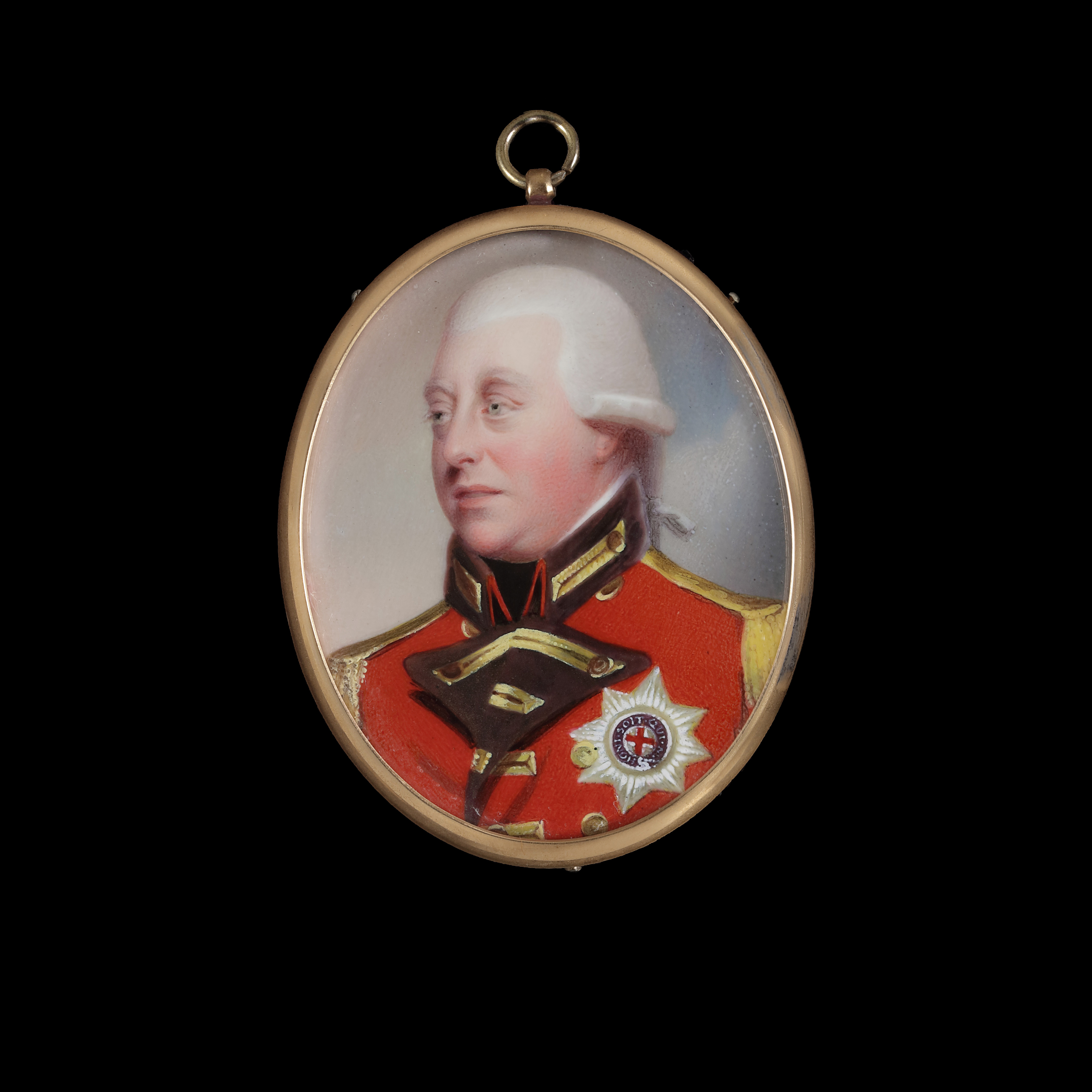
Fig. 9: ATTRIBUTED TO HENRY BONE, R.A. (BRITISH, 1755-1834), AFTER SIR WILLIAM BEECHEY (BRITISH, 1753-1839), portrait enamel of George III (1738 - 1820) wearing a red coat with black facings, gold buttons and epaulettes, the breast star of the order of the Garter on his left, white chemise, black stock, his powdered wig worn en queue and tied with a white ribbon bow, enamel on copper, gilt-metal frame, oval, 70mm (2.75 in.) high. AVAILABLE with The Limner Company, £2,500.
William Essex (1784 – 1869) was also patronised by the Royal Family, and figure 9 shows an example of his work, copying a portrait by Sir Thomas Lawrence (1769 – 1830). His career, which led him to become enamel painter to Queen Victoria in 1837 and to Prince Albert in 1841, brings the history of Enamel painting well into the nineteenth century.
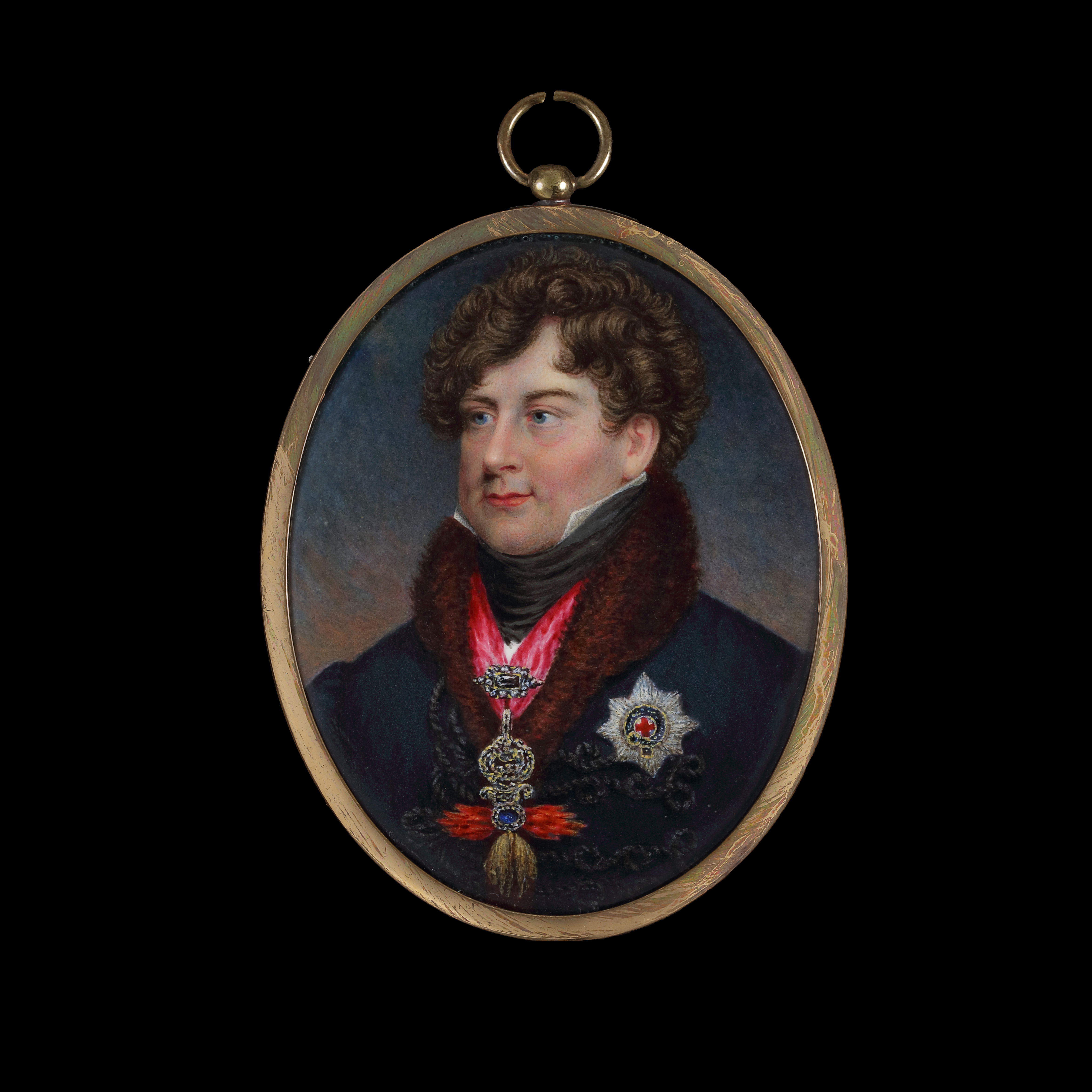
Fig. 10:
WILLIAM ESSEX (1784-1869) after SIR THOMAS LAWRENCE (1769-1830), portrait enamel of George IV (1762 - 1830) when Prince Regent (1811 - 1820) wearing a dark blue coat with fur collar, the Breast Garter star, the Order of the Golden Fleece, and a large sapphire and diamond brooch on a crimson sash suspended from his neck, white chemise and black stock, his brown hair worn short; circa 1820, enamel on metal, oval, 79 mm (3 ⅛ in) high, gilt metal frame. AVAILABLE with The Limner Company, £2,750.
Bone and others also copied historic portraits in enamel, which received high praise from contemporaries. John Plott (1733 – 1803), working at the end of the eighteenth century, demonstrates a similar approach in another portrait of Charles I, recently sold by The Limner Company (figure 11).
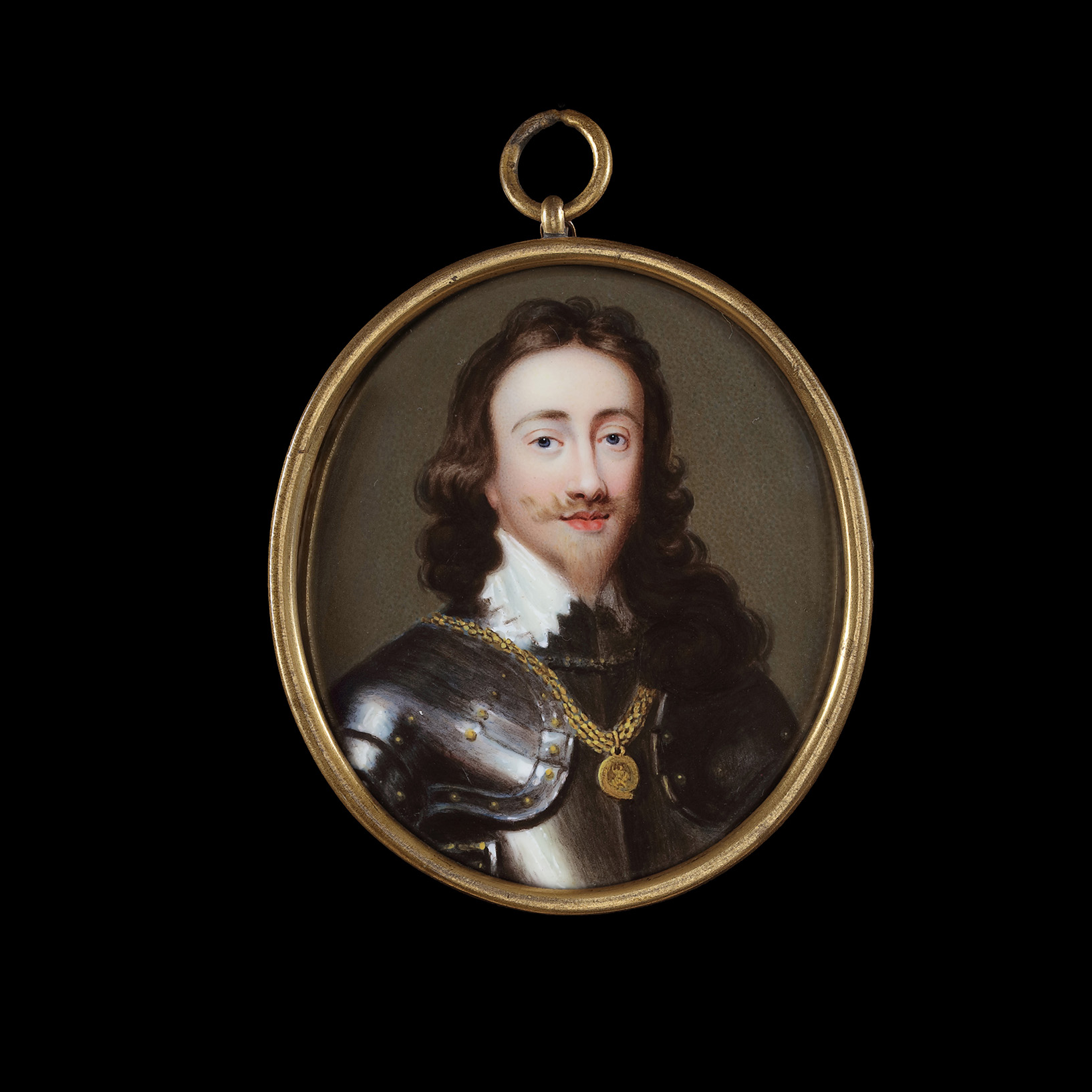
Fig. 11: JOHN PLOTT (1722-1803), after ANTHONY van DYCK
(1599-1641), portrait enamel of Charles I (1600-1649), King of England, Scotland and Ireland (1625-1649), wearing breast plate and studded pauldrons, gold collar with badge of the Order of the Garter, white chemise with van Dyke collar, his loosely curling hair falling to his shoulders, enamel on copper, gold mount, oval, 65mm (2.5ins) high. Previously with The Limner Company.
Copying, which is often seen as a ‘lesser’ form of art, became something that enamellists were proud of; they were demonstrating their ability to reproduce the qualities of oil in a much smaller, and arguably harder, format. One such artist who produced many copies of contemporary artists, especially Sir Joshua Reynolds (1723 – 1792), was William Grimaldi. He worked on both ivory and in enamel, and produced copies in both mediums [11].
Artists like Grimaldi were still producing from life, however, exemplified in his portrait of the Duke of Wellington (figure 12). He painted him from life on three occasions, this work being the result of the final sitting in 1818. These sittings did not always allow Grimaldi to produce a final product, and thanks to the artist’s papers, we know that this portrait was not deemed good enough to present to Wellington, given the firing marks. This was despite five weeks of work and eighteen firings in the kiln [12]. Even by this point, then, artists were still struggling with the practicalities of the medium, only emphasising its difficulty.
Artists like Grimaldi were still producing from life, however, exemplified in his portrait of the Duke of Wellington (figure 12). He painted him from life on three occasions, this work being the result of the final sitting in 1818. These sittings did not always allow Grimaldi to produce a final product, and thanks to the artist’s papers, we know that this portrait was not deemed good enough to present to Wellington, given the firing marks. This was despite five weeks of work and eighteen firings in the kiln [12]. Even by this point, then, artists were still struggling with the practicalities of the medium, only emphasising its difficulty.
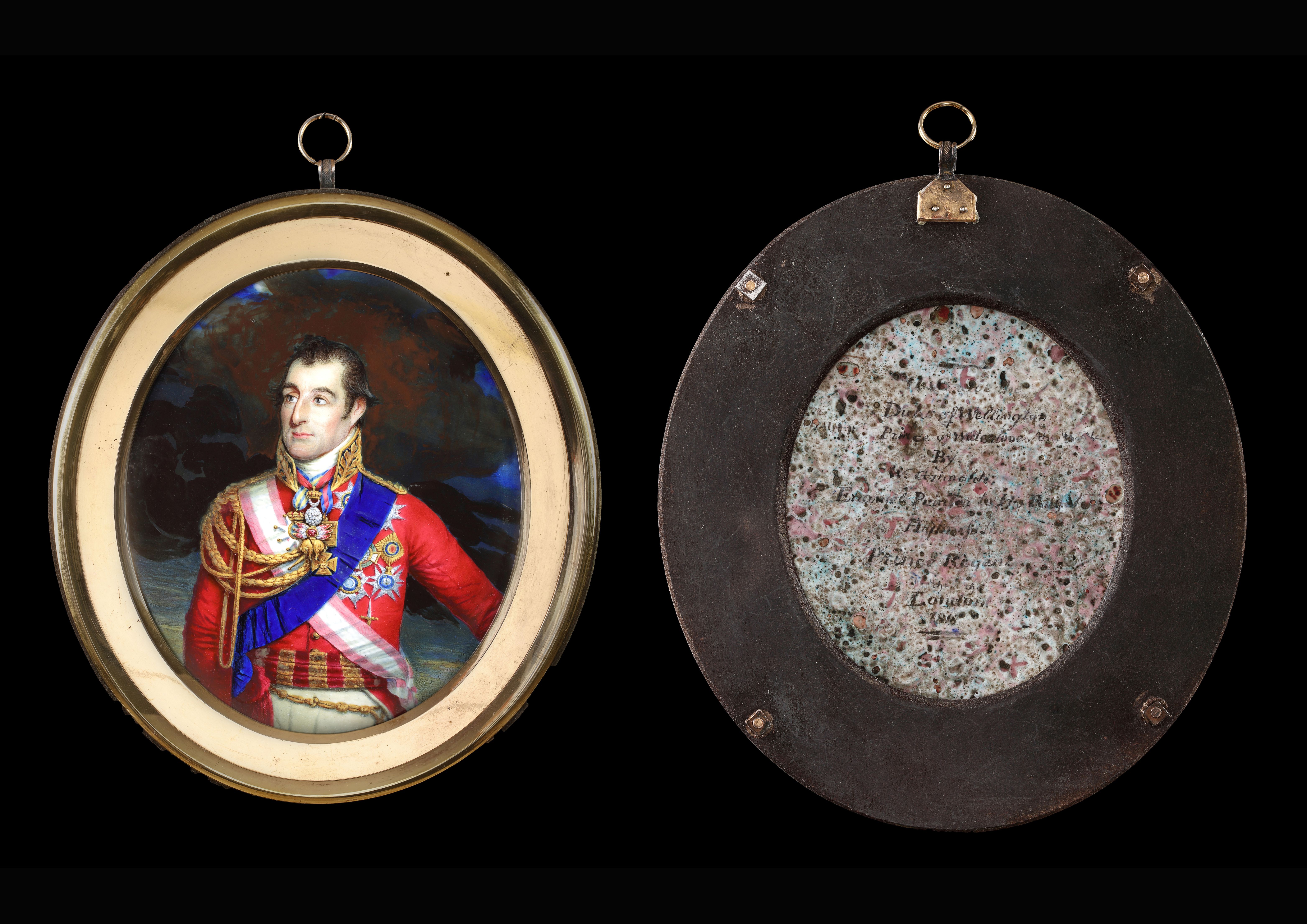
Fig. 12: WILLIAM GRIMALDI, R.A. (1751-1830), portrait enamel of Arthur Wellesley, 1st Duke of Wellington (1769-1852), in field marshal’s uniform; 1818, enamel on copper, oval, 137 mm (5 ⅖ in) high, signed, dated, and inscribed extensively on the counter enamel, and further inscribed on a backing card, gilt-metal frame. Previously with The Limner Company.
The End of Enamel
As with watercolour, the popularity of enamel miniatures faded at the end of the nineteenth century. Though the material was, and still is, used in jewellery and decorative arts, it simply wasn’t needed to capture a sitter’s likeness anymore. Even though it has a clear and distinct history to painting miniatures in watercolour, painting miniatures in enamel faced a very similar ending.
For the sake of brevity numerous skilled enamellists have not been included here, such as Pierre Signac (1624/4 – 1684), Abraham (fl.1724 - c.1753) and Noah (fl.1724 – 1741 (?)) Seaman, Richard Crosse (1742 – 1810), and Henry Spicer (1743 – 1804). For an excellent overview which discusses the lives and careers of some of these, I recommend The Gilbert Collection: Portrait Miniatures in Enamel, by Sarah Coffin and Bodo Hofstetter (London, 2000). This is the most developed study of enamel portraits available and proved an invaluable source for this blog.
[1] A.B Grimaldi, A Catalogue, Chronological and Descriptive, of Paintings, Drawings, & Engravings, by and after William Grimaldi, R.A., Paris., London, 1873, p. 9, no. 13.
[2] A good example is this video by the Victoria and Albert Museum: https://www.youtube.com/watch?v=GwGS5HNaK0Y&themeRefresh=1.
[3] Grimaldi’s comments are recorded in papers passed down his family and published in A.B Grimaldi, A Catalogue, Chronological and Descriptive, of Paintings, Drawings, & Engravings, by and after William Grimaldi, R.A., Paris., London, 1873.
[4] B. Hofstetter, "Continental Enamelled Portrait Miniatures" in S. Coffin and B. Hofstetter, The Gilbert Collection: Portrait miniatures in Enamel, London, 2000, p. 21.
[5] S. Coffin, “Enamelled Portrait Miniatures in England” in S. Coffin and B. Hofstetter, The Gilbert Collection: Portrait miniatures in Enamel, London, 2000, p. 31.
[6] B. Hofstetter, “Continental Enamelled Portrait Miniatures” in S. Coffin and B. Hofstetter, The Gilbert Collection: Portrait miniatures in Enamel, London, 2000, p. 15.
[7] Ibid.
[8] For more information on these, see Celine Cachaud’s blog, https://philipmould.com/news/88-framing-miniatures-in-the-17th-century-the-golden-age-of-la-boite-a-portrait/.
[9] S. Coffin, “Enamelled Portrait Miniatures in England” in S. Coffin and B. Hofstetter, The Gilbert Collection: Portrait miniatures in Enamel, London, 2000, p. 32.
[10] Ibid., p. 35.
[11] For more information, see ‘An Introduction to WILLIAM GRIMALDI (1751-1830)’ on our website.
[12] A.B Grimaldi, A Catalogue, Chronological and Descriptive, of Paintings, Drawings, & Engravings, by and after William Grimaldi, R.A., Paris., London, 1873, no. 34, p. 12.


