

NEWS
By Rebecca Ingram |
09 Apr 2026
Quiet Luxury: Dutch Seventeenth-Century Fashion
While researching an early 17th-century portrait [Fig.1] for our recent ‘A Brush With Metal’ exhibition, I became engrossed reading about Dutch fashion of the period (thank you Aileen Ribeiro). Of course fashion typically reflects the socio-economic climate in which it arises, and the achievements of the northern-Netherlands during the late 16th and early 17th centuries made for a distinctive fashion statement which we might recognise today as ‘quiet luxury’[1].
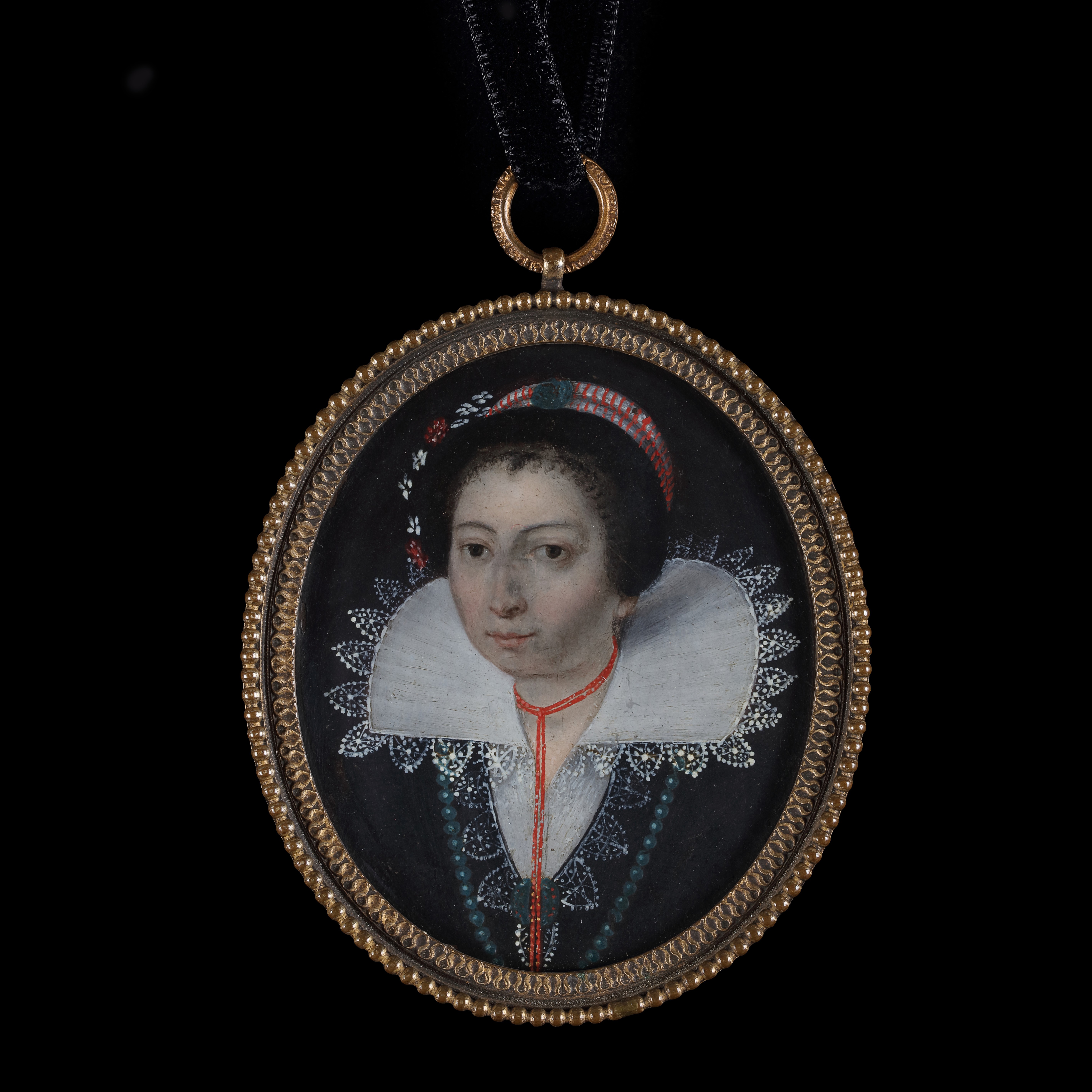 Figure 1. DUTCH SCHOOL (17th century) Portrait of a Lady wearing a 'rebato' collar with needle lace edging, a black gown, coral and pearl necklaces, and her hair tied back in a turban roll with floral decoration; circa 1615 – recently sold by The Limner Company.
Background
The Low Countries (modern day Belgium, Luxembourg and the Netherlands) had been governed by the House of Hapsburg since 1482[2]. The union of two European superpowers with the marriage of the Hapsburg and Aragon/Castile dynasties in the 16th century, and subsequent Spanish rule of the Netherlands[3], saw the assimilation of wider European styles – but most prominently Spanish - into the culture Low Countries. An example of this can be seen in another highlight from the recent exhibition [Fig.2].
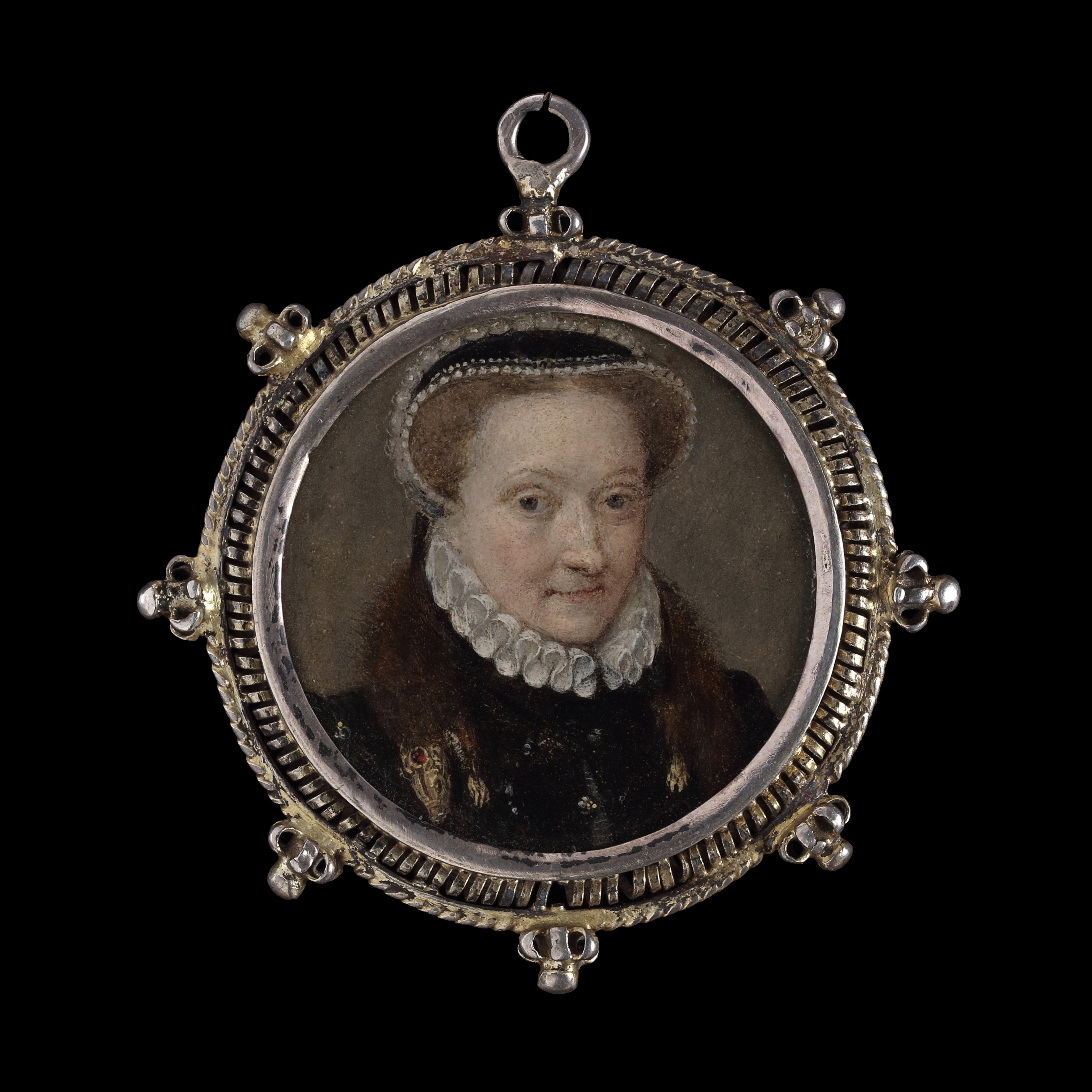 Figure 2. FRANS POURBUS THE ELDER (1545/6-1581) Portrait of a Lady, wearing a black gown with gold fasteners, a white ruff and cap, and a gold headed 'zibellino'; 1570 – recently sold by The Limner Company.
This portrait by Frans Pourbus the Elder (1545/6-1581) was painted in 1570, likely in the artist’s native Belgium. It depicts a wealthy lady wearing a zibellino – the pelt of any species of weasel, its head and paws decorated with gold and some cases jewels and crystal. This luxurious garment is thought to have come from northern Italy (zibellini translates as sables) and the first recorded example of one worn by a woman belongs to Isabella of Aragon (1470-1524) dating to the month of her wedding in 1489 to the Duke of Milan.[4] An earlier example dating to 1467, can be found in the inventory of Charles the Bold, Duke of Burgundy (1433-1477).
Spanish rule of the northern Netherlands officially came to an end in 1648 following the conclusion of the Eighty Years’ War, also known as the Dutch Revolt. However, a Dutch Republic had been declared decades prior to this date, and portraiture of the early 17th century illustrates the emergence of a national identity much sooner.
Emerging Dutch Style
In the early 17th century, aspects of dress in the self-declared Republic crystalised into recognisably Dutch fashion. The most striking was the preference for black clothing, which is quite ironic given the fashion for rich black clothing was inherited from their recently departed Spanish overlords, by whom it was esteemed for its courtliness, high cost and sobriety.
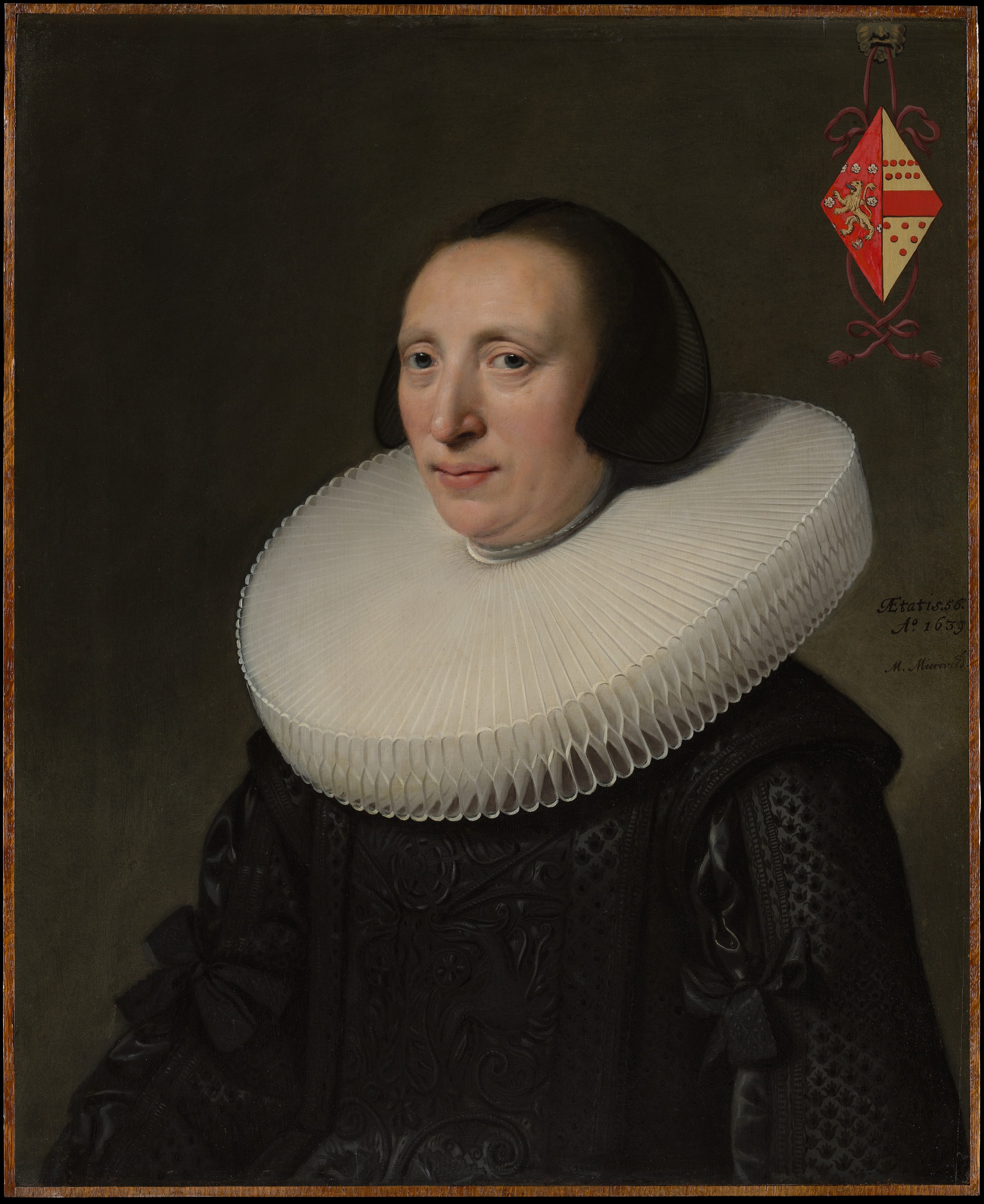 Figure 3. MICHIEL JANSZ VAN MIEREVELT (1567-1641) Portrait of Margaretha van Clootwijk (c.1580/81-1662); 1639 – The Metropolitan Museum of Art, New York [25.110.12]
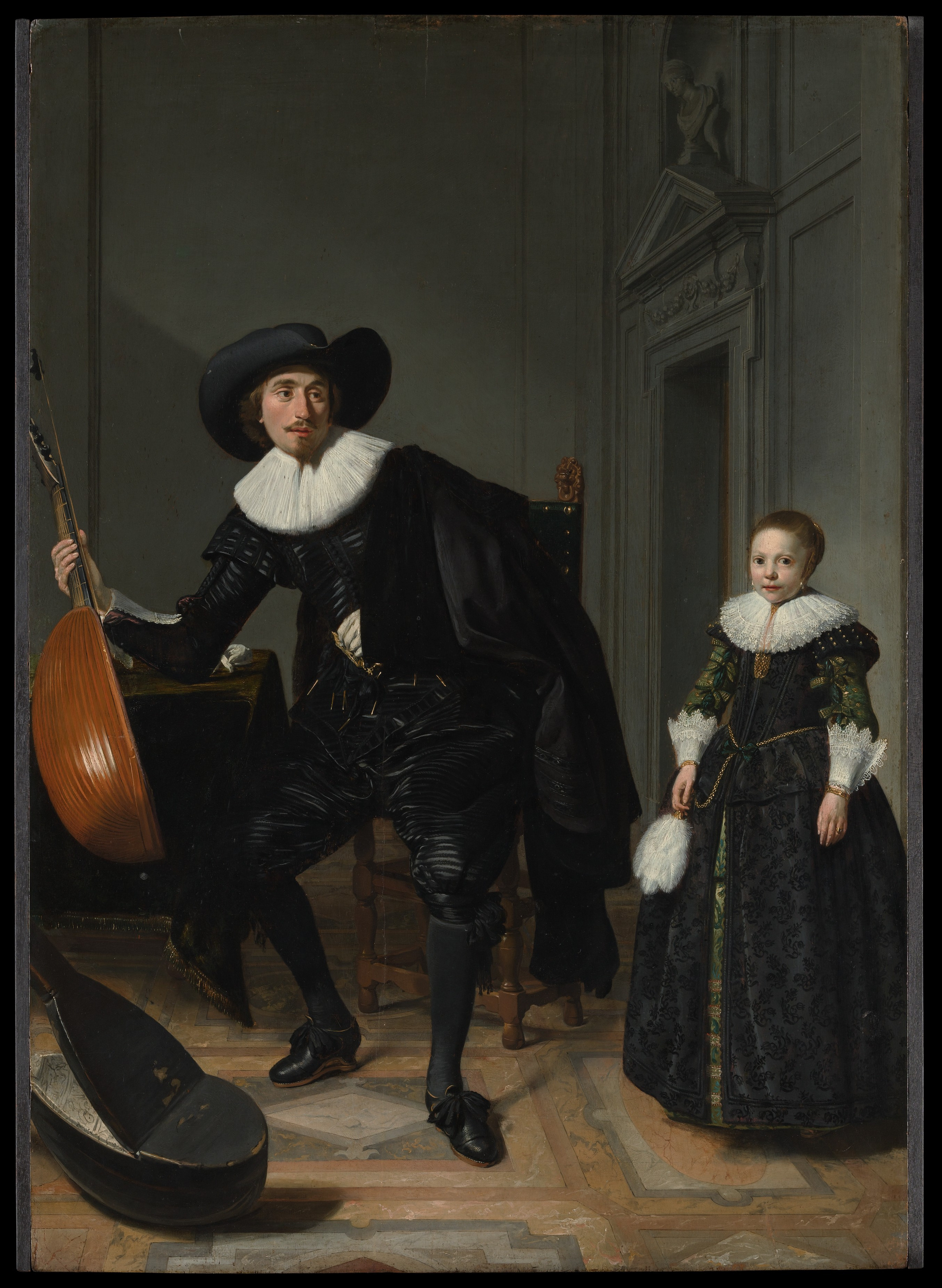 Figure 4. THOMAS DE KEYSER (1596/97–1667) A Musician and his Daughter; 1629 - The Metropolitan Museum of Art, New York [64.65.4]
Black gowns, doublets and hose, almost became a uniform for the burgeoning and vastly wealthy merchant class at this time. While to the 21st-century viewer it might now appear plain, the black garments of the wealthy individuals portrayed would have been of very rich materials. The finest fabrics were richly textured and patterned black on black[5], which can be difficult to discern depending on the scale – as here - and condition of a portrait. Such fabrics – velvet, damask, braid on silk taffeta, embroidery on satin - were usually manufactured with silk from the far East and subjected to an expensive dying process. Therefore, although the blackness of clothing has been sometimes linked to Puritanism or Calvinisim, it was often made from luxury (very costly) materials.[6]
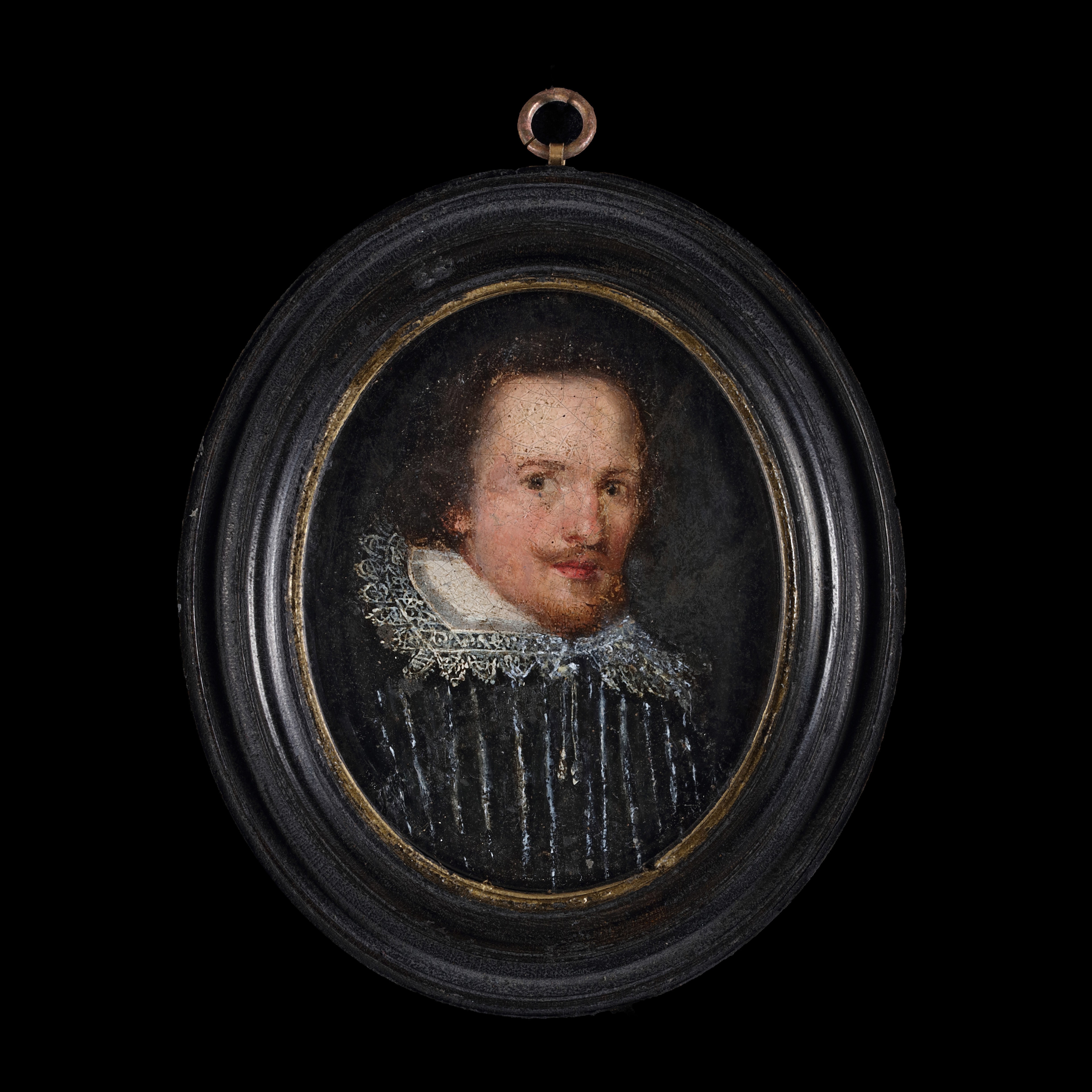
Figure 5. DUTCH SCHOOL (17th Century) Portrait of a Gentleman, wearing black doublet slashed to reveal white silk and lawn collar edged with lace; late 1620s – for sale with The Limner Company.
A distinctive aspect of women’s dress in 17th-century Netherlands was a type of gown which would tell of the wearer’s marital status. Unmarried women and girls would wear a bouwen: a gown with tight-fitting bodice and closed skirt [Fig.4].[7] A married woman however, wore a vlieger: an open gown derived from the Spanish ropa which was loose from the shoulders at the back and tight to the waist at the sides and front, and worn over a tight-fitting bodice.[8]
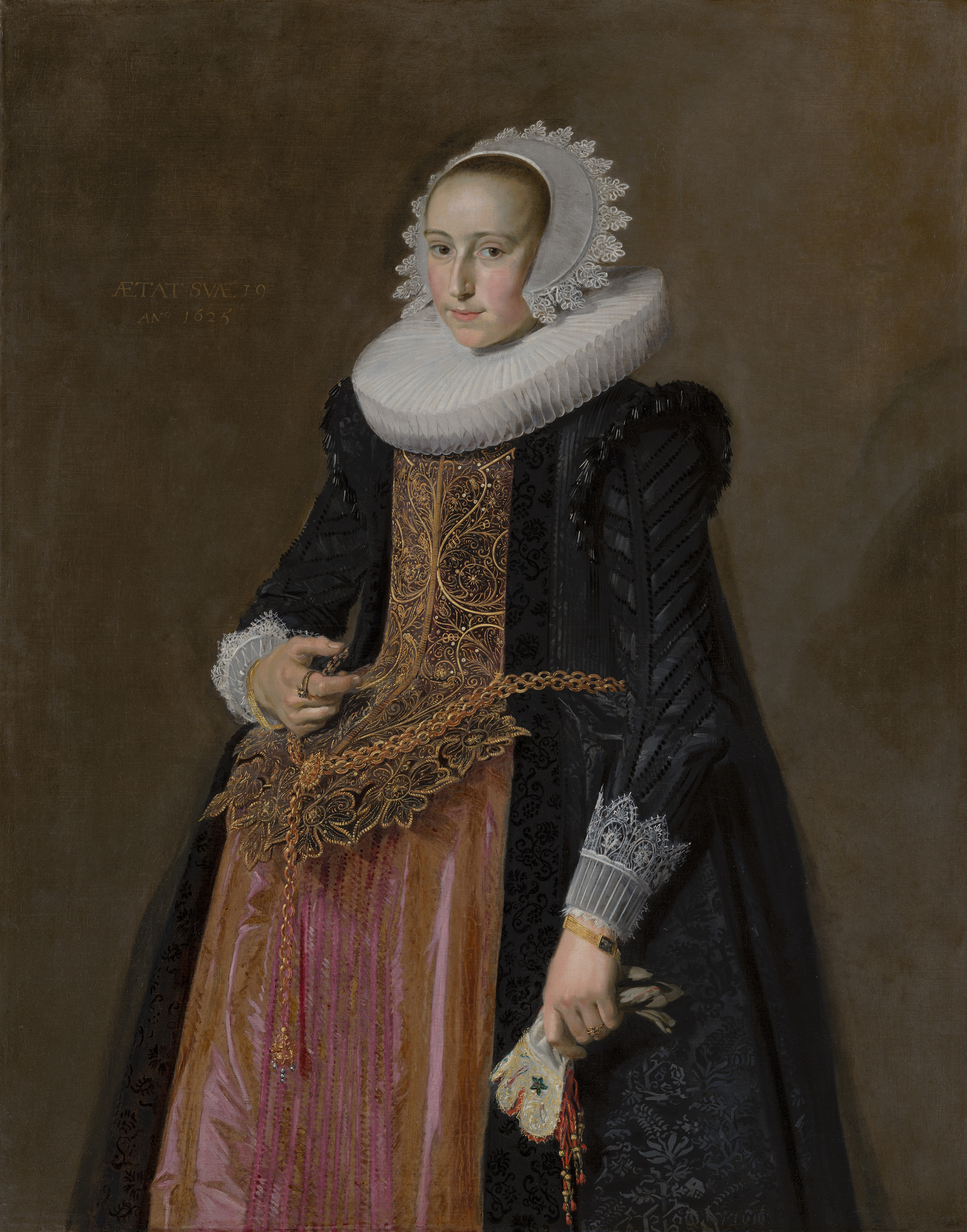
Figure 6. FRANS HALS (1582/83-1666) Portrait of Aletta Hanemans (1606-1653); 1625 - Mauritshuis, Den Haag [460].
Black outer garments acted as a foil for the splendid linen for which the Dutch were also known. Masters of bleaching and sun-drying, the whiteness of their linen was famed, as was the Dutch mangle board for laundering it.[9]
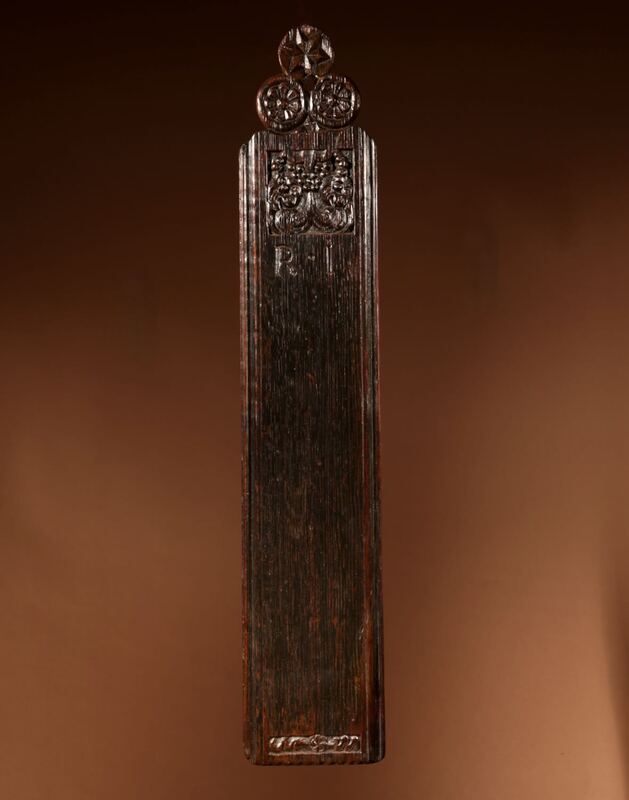
Figure 7. DUTCH (17th century) Rare Oak Mangle Board – for sale with Koos Limburg Jnr.
Throughout the 17th century the Dutch habit was for increasingly large linen bands (collars) or ruffs, even when the ruff had long since fallen out of fashion elsewhere in Europe.
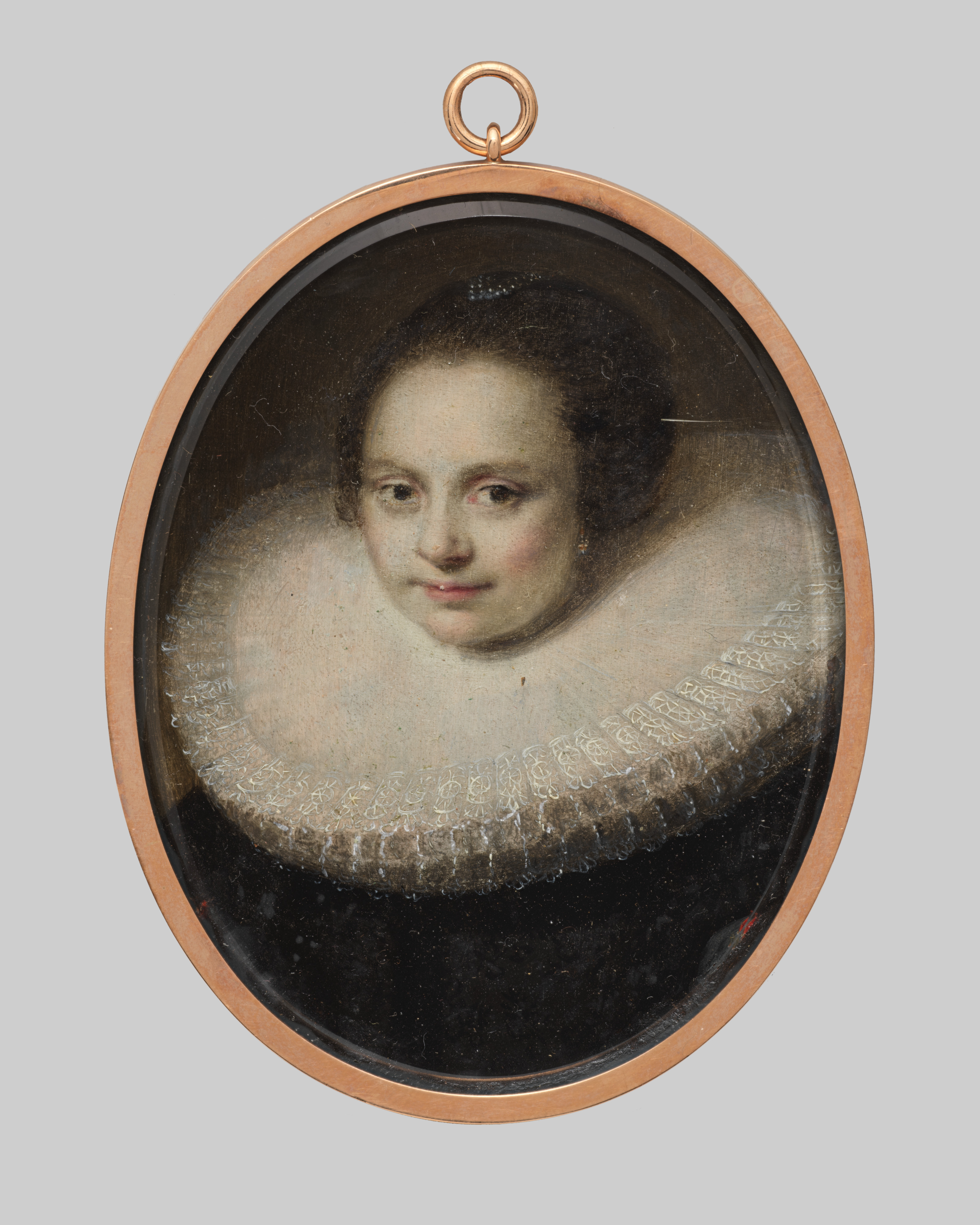 Figure 8. DAVID BAUDRINGHIEN (c.1581-1650) Portrait of a Woman – The Metropolitcan Museum of Art, New York [32.75.15].
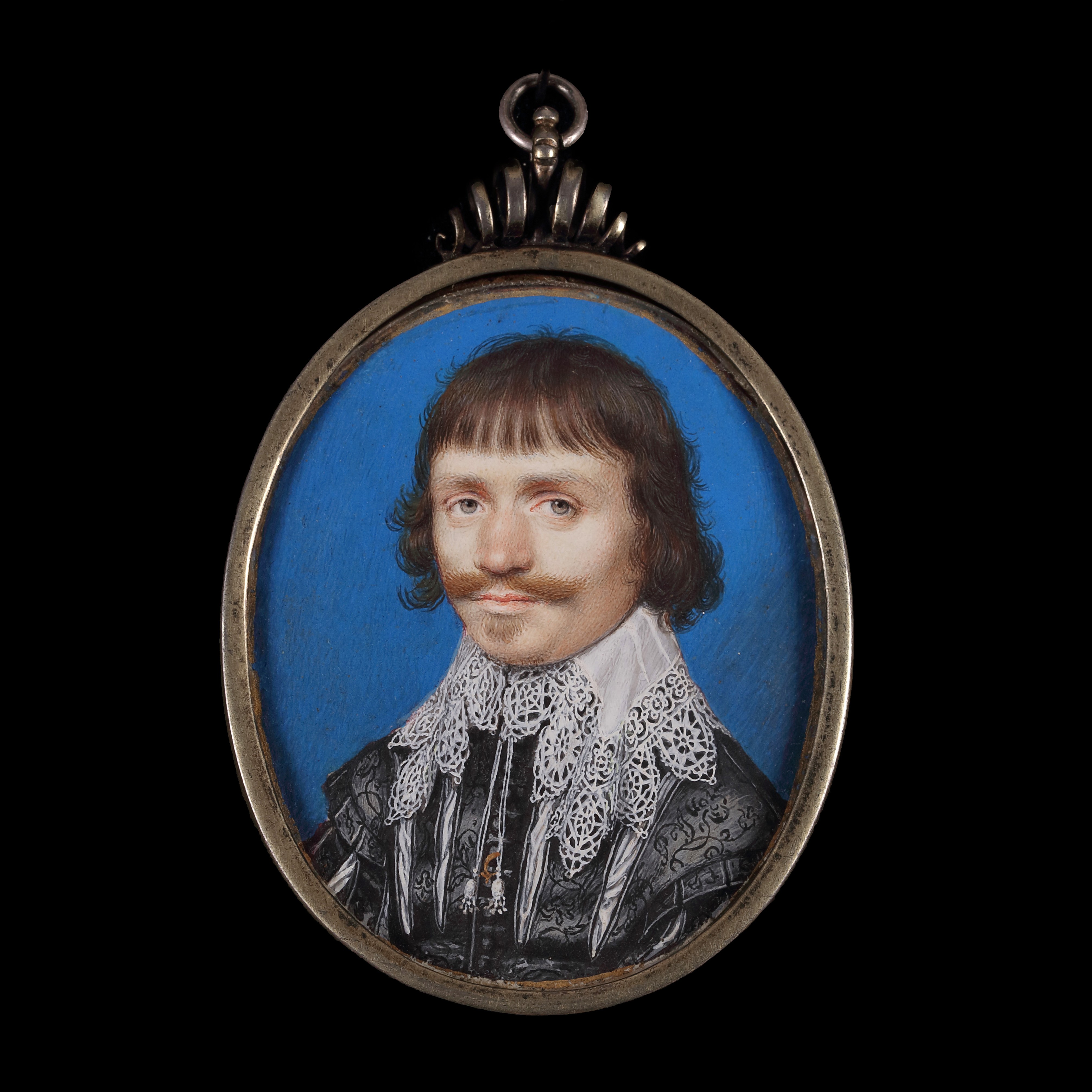
Figure 9. ALEXANDER COOPER (1609/12-1660) Portrait miniature probably depicting a Dutch Nobleman, wearing a black ‘pinked’ doublet, lace lawn collar with a gold ring tied to the tasseled ends, his hair worn with a fringe; circa 1630s – previously sold by The Limner Company.
Another distinctive aspect of Dutch silhouette was headwear. Women’s heads were nearly always covered at this time, and the wealthier the wearer, the larger and more elaborate the design; linen caps became diadems of lace and most extraordinary was the huik. The huik (pronounce ‘hoik’) comprised of a long (seemingly ankle-length) black veil or cloak often held in place on top of the head with a circular cap. It was described by the Scottish traveller Fynes Moryson (1566-1630) thus:
“All Women in generall, when they goe out of the house, put on a hoyke or vaile which covers their heads, and hangs downe upon their backs to their legges ; and this vaile in Holland is of a light stuffe or Kersie, and hath a kinde of horne rising over the forehead, not much unlike the old pummels of our Womens saddles, and they gather the Vaile with their hands to cover all their faces, but onely the eyes : but the Women of Flanders and Brabant weare […] leave their faces open to view, and these Caps are round, large, and flat to the head, and of Velvet, or at least guarded therewith, and are in forme like our potlids used to cover pots in the Kitchin”[10]
This distinctive garment was sufficiently famed for it to be included in the contemporaneous mica talcs used in a dress-up a oil portraits of a lady [Fig.10], a parlour game that included other forms of national dress such as Venetian zendale (hood) and an Ottoman-inspired headdress.
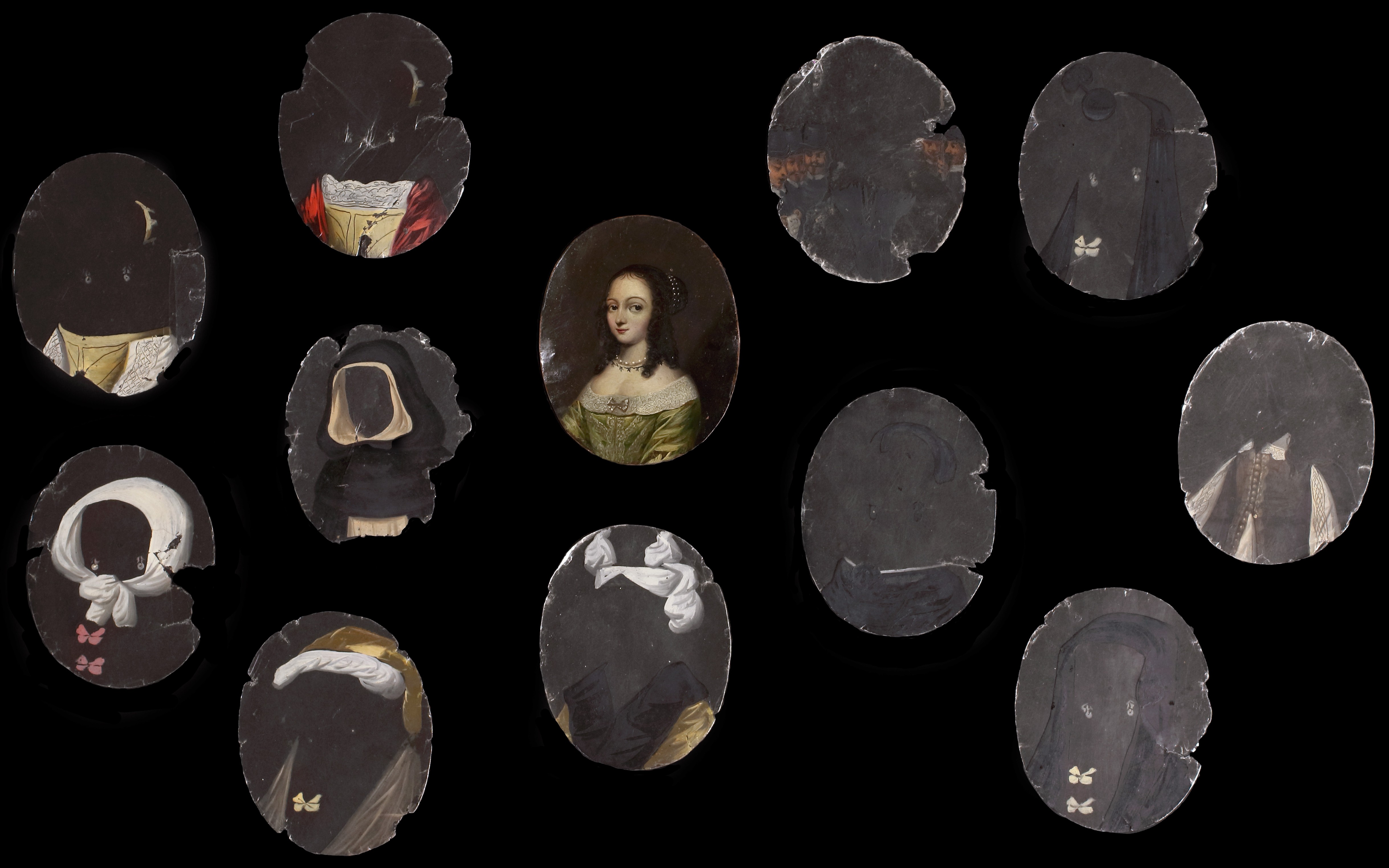
 Figure 10. ENGLISH SCHOOL (17th century) An oil portrait of a Lady, likely to be an English or Swedish Noblewoman, with eleven costume ‘mica’ talcs – recently sold by The Limner Company.
‘The Great Emporium Mundi’[11]
Out of the Spanish shadow, the Dutch quickly emerged as a global economic power in the early 17th century. The Dutch East India Company was established in 1602 and rapidly came to dominate trade for mass-produced and luxury goods from all over the world, and the Netherlands became the axis of global commerce.
The arriving goods were not just bought and sold but often worked in the region. The account of Leiden in The Delights of Holland (1691) by William Mountagne, who travelled to the region, describes a city famed for…
‘great Manufactures of Woollen and Linnen-Cloth, Perpetuanas, Sayes, Serges, Stuffs and Camlets; of the first they send abundance to Turkey, whence they bring Mohair to make their Camlets; also they import fine Wool from Spain, and coarse from England and Poland’.[12]
Alongside these staple materials, aspirational luxuries arrived in the Netherlands, heavily influencing fashion. It was the centre of silk manufacture for instance, which came from the East along the Silk Road - providing the shimmer to the ubiquitous black fabrics. Even tulips, which we now think of as quintessentially Dutch, were imported from the Ottoman Empire and became a status symbol in Dutch society. Still-life paintings of flowers became popular and referenced Dutch prowess in flower cultivation, most especially tulips. Eye-wateringly expensive tulips might also be an accessory in a portrait, see for example the portrait of Lady Jane Goodwin by Flemish-born Anthony van Dyck (1599-1641) [Fig.11].
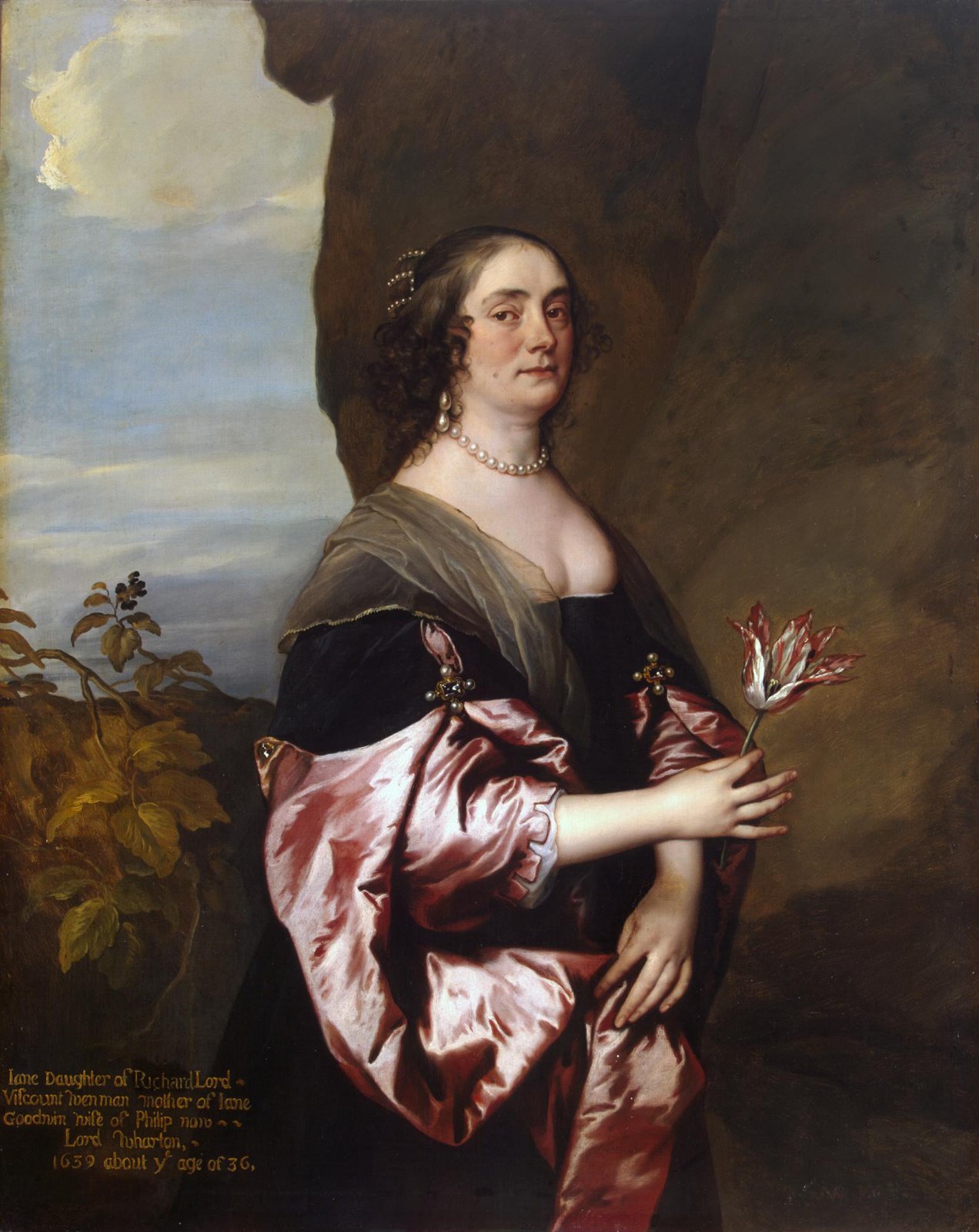 Figure 11. ANTHONY VAN DYCK (1599-1641) Portrait of Lady Jane Goodwin; 1639 - The State Hermitage Museum, St Petersburg [ГЭ-549].
Prosperity & Portraiture
Trade brought a vast amount of wealth to the region and its cities prospered and expanded at a phenomenal rate. The wealthy merchant class came to occupy the vacuum left by the departed Spanish state and aristocracy as a burgher oligarchy.[13] Art was an important way for them to spend - as well as promote - their newfound wealth and position, and portraiture flourished. According to Michael North, there was approximately 1 painter per 1,000 inhabitants in the northern Netherlands, a far higher ratio that in Renaissance Italy.[14]
The resultant portraits can be characterised by verisimilitude in clothing, indicating it was likely an important factor to the commission. It’s also notable that clothing often occupies as large amount of pictorial space in Dutch portraits; with huge ruffs / rebato collars / outsized falling bands, women’s headwear in various forms and men’s wide-brimmed hats, the billowing sleeves and doublets with padded shoulders, as well as the protruding stomacher or borst worn by some women, could make for quite a formidable silhouette. Fashion in the early 17th-century northern Netherlands strongly reflected the achievements and emerging self-identity of the Dutch, and it’s study is a prime example of the importance of fashion history.
Footnotes
[1] See Archer, H., ‘What Is Quiet Luxury And Why Is The Trend Louder Than Ever?’, Elle magazine online, 30 march 2023 – accessed 19 March 2026 https://www.elle.com/uk/fashion/trends/a43449527/quiet-luxury/.
[2] The Netherlands had been a Burgundian domain until they were inherited by Philip the Fair (1478-1506) of the House of Hapsburg, son of Mary of Burgundy (1457-1472) and Maximilian I (1459-1519), Holy Roman Emperor.
[3] What is effectively modern-day Spain had unified in 15th century with the marriage of Isabella I of Castile (1451-1504) and King Ferdinand II of Aragon (1452-1516). Their daughter and heir presumptive, Joanna (1479-1555) had married Philip the Fair, but after Philip’s premature death in 1506, power was seized by Joanna’s father, Ferdinand.
[4] Sherrill, T. ‘Fleas, Fur, and Fashion: Zibellini as Luxury Accessories of the Renaissance’ in: Netherton R, Owen-Crocker GR, eds. Medieval Clothing and Textiles 2 (Boydell & Brewer; 2006),121-150. https://www.cambridge.org/core/books/abs/medieval-clothing-and-textiles-2/fleas-fur-and-fashion-zibellini-as-luxury-accessories-of-the-renaissance/64660186C42AC8AF569D93AA96ECF744
[5] Aileen Ribeiro, Clothing Art: The Visual Culture of Fashion, 1600-1914 (Yale University Press, 2016), p.115
[6] Ibid
[7] Ibid, p.111
[8] Ibid, p.115
[9] McNeil, P., ‘Ruff Stuff’ online article for ‘Rembrandt and the Dutch golden age masterpieces from the Rijksmuseum’, exhibition at Art Gallery of New South Wales, 11 Nov 2017 – 18 Feb 2018 https://www.artgallery.nsw.gov.au/artboards/rembrandt/ruffs-and-stuff/ - accessed 26 February 2026
[10] Quoted in https://archive.org/details/the-huik-a-netherlandish-womans-garment/page/n1/mode/1up
[11] Ribeiro, p.108
[12] Quoted in Ribeiro, p.113
[13] https://www.canvasjournal.ca/read/fashioning-holland-the-hidden-language-of-clothing-in-seventeenth-century-dutch-portraiture - accessed 26 February 2026
[14] Cited in Ribeiro, p.108
Figure 1. DUTCH SCHOOL (17th century) Portrait of a Lady wearing a 'rebato' collar with needle lace edging, a black gown, coral and pearl necklaces, and her hair tied back in a turban roll with floral decoration; circa 1615 – recently sold by The Limner Company.Background
The Low Countries (modern day Belgium, Luxembourg and the Netherlands) had been governed by the House of Hapsburg since 1482[2]. The union of two European superpowers with the marriage of the Hapsburg and Aragon/Castile dynasties in the 16th century, and subsequent Spanish rule of the Netherlands[3], saw the assimilation of wider European styles – but most prominently Spanish - into the culture Low Countries. An example of this can be seen in another highlight from the recent exhibition [Fig.2].
Figure 2. FRANS POURBUS THE ELDER (1545/6-1581) Portrait of a Lady, wearing a black gown with gold fasteners, a white ruff and cap, and a gold headed 'zibellino'; 1570 – recently sold by The Limner Company.This portrait by Frans Pourbus the Elder (1545/6-1581) was painted in 1570, likely in the artist’s native Belgium. It depicts a wealthy lady wearing a zibellino – the pelt of any species of weasel, its head and paws decorated with gold and some cases jewels and crystal. This luxurious garment is thought to have come from northern Italy (zibellini translates as sables) and the first recorded example of one worn by a woman belongs to Isabella of Aragon (1470-1524) dating to the month of her wedding in 1489 to the Duke of Milan.[4] An earlier example dating to 1467, can be found in the inventory of Charles the Bold, Duke of Burgundy (1433-1477).
Spanish rule of the northern Netherlands officially came to an end in 1648 following the conclusion of the Eighty Years’ War, also known as the Dutch Revolt. However, a Dutch Republic had been declared decades prior to this date, and portraiture of the early 17th century illustrates the emergence of a national identity much sooner.
Emerging Dutch Style
In the early 17th century, aspects of dress in the self-declared Republic crystalised into recognisably Dutch fashion. The most striking was the preference for black clothing, which is quite ironic given the fashion for rich black clothing was inherited from their recently departed Spanish overlords, by whom it was esteemed for its courtliness, high cost and sobriety.
Figure 3. MICHIEL JANSZ VAN MIEREVELT (1567-1641) Portrait of Margaretha van Clootwijk (c.1580/81-1662); 1639 – The Metropolitan Museum of Art, New York [25.110.12]Figure 4. THOMAS DE KEYSER (1596/97–1667) A Musician and his Daughter; 1629 - The Metropolitan Museum of Art, New York [64.65.4]Black gowns, doublets and hose, almost became a uniform for the burgeoning and vastly wealthy merchant class at this time. While to the 21st-century viewer it might now appear plain, the black garments of the wealthy individuals portrayed would have been of very rich materials. The finest fabrics were richly textured and patterned black on black[5], which can be difficult to discern depending on the scale – as here - and condition of a portrait. Such fabrics – velvet, damask, braid on silk taffeta, embroidery on satin - were usually manufactured with silk from the far East and subjected to an expensive dying process. Therefore, although the blackness of clothing has been sometimes linked to Puritanism or Calvinisim, it was often made from luxury (very costly) materials.[6]
Figure 5. DUTCH SCHOOL (17th Century) Portrait of a Gentleman, wearing black doublet slashed to reveal white silk and lawn collar edged with lace; late 1620s – for sale with The Limner Company.
A distinctive aspect of women’s dress in 17th-century Netherlands was a type of gown which would tell of the wearer’s marital status. Unmarried women and girls would wear a bouwen: a gown with tight-fitting bodice and closed skirt [Fig.4].[7] A married woman however, wore a vlieger: an open gown derived from the Spanish ropa which was loose from the shoulders at the back and tight to the waist at the sides and front, and worn over a tight-fitting bodice.[8]
Figure 6. FRANS HALS (1582/83-1666) Portrait of Aletta Hanemans (1606-1653); 1625 - Mauritshuis, Den Haag [460].
Black outer garments acted as a foil for the splendid linen for which the Dutch were also known. Masters of bleaching and sun-drying, the whiteness of their linen was famed, as was the Dutch mangle board for laundering it.[9]
Figure 7. DUTCH (17th century) Rare Oak Mangle Board – for sale with Koos Limburg Jnr.
Throughout the 17th century the Dutch habit was for increasingly large linen bands (collars) or ruffs, even when the ruff had long since fallen out of fashion elsewhere in Europe.
Figure 8. DAVID BAUDRINGHIEN (c.1581-1650) Portrait of a Woman – The Metropolitcan Museum of Art, New York [32.75.15].Figure 9. ALEXANDER COOPER (1609/12-1660) Portrait miniature probably depicting a Dutch Nobleman, wearing a black ‘pinked’ doublet, lace lawn collar with a gold ring tied to the tasseled ends, his hair worn with a fringe; circa 1630s – previously sold by The Limner Company.
Another distinctive aspect of Dutch silhouette was headwear. Women’s heads were nearly always covered at this time, and the wealthier the wearer, the larger and more elaborate the design; linen caps became diadems of lace and most extraordinary was the huik. The huik (pronounce ‘hoik’) comprised of a long (seemingly ankle-length) black veil or cloak often held in place on top of the head with a circular cap. It was described by the Scottish traveller Fynes Moryson (1566-1630) thus:
“All Women in generall, when they goe out of the house, put on a hoyke or vaile which covers their heads, and hangs downe upon their backs to their legges ; and this vaile in Holland is of a light stuffe or Kersie, and hath a kinde of horne rising over the forehead, not much unlike the old pummels of our Womens saddles, and they gather the Vaile with their hands to cover all their faces, but onely the eyes : but the Women of Flanders and Brabant weare […] leave their faces open to view, and these Caps are round, large, and flat to the head, and of Velvet, or at least guarded therewith, and are in forme like our potlids used to cover pots in the Kitchin”[10]
This distinctive garment was sufficiently famed for it to be included in the contemporaneous mica talcs used in a dress-up a oil portraits of a lady [Fig.10], a parlour game that included other forms of national dress such as Venetian zendale (hood) and an Ottoman-inspired headdress.
Figure 10. ENGLISH SCHOOL (17th century) An oil portrait of a Lady, likely to be an English or Swedish Noblewoman, with eleven costume ‘mica’ talcs – recently sold by The Limner Company.‘The Great Emporium Mundi’[11]
Out of the Spanish shadow, the Dutch quickly emerged as a global economic power in the early 17th century. The Dutch East India Company was established in 1602 and rapidly came to dominate trade for mass-produced and luxury goods from all over the world, and the Netherlands became the axis of global commerce.
The arriving goods were not just bought and sold but often worked in the region. The account of Leiden in The Delights of Holland (1691) by William Mountagne, who travelled to the region, describes a city famed for…
‘great Manufactures of Woollen and Linnen-Cloth, Perpetuanas, Sayes, Serges, Stuffs and Camlets; of the first they send abundance to Turkey, whence they bring Mohair to make their Camlets; also they import fine Wool from Spain, and coarse from England and Poland’.[12]
Alongside these staple materials, aspirational luxuries arrived in the Netherlands, heavily influencing fashion. It was the centre of silk manufacture for instance, which came from the East along the Silk Road - providing the shimmer to the ubiquitous black fabrics. Even tulips, which we now think of as quintessentially Dutch, were imported from the Ottoman Empire and became a status symbol in Dutch society. Still-life paintings of flowers became popular and referenced Dutch prowess in flower cultivation, most especially tulips. Eye-wateringly expensive tulips might also be an accessory in a portrait, see for example the portrait of Lady Jane Goodwin by Flemish-born Anthony van Dyck (1599-1641) [Fig.11].
Figure 11. ANTHONY VAN DYCK (1599-1641) Portrait of Lady Jane Goodwin; 1639 - The State Hermitage Museum, St Petersburg [ГЭ-549].Prosperity & Portraiture
Trade brought a vast amount of wealth to the region and its cities prospered and expanded at a phenomenal rate. The wealthy merchant class came to occupy the vacuum left by the departed Spanish state and aristocracy as a burgher oligarchy.[13] Art was an important way for them to spend - as well as promote - their newfound wealth and position, and portraiture flourished. According to Michael North, there was approximately 1 painter per 1,000 inhabitants in the northern Netherlands, a far higher ratio that in Renaissance Italy.[14]
The resultant portraits can be characterised by verisimilitude in clothing, indicating it was likely an important factor to the commission. It’s also notable that clothing often occupies as large amount of pictorial space in Dutch portraits; with huge ruffs / rebato collars / outsized falling bands, women’s headwear in various forms and men’s wide-brimmed hats, the billowing sleeves and doublets with padded shoulders, as well as the protruding stomacher or borst worn by some women, could make for quite a formidable silhouette. Fashion in the early 17th-century northern Netherlands strongly reflected the achievements and emerging self-identity of the Dutch, and it’s study is a prime example of the importance of fashion history.
Footnotes
[1] See Archer, H., ‘What Is Quiet Luxury And Why Is The Trend Louder Than Ever?’, Elle magazine online, 30 march 2023 – accessed 19 March 2026 https://www.elle.com/uk/fashion/trends/a43449527/quiet-luxury/.
[2] The Netherlands had been a Burgundian domain until they were inherited by Philip the Fair (1478-1506) of the House of Hapsburg, son of Mary of Burgundy (1457-1472) and Maximilian I (1459-1519), Holy Roman Emperor.
[3] What is effectively modern-day Spain had unified in 15th century with the marriage of Isabella I of Castile (1451-1504) and King Ferdinand II of Aragon (1452-1516). Their daughter and heir presumptive, Joanna (1479-1555) had married Philip the Fair, but after Philip’s premature death in 1506, power was seized by Joanna’s father, Ferdinand.
[4] Sherrill, T. ‘Fleas, Fur, and Fashion: Zibellini as Luxury Accessories of the Renaissance’ in: Netherton R, Owen-Crocker GR, eds. Medieval Clothing and Textiles 2 (Boydell & Brewer; 2006),121-150. https://www.cambridge.org/core/books/abs/medieval-clothing-and-textiles-2/fleas-fur-and-fashion-zibellini-as-luxury-accessories-of-the-renaissance/64660186C42AC8AF569D93AA96ECF744
[5] Aileen Ribeiro, Clothing Art: The Visual Culture of Fashion, 1600-1914 (Yale University Press, 2016), p.115
[6] Ibid
[7] Ibid, p.111
[8] Ibid, p.115
[9] McNeil, P., ‘Ruff Stuff’ online article for ‘Rembrandt and the Dutch golden age masterpieces from the Rijksmuseum’, exhibition at Art Gallery of New South Wales, 11 Nov 2017 – 18 Feb 2018 https://www.artgallery.nsw.gov.au/artboards/rembrandt/ruffs-and-stuff/ - accessed 26 February 2026
[10] Quoted in https://archive.org/details/the-huik-a-netherlandish-womans-garment/page/n1/mode/1up
[11] Ribeiro, p.108
[12] Quoted in Ribeiro, p.113
[13] https://www.canvasjournal.ca/read/fashioning-holland-the-hidden-language-of-clothing-in-seventeenth-century-dutch-portraiture - accessed 26 February 2026
[14] Cited in Ribeiro, p.108




