
NEWS
By Dr. Valeria Vallucci |
19 Jan 2026
Burnsiana.
‘Fintry, my stay in worldly strife, Friend o’ my Muse, Friend o’ my Life’:
Portrait Miniatures of Robert Burns’s staunch friend and patron,
Robert Graham of Fintry (1749-1815), and two of his children.
No celebrant of Burns Night requires an introduction to Robert Graham of Fintry, the distinguished Angus laird whose lineage traces back to King Robert III.[1] Graham of Fintry was among the poet’s most steadfast and pragmatic patrons, a measured and perceptive correspondent, and, above all, the indispensable confidant who secured for Burns what he himself termed his “sheet anchor in life”, a job with the Scottish Excise.[2] The Grahams of Fintry have since been custodians of significant Burns manuscripts, many now housed in national institutions, including a copy of the celebrated Tam o’ Shanter (1790). Like the manuscripts, this refined group of late eighteenth-century portrait miniatures has descended through the Graham of Fintry lineage, emerging only recently from private hands. For admirers of Burns, these miniatures stand as rare and eloquent relics of the poet’s cultivated and expansive social milieu. They evoke a friendship rooted not only in shared virtues, such as industry, resilience, and conscientiousness, but also in a deep and abiding Scottish identity. Graham of Fintry has been described as ‘the best friend the Poet ever had.’[3] This article examines this famous friendship, the themes and motives that shaped it, and the context it provides for the commission of these three refined miniatures.
 |
 |
 |
||
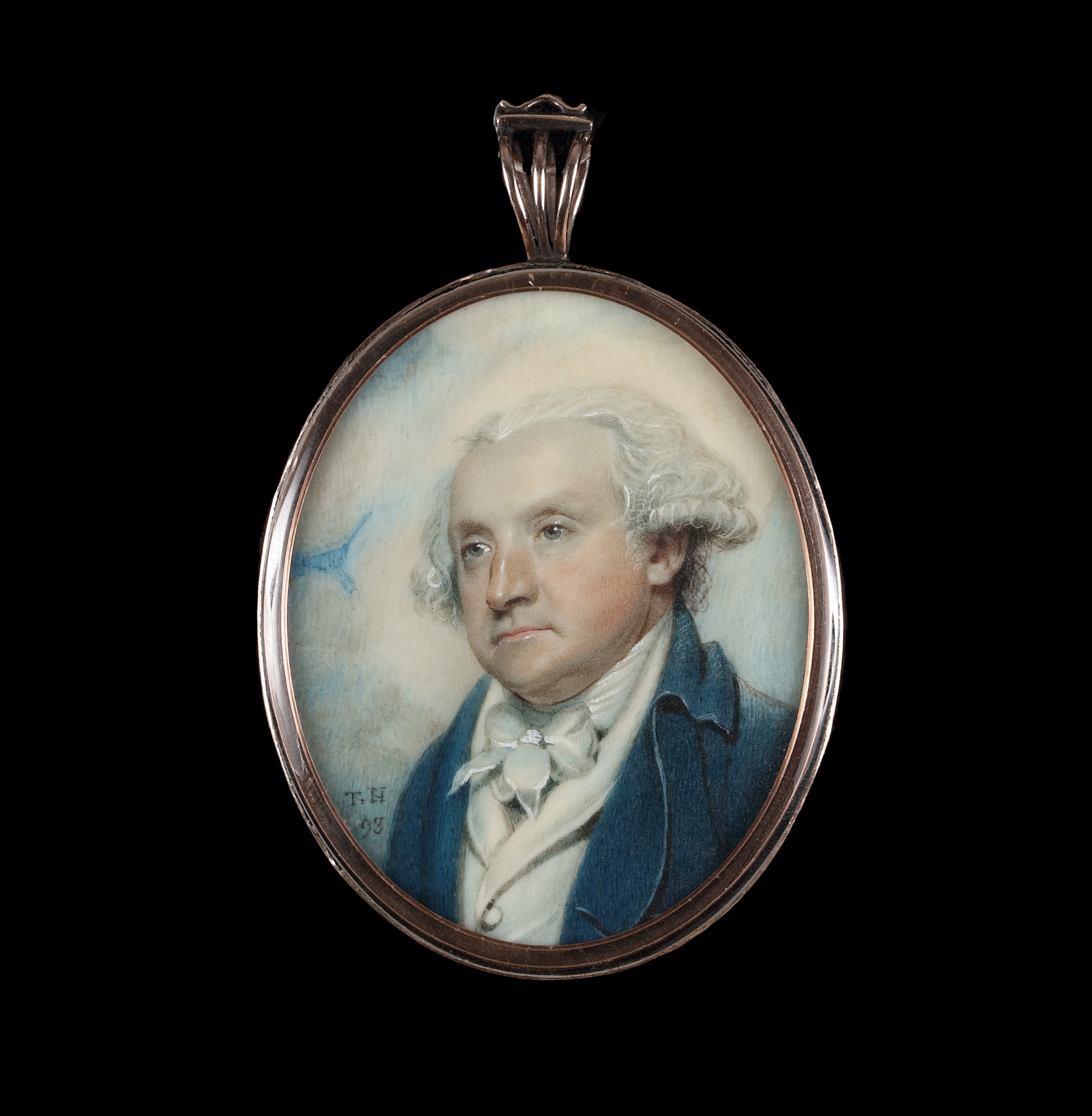
| Fig. 1. THOMAS HAZLEHURST (c.1740–c.1821), Portrait Miniature of Robert Graham of Fintry (1745-1819), 1793. The Limner Company. | |
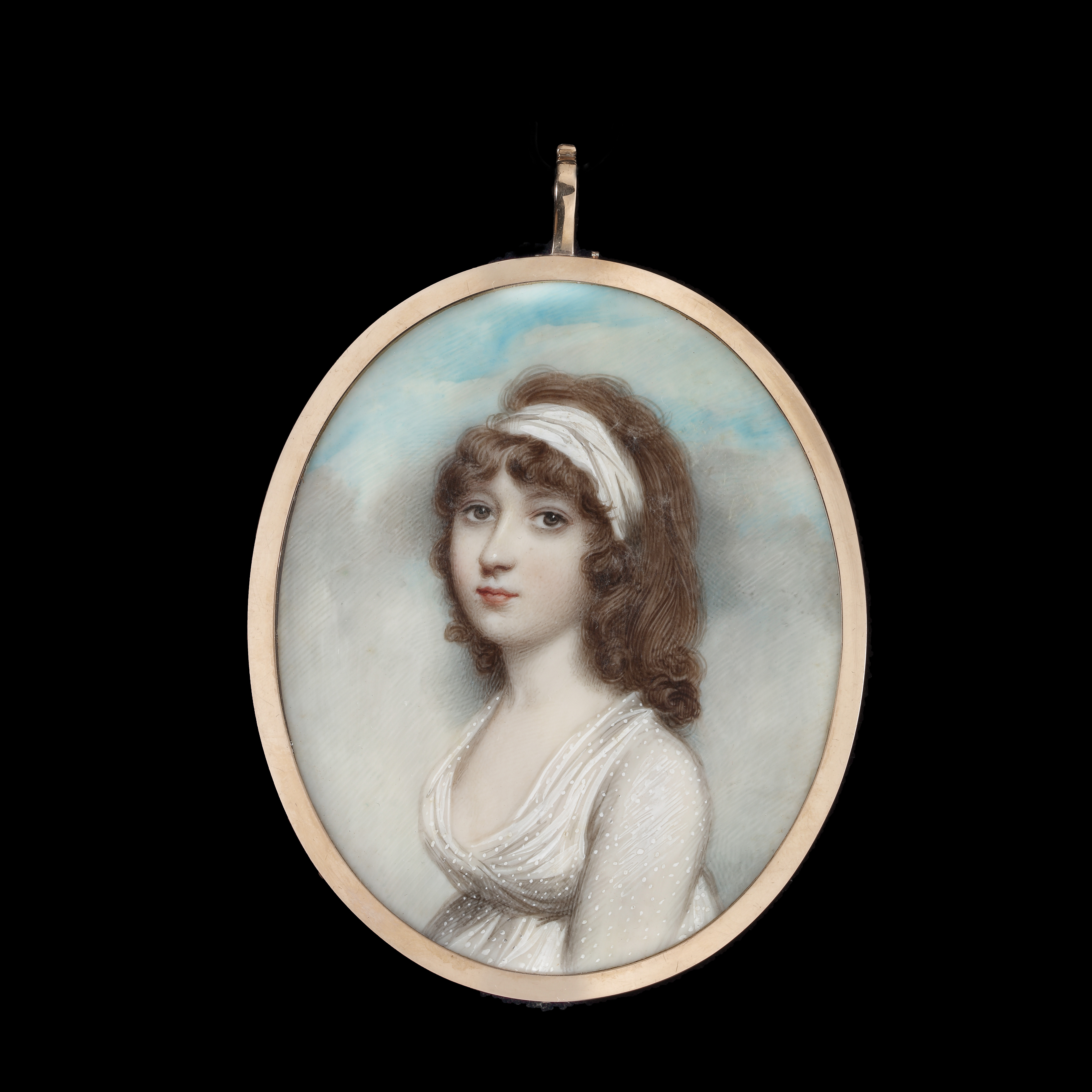
Fig. 2. ANDREW PLIMER (1763–1837), Portrait miniature of a daughter of Robert Graham of Fintry, circa 1798. The Limner Company. | |
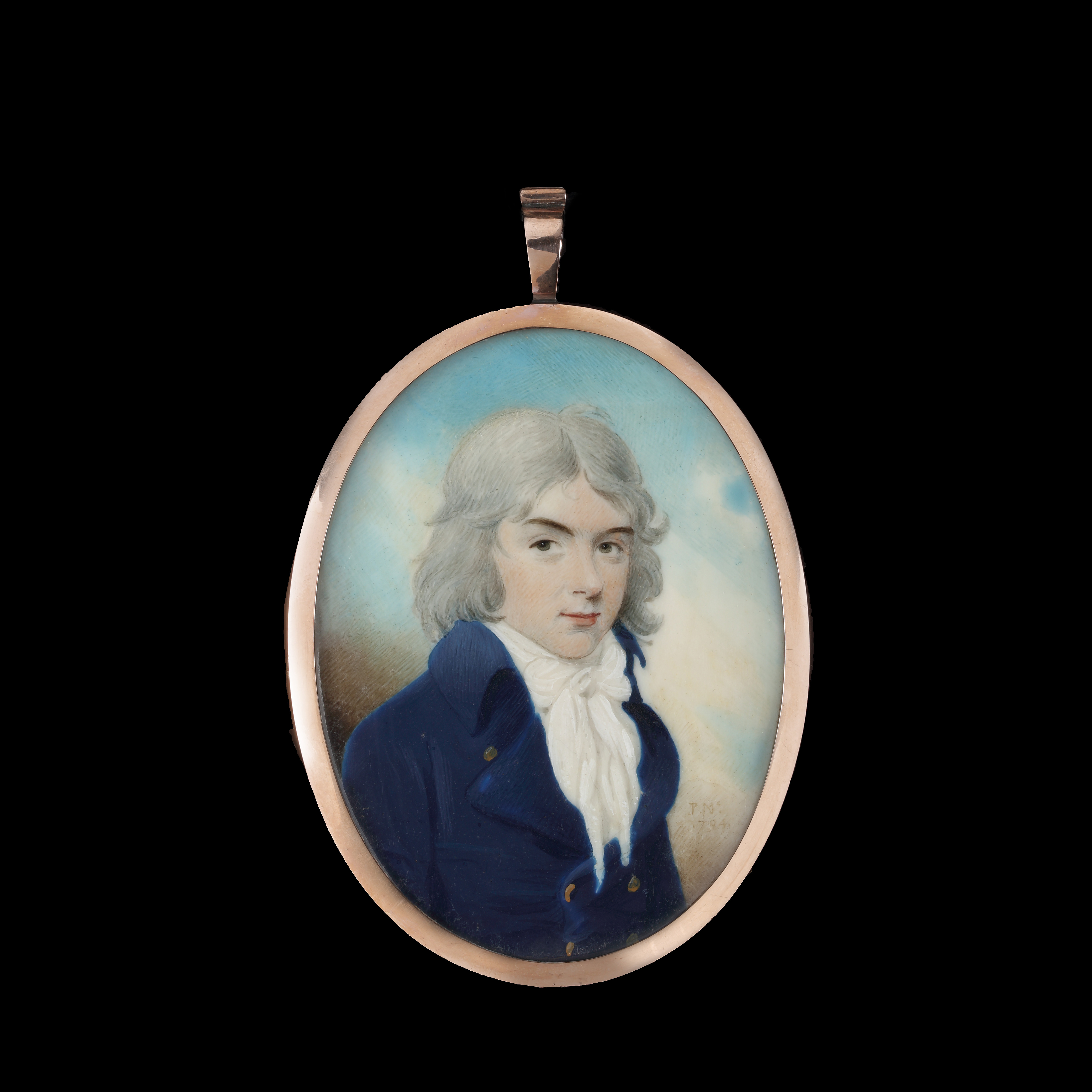
Fig. 3. PATRICK JOHN MCMORELAND (1741 -c.1809), Portrait miniature of a son of Robert Graham of Fintry, 1794. The Limner Company. |
1. Fintry: a brief biography (pre-1787)
Robert Graham (1749–1815) was born into an ancient Scottish family whose extensive lands were in Forfarshire. Although he retained the traditional designation ‘of Fintry’, he did not grow up at Mains Castle but instead at Linlathen, where his father died when he was only seven. His early years were shaped by a respectable education at Haddington and later at the University of St Andrews (1763–67), after which he inherited the family estate. By 1771, he had been appointed ‘gamekeeper’ or factor to the Douglas family, administering their properties in Forfar and Perth, an experience that would prove valuable in his later career. Two years later, he married his second cousin, Margaret Elizabeth (‘Peggy’) Mylne of Mylnefield, and together they built a large household of five sons and eleven daughters.[4] Yet the appearance of stability concealed a more fragile reality. His lands no longer yielded sufficient revenue, and long-standing family debts pressed heavily upon him. By the late 1780s, he was forced to sell the entire estate by ‘public voluntary roup’ (auction). As one scholar has observed, there was a moment when Fintry stood, in effect, as ‘a landless laird’, cut adrift from the historic patrimony that had shaped his identity.[5] Fortune, however, soon turned in his favour. At the beginning of 1787, he was appointed ‘His Majesty’s Commissioner for the Receipt and Management of His Majesty’s Revenues of Excise in Scotland’.[6] It was in this capacity that he was first introduced to the Bard of Scotland.
2. How Fintry and Burns met
Burns and Fintry first met in the central Highlands at the end of summer 1787.[7] At the time, Burns had embarked on a 600-kilometre tour of the Highlands, travelling by chaise and accompanied by the irascible Latin teacher William Nicol. The journey would furnish the poet with abundant lyrical inspiration and plenty of Jacobite anecdotes,[8] while also providing a timely opportunity to cultivate ducal patronage in the wake of the resounding success of the ‘First Edinburgh Edition’ of Poems, Chiefly in the Scottish Dialect. It was at Blair Castle – the ancestral seat of John Murray, 4th Duke of Atholl (1755–1830)[9] – that Burns was introduced to Fintry and his “belle et amiable” wife.[10] Burns later noted that his initial impression of Fintry was of a man who appreciated “the charms of conversation.”[11] What Fintry made of the poet is unrecorded, but we can imagine that he was impressed by the remarkable ascent of this self-fashioned ploughman-poet. He may well have shared the view of another guest who admired Burns’s ability to speak “with ease, propriety, and manliness.”[12] The available evidence suggests that, although brief, the encounter was notably successful. Within this context, it is essential to recognise that the Bard’s interest in Fintry may not have derived solely from Fintry’s role within the Establishment; additional motives likely existed, and these require examination.
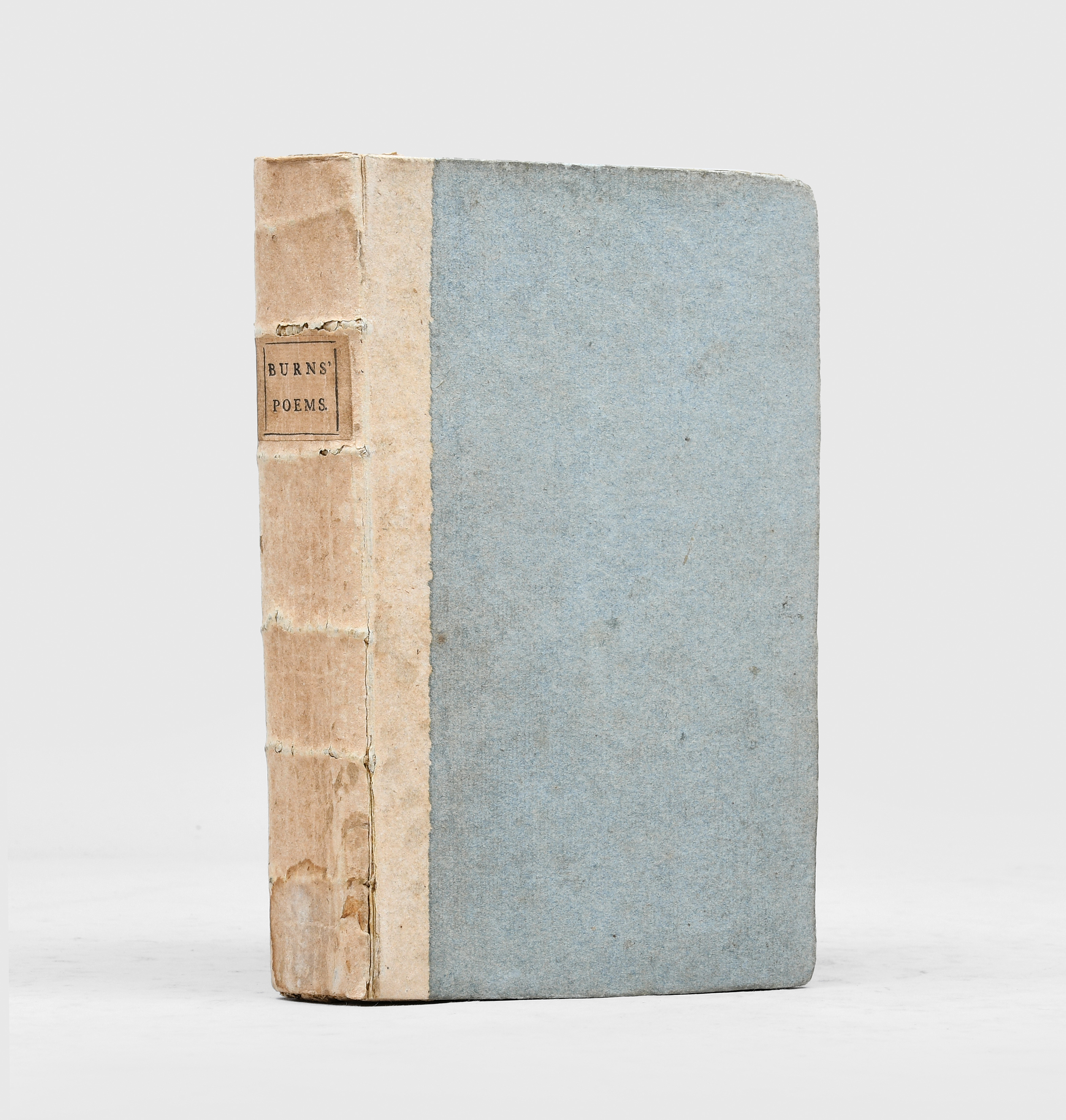
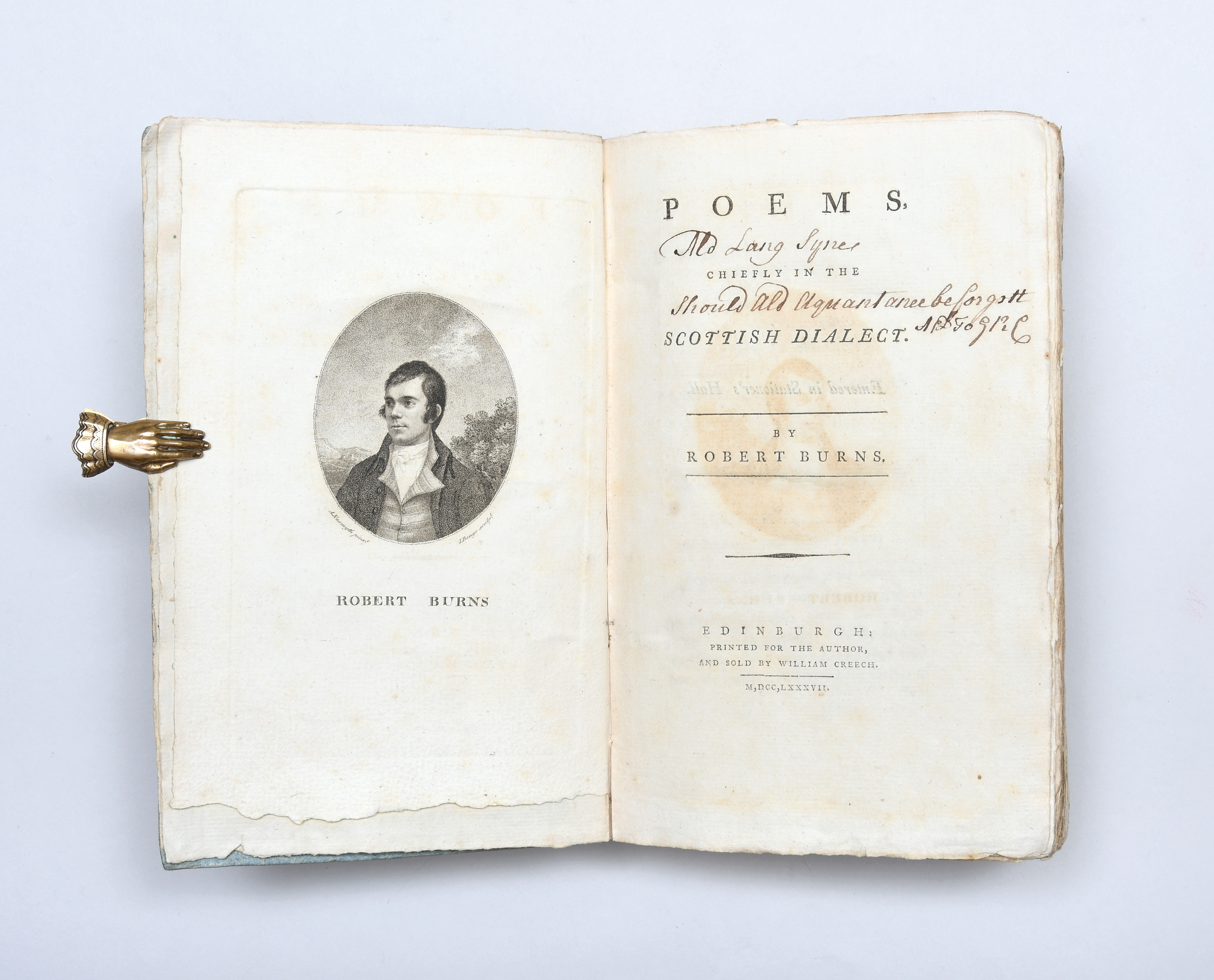
Fig. 2
ROBERT BURNS (1759-1796), Poems, Chiefly in the Scottish Dialect
The Bradley Martin copy, in original boards
Edinburgh: Printed for the Author, 1787
Peter Harrington (Stock Code: 174292)
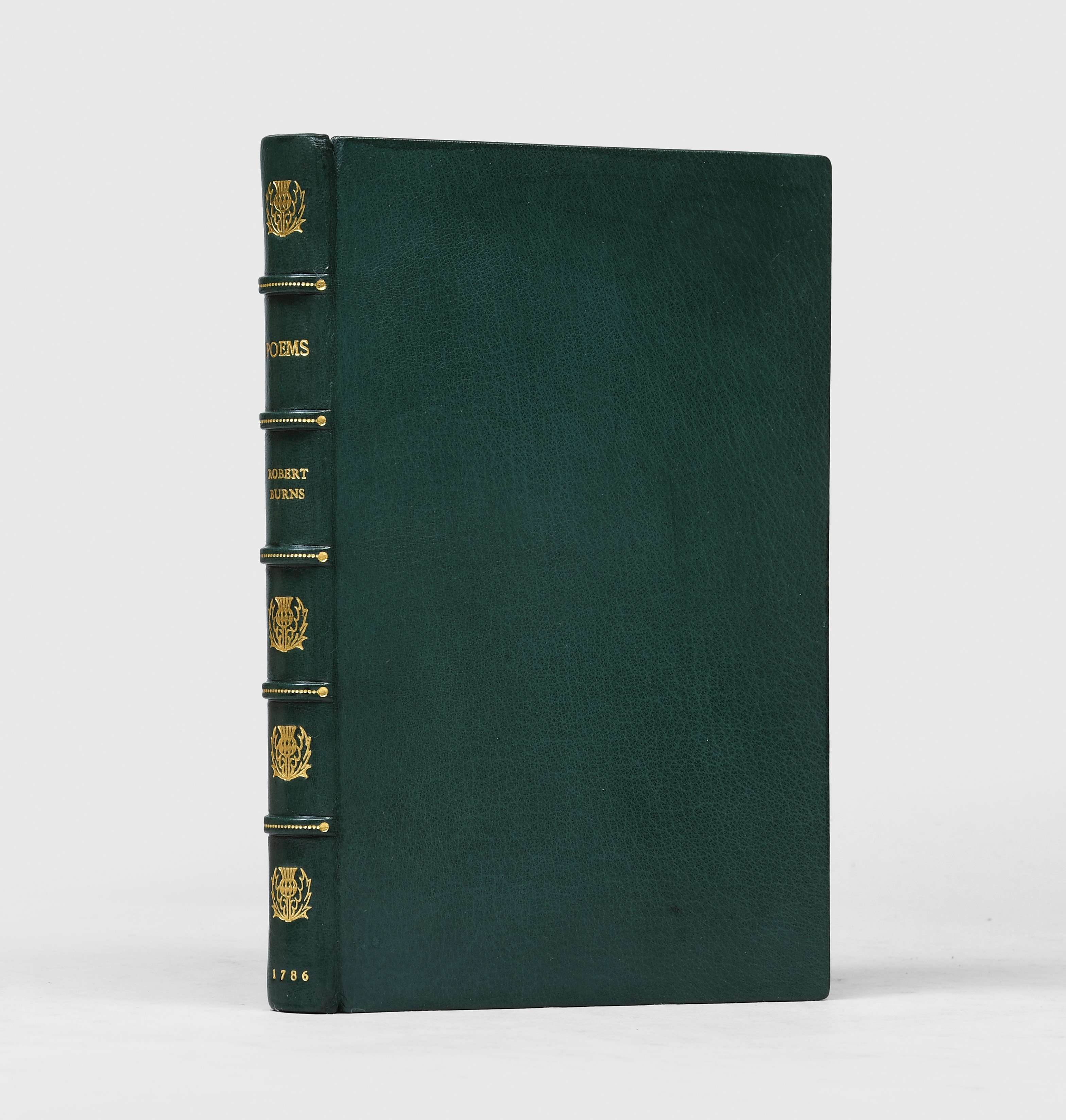
Fig. 3
ROBERT BURNS (1759-1796), Poems, Chiefly in the Scottish Dialect
Handsomely bound copy
Glasgow: John Smith & Son (Glasgow) Ltd, 1927
Peter Harrington (Stock Code: 161013)
3. Fintry’s Character
Burns held Fintry in unusually high esteem, describing him as “one of the worthiest and most accomplished gentlemen, not only of this country, but, I will dare to say, of this age”[13] and as “a gentleman of uncommon worth.”[14] It is clear that these tributes were not mere expressions of gratitude for Graham’s help in securing his financial and social stability. Rather, they reflect qualities Burns recognised in Fintry’s character.
Contemporary accounts seem to portray Fintry as a lively, sociable figure with a distinct joie de vivre. He played golf and cricket, attended university balls, enjoyed convivial drinking, and like many gentlemen of his era, suffered intermittent attacks of gout.[15] He was also capable of dramatic action: on one occasion, he reportedly defended a property from a violent mob, an episode that brought him public commendation.[16] As to his temperament, the poetess Mary Eleanor Bowes called him “a man of violent resentments”, while another source styled him a ‘staunch churchman’ devoted to the Monifieth Parish Church.[17] Taken together, these glimpses suggest a worldly, resilient, occasionally peppery, but socially astute gentleman.
Fintry was very much a product of the Scottish Enlightenment, committed to the ideals of improvement and economic progress. He supported a range of developmental initiatives, including the repurposing of waste ground in Dundee and the establishment of the cotton-manufacturing village of Stanley near Perth. He contributed to the reform of canvas-manufacturing standards for maritime use,[18] and in 1795 he was appointed an office-bearer of The Society for the Improvement of British Wool.[19] Intellectually, he aligned himself with the ideas of Adam Smith, whose Wealth of Nations (1776) he later lent to Burns.
Although descended from Jacobite forebears,[20] Fintry’s own political loyalties were firmly pro-Hanoverian. Overall, he was ‘a dedicated Whig’ committed to moderate, constitutional politics.[21] Alongside the Duke of Atholl, he moved in the influential orbit of Henry Dundas (1742–1811), the powerful Scottish manager of Pitt’s administration. Dundas’s programme in Scotland centred on consolidating government influence among Highland elites, securing compliant parliamentary seats, and encouraging military recruitment by tapping into the Highlands’ martial traditions.[22] Fintry participated actively in these networks. He received payments from Dundas’s secret service fund for intelligence work that supported ministerial propaganda and countered radical agitation.[23] Following the French Revolution and the rise of republican unrest, he oversaw a group of paid informants monitoring radical activity in the Dundee area.[24] He also belonged to the Dundee Club, an organisation committed to curbing local expressions of ‘disloyalty and sedition’ against the British Constitution.[25]
Burns was not indifferent to the influence Fintry wielded. “Fortune, Sir, has made you powerful & me impotent; has given you patronage, & me dependence,” he remarked with characteristic frankness.[26] On another occasion, he acknowledged that he had found in “Mr. Graham a very powerful and kind friend.”[27] Yet Burns did not approach him as a superior. Rather, Fintry’s character intrigued him. He esteemed his intellect and considered him a man with whom he could converse as an equal in spirit. It is on these qualities that the tone of their surviving correspondence rests. To be sure, the correspondence is shaped by Burns’s petitions for assistance, but it is animated, too, by the mutual respect and curiosity that underpinned their relationship.
Contemporary accounts seem to portray Fintry as a lively, sociable figure with a distinct joie de vivre. He played golf and cricket, attended university balls, enjoyed convivial drinking, and like many gentlemen of his era, suffered intermittent attacks of gout.[15] He was also capable of dramatic action: on one occasion, he reportedly defended a property from a violent mob, an episode that brought him public commendation.[16] As to his temperament, the poetess Mary Eleanor Bowes called him “a man of violent resentments”, while another source styled him a ‘staunch churchman’ devoted to the Monifieth Parish Church.[17] Taken together, these glimpses suggest a worldly, resilient, occasionally peppery, but socially astute gentleman.
Fintry was very much a product of the Scottish Enlightenment, committed to the ideals of improvement and economic progress. He supported a range of developmental initiatives, including the repurposing of waste ground in Dundee and the establishment of the cotton-manufacturing village of Stanley near Perth. He contributed to the reform of canvas-manufacturing standards for maritime use,[18] and in 1795 he was appointed an office-bearer of The Society for the Improvement of British Wool.[19] Intellectually, he aligned himself with the ideas of Adam Smith, whose Wealth of Nations (1776) he later lent to Burns.
Although descended from Jacobite forebears,[20] Fintry’s own political loyalties were firmly pro-Hanoverian. Overall, he was ‘a dedicated Whig’ committed to moderate, constitutional politics.[21] Alongside the Duke of Atholl, he moved in the influential orbit of Henry Dundas (1742–1811), the powerful Scottish manager of Pitt’s administration. Dundas’s programme in Scotland centred on consolidating government influence among Highland elites, securing compliant parliamentary seats, and encouraging military recruitment by tapping into the Highlands’ martial traditions.[22] Fintry participated actively in these networks. He received payments from Dundas’s secret service fund for intelligence work that supported ministerial propaganda and countered radical agitation.[23] Following the French Revolution and the rise of republican unrest, he oversaw a group of paid informants monitoring radical activity in the Dundee area.[24] He also belonged to the Dundee Club, an organisation committed to curbing local expressions of ‘disloyalty and sedition’ against the British Constitution.[25]
Burns was not indifferent to the influence Fintry wielded. “Fortune, Sir, has made you powerful & me impotent; has given you patronage, & me dependence,” he remarked with characteristic frankness.[26] On another occasion, he acknowledged that he had found in “Mr. Graham a very powerful and kind friend.”[27] Yet Burns did not approach him as a superior. Rather, Fintry’s character intrigued him. He esteemed his intellect and considered him a man with whom he could converse as an equal in spirit. It is on these qualities that the tone of their surviving correspondence rests. To be sure, the correspondence is shaped by Burns’s petitions for assistance, but it is animated, too, by the mutual respect and curiosity that underpinned their relationship.
4. The Correspondence, the poems, the Excise
Several critics have noted how little the two men may actually have known one another.[28] Yet the legacy of their friendship remains remarkable. How often Burns and Fintry met in person after their introduction at Blair Castle remains uncertain. Fintry may have accepted Burns’s invitation to a convivial farmer’s dinner at Ellisland in the summer of 1789.[29] And some sources suggest Burns visited Fintry in Dundee.[30] Burns’s warm tributes to Mrs Graham and Miss Graham also imply personal acquaintance with the Fintry family.[31] What survives, therefore, is not a record of sustained companionship but a compelling correspondence of around fifteen letters, complemented by five poems Burns composed for Fintry and his household. These exchanges centre chiefly on Burns’s developing career in the Scottish Excise and his evolving reputation as both poet and man. No letters from Fintry to Burns have survived.
The tone of Burns’s letters to Fintry has often been described as “unscrupulous”:[32] forthright, pressing, and unapologetically candid. At times melodramatic but more often contrite, the correspondence reveals a writer acutely conscious of his precarious position. Burns constructs a persona at once humble and ambitious, a kind of penniless ‘apprentice’ whose gratitude can be extravagant, even theatrical, yet whose pride and determination ring unmistakably through the pleas. By contrast, Fintry emerges as patron and friend, but also as a ‘Master’, someone Burns admires and hopes to learn from.[33]
Burns’s first bold appeal for Fintry’s patronage came in January 1788. He had recently submitted his application to the Board of Excise and sought appointment as an Officer under Fintry’s protection.[34] In this letter, Burns, ‘the heaven-taught ploughman’, voiced his fear of remaining an unsuccessful ‘country farmer’ and of earning too little to support his family. Within two months he had secured an instructor, an Excise Officer in Ayrshire, and promptly asked Fintry to encourage the Excise Secretary to authorise this arrangement. Fintry acted without delay. In September 1788, Burns pressed further, expressing a desire to be placed in the Dumfries Excise Division, an outcome possible only if an existing officer were displaced. Burns’s urgent tone may have been because of his difficulties at Ellisland Farm. He had recently leased the place and worried that he would not be able to make it profitable. His anxieties assumed literary form when he wrote To Robert Graham, Esq., of Fintry, with a request for an Excise Division (1788), an Augustan compliment in the manner of Pope, where the poet clings to “generous Graham” like a vine seeking support.[35] The following spring and summer brought rising confidence. Between May and July 1789 Burns was discussing a role in the local Excise station with Collector John Mitchell, whom Fintry had introduced to him through a letter of recommendation. Burns’s gratitude took poetic form in To Robert Graham, Esq., of Fintry, on Receiving a Favour, a sonnet of August 1789. By December he reported that he had been training with Collector Mitchell and Supervisor Findlater and was at last serving as an Excise Officer on a ten-parish “ride” in Nithsdale. Burns’s progress was swift.
By the summer of 1790 he had obtained a foot-walk Division in Dumfries – the “tobacco district” – again through Mitchell’s assistance.[36] As the burdens of Ellisland grew intolerable, he confided to Fintry his wish to focus wholly on the Excise, with hopes of eventual promotion to Examiner or a post in a Port Division. Yet 1790 also brought political daring. After the burgh elections, Burns sent Fintry an audacious poetic commentary: the Epistle to Robert Graham of Fintry on the Election for the Dumfries String of Boroughs (1790). Here he denounced the Duke of Queensberry’s hypocrisy and mocked the corruption of the electoral system in tones reminiscent of Pope and Hogarth.[37] The following year, having resolved to abandon the farm and move his family to Dumfries, Burns returned to the poetic mode of petition in To Robert Graham of Fintry, Esq. (1791). Written after the death of his earlier patron Glencairn, the poem is a lament in which the poet, weakened, overburdened, and impoverished, turns to Fintry for compassion and support. Critics have often judged the ‘Fintry poems’ as histrionic or sycophantic, but this final piece is widely regarded as the finest. Burns adopts the persona of the reckless poet who, purely driven by poetic inspiration, unleashes his voice to tell uncomfortable truths about Scotland’s political integrity and the decay of its aristocracy, and to educate his patron about the difficulties of a poetic existence.[38]
The most intense phase of their correspondence came with the political storm of late 1792. In December, Burns wrote to Fintry in alarm: Collector Mitchell had received an order from the Excise Board to investigate accusations that Burns was “a person disaffected to Government.” Burns suspected betrayal by someone who knew him well. He was so desperate to save his reputation that he invoked Fintry’s marriage and fatherhood. Fintry’s reply was reportedly reassuring, though he required Burns to answer each charge. Burns’s response, written in January 1793, stretched to seven pages. He denied involvement with any Republican group in Dumfries, and denied the rumour that he had joined a crowd singing the French revolutionary anthem Ça ira in defiance of the King and the Constitution. He also denied any association with Captain Johnson, publisher of the radical Edinburgh Gazetteer. Critics have often found Burns’s defence thin and unconvincing,[39] yet its conclusion is astonishing: after addressing every allegation, Burns renewed his request for Fintry’s help in obtaining a Supervisor’s post, a promotion that, as events would prove, never came.
The tone of Burns’s letters to Fintry has often been described as “unscrupulous”:[32] forthright, pressing, and unapologetically candid. At times melodramatic but more often contrite, the correspondence reveals a writer acutely conscious of his precarious position. Burns constructs a persona at once humble and ambitious, a kind of penniless ‘apprentice’ whose gratitude can be extravagant, even theatrical, yet whose pride and determination ring unmistakably through the pleas. By contrast, Fintry emerges as patron and friend, but also as a ‘Master’, someone Burns admires and hopes to learn from.[33]
Burns’s first bold appeal for Fintry’s patronage came in January 1788. He had recently submitted his application to the Board of Excise and sought appointment as an Officer under Fintry’s protection.[34] In this letter, Burns, ‘the heaven-taught ploughman’, voiced his fear of remaining an unsuccessful ‘country farmer’ and of earning too little to support his family. Within two months he had secured an instructor, an Excise Officer in Ayrshire, and promptly asked Fintry to encourage the Excise Secretary to authorise this arrangement. Fintry acted without delay. In September 1788, Burns pressed further, expressing a desire to be placed in the Dumfries Excise Division, an outcome possible only if an existing officer were displaced. Burns’s urgent tone may have been because of his difficulties at Ellisland Farm. He had recently leased the place and worried that he would not be able to make it profitable. His anxieties assumed literary form when he wrote To Robert Graham, Esq., of Fintry, with a request for an Excise Division (1788), an Augustan compliment in the manner of Pope, where the poet clings to “generous Graham” like a vine seeking support.[35] The following spring and summer brought rising confidence. Between May and July 1789 Burns was discussing a role in the local Excise station with Collector John Mitchell, whom Fintry had introduced to him through a letter of recommendation. Burns’s gratitude took poetic form in To Robert Graham, Esq., of Fintry, on Receiving a Favour, a sonnet of August 1789. By December he reported that he had been training with Collector Mitchell and Supervisor Findlater and was at last serving as an Excise Officer on a ten-parish “ride” in Nithsdale. Burns’s progress was swift.
By the summer of 1790 he had obtained a foot-walk Division in Dumfries – the “tobacco district” – again through Mitchell’s assistance.[36] As the burdens of Ellisland grew intolerable, he confided to Fintry his wish to focus wholly on the Excise, with hopes of eventual promotion to Examiner or a post in a Port Division. Yet 1790 also brought political daring. After the burgh elections, Burns sent Fintry an audacious poetic commentary: the Epistle to Robert Graham of Fintry on the Election for the Dumfries String of Boroughs (1790). Here he denounced the Duke of Queensberry’s hypocrisy and mocked the corruption of the electoral system in tones reminiscent of Pope and Hogarth.[37] The following year, having resolved to abandon the farm and move his family to Dumfries, Burns returned to the poetic mode of petition in To Robert Graham of Fintry, Esq. (1791). Written after the death of his earlier patron Glencairn, the poem is a lament in which the poet, weakened, overburdened, and impoverished, turns to Fintry for compassion and support. Critics have often judged the ‘Fintry poems’ as histrionic or sycophantic, but this final piece is widely regarded as the finest. Burns adopts the persona of the reckless poet who, purely driven by poetic inspiration, unleashes his voice to tell uncomfortable truths about Scotland’s political integrity and the decay of its aristocracy, and to educate his patron about the difficulties of a poetic existence.[38]
The most intense phase of their correspondence came with the political storm of late 1792. In December, Burns wrote to Fintry in alarm: Collector Mitchell had received an order from the Excise Board to investigate accusations that Burns was “a person disaffected to Government.” Burns suspected betrayal by someone who knew him well. He was so desperate to save his reputation that he invoked Fintry’s marriage and fatherhood. Fintry’s reply was reportedly reassuring, though he required Burns to answer each charge. Burns’s response, written in January 1793, stretched to seven pages. He denied involvement with any Republican group in Dumfries, and denied the rumour that he had joined a crowd singing the French revolutionary anthem Ça ira in defiance of the King and the Constitution. He also denied any association with Captain Johnson, publisher of the radical Edinburgh Gazetteer. Critics have often found Burns’s defence thin and unconvincing,[39] yet its conclusion is astonishing: after addressing every allegation, Burns renewed his request for Fintry’s help in obtaining a Supervisor’s post, a promotion that, as events would prove, never came.
5. An analysis of Fintry’s patronage
Regarding Burns’s unrestrained poetical flattery, Fintry may well have felt a mixture of caution and delight. Yet to each of the poet’s bold requests he responded as far as propriety allowed, assisting without ever overstepping institutional boundaries. What is often overlooked in discussions of Fintry’s patronage is a consideration of the deeper motives behind his empathy and humanity, and the extent to which the relationship became mutually convenient. For although the two men differed markedly in rank, they met as equals in spirit: Burns offered cultural prestige, poetic homage, and a widening of Fintry’s intellectual profile, while Fintry supplied stability, support, and access to power. Their correspondence, therefore, reflects not merely a hierarchy of patron and petitioner but a reciprocal exchange shaped by shared sensibilities and intersecting needs.
Fintry’s affinity for Burns can be partly explained by his own familiarity with instability and the uncertainties of fortune. He was a seasoned Scotsman who understood the contradictions of human nature and the precariousness of economic life. Although he had not experienced rural poverty firsthand, he had managed estates, dealt with tenants, and participated in agricultural improvement. These experiences gave him insight into the vulnerabilities of farming life. Burns expressed his fear of financial collapse – a fear sharpened by the memory of his father’s ruin and the lawsuit that followed – to Fintry at least once: “I have lived to see repeatedly throw a venerable Parent in the jaws of a Jail; where, but for the Poor Man’s last and often best friend, Death, he might have ended his days.”[40] Fintry, too, had lost his father very young, a trauma that may have shaped the difficulties he later faced in sustaining the family estate. After their fathers’ deaths, both he and Burns found themselves responsible for supporting their families, Burns as a tenant farmer, Fintry as a factor. It is no surprise, then, that Burns appealed to him in terms he knew would resonate: “Sir, you are a Husband & a father… you know what you would feel to see the much-loved wife of your bosom & your helpless prattling little ones, turned adrift into the world.”[41] Burns’s strategic invocation of shared anxieties about domestic responsibility reveals acute sensitivity to Fintry’s own emotional landscape.
Burns also understood how to appeal to other aspects of Fintry’s character. His letters, often signed with declarations of “native gratitude,” tapped into a shared sense of patriotism and civic purpose.[42] Politically, the two men were not so far apart. Both were patriotic Scots employed by the British state; both worked as ‘gaugers’, positions that attracted resentment from segments of society, but offered routes to influence and advancement. Fintry’s commitment to economic improvement and national progress aligned with Burns’s own hopes for reform. Indeed, in his letter of January 1793, Burns openly professed his adherence to the “Reform Principles”: “I look upon the British Constitution, as settled at the Revolution, to be the most glorious Constitution on earth, or that perhaps the wit of man can frame; at the same time, I think, & you know what High and distinguished Characters have for some time thought so, that we have a good deal deviated from the original principles of that Constitution […]”.[43] Burns clearly believed that Fintry would understand, and perhaps share, similar feelings about the current state of corruption. He would not have risked such a statement had he not been confident of Fintry’s sympathetic ear.
Meanwhile, Fintry was not oblivious to Burns’s radicalism.[44] Fintry showed great humanity during the episode of Ça ira at the theatre, which should be seen in the context of the growing number of radical riots and new radical society spreading in the manufacturing regions of lowland Scotland after the French Revolution (1792-94). The elite, to which Fintry belonged, grew concerned and sent letters to the government about these activities. Henry Dundas was convinced insurrection was imminent in Scotland and intensified his measures to spy on dissidents and radicals. As mentioned before, Fintry was one of these government informers.[45] He was paying spies to detect radical activity in the Dundee area. According to Scott Hogg, this is something that would have shocked Burns, and it points to the possibility of Fintry’s disloyalty towards him.[46] Though participating in this repressive climate, Fintry was simply committed to the order and stability of Dundee.[47] He was powerful, but he was still a local official. He was, perhaps, glad that he was not obliged to watch radical societies in Dumfries and he could assure Burns that he was safe, and no proceedings would be brought against him. According to Noble and Scott Hogg, Fintry was ‘keeping [Burns] dependent and cornered in Dumfries. Burns himself, of course, was desperate to have the Excise move him to the more radically sympathetic West Scotland’. [48] Ultimately, what counts is that Fintry did not expose his Bard friend.
Burns himself recognised the depth of Fintry’s support. Writing to Professor Stewart, he affirmed his “doubly indebted” gratitude for acts of kindness “done in a manner grateful to the delicate feelings of sensibility.”[49] To Fintry he wrote: “You, Sir, have patronized and befriended me… by being my persevering Friend in real life.”[50] Burns understood precisely which of Fintry’s qualities – his benevolence, his sense of duty, his personal experience of loss – were most likely to secure his sympathy, and he used them with remarkable dexterity. Yet this dynamic cannot be characterised as one-sided. Burns offered something tangible in return. His poems, circulated in manuscript among Edinburgh’s intellectual elite, brought Fintry’s name into influential literary networks; his printed dedication publicly associated Fintry with the cultural prestige of Scotland’s most celebrated poet; and his correspondence consistently cast Fintry as a man of discernment, benevolence, and refined judgement.
Seen in this light, their relationship was not merely a pattern of petition and patronage but a reciprocal exchange. Burns secured stability and protection during his most vulnerable years, while Fintry acquired cultural visibility and a lasting association with the emerging national bard. This mutual convenience—reinforced by genuine respect and shared convictions—helps explain why Fintry remained one of Burns’s most consistent and loyal supporters during the most precarious period of the poet’s life.
Fintry’s affinity for Burns can be partly explained by his own familiarity with instability and the uncertainties of fortune. He was a seasoned Scotsman who understood the contradictions of human nature and the precariousness of economic life. Although he had not experienced rural poverty firsthand, he had managed estates, dealt with tenants, and participated in agricultural improvement. These experiences gave him insight into the vulnerabilities of farming life. Burns expressed his fear of financial collapse – a fear sharpened by the memory of his father’s ruin and the lawsuit that followed – to Fintry at least once: “I have lived to see repeatedly throw a venerable Parent in the jaws of a Jail; where, but for the Poor Man’s last and often best friend, Death, he might have ended his days.”[40] Fintry, too, had lost his father very young, a trauma that may have shaped the difficulties he later faced in sustaining the family estate. After their fathers’ deaths, both he and Burns found themselves responsible for supporting their families, Burns as a tenant farmer, Fintry as a factor. It is no surprise, then, that Burns appealed to him in terms he knew would resonate: “Sir, you are a Husband & a father… you know what you would feel to see the much-loved wife of your bosom & your helpless prattling little ones, turned adrift into the world.”[41] Burns’s strategic invocation of shared anxieties about domestic responsibility reveals acute sensitivity to Fintry’s own emotional landscape.
Burns also understood how to appeal to other aspects of Fintry’s character. His letters, often signed with declarations of “native gratitude,” tapped into a shared sense of patriotism and civic purpose.[42] Politically, the two men were not so far apart. Both were patriotic Scots employed by the British state; both worked as ‘gaugers’, positions that attracted resentment from segments of society, but offered routes to influence and advancement. Fintry’s commitment to economic improvement and national progress aligned with Burns’s own hopes for reform. Indeed, in his letter of January 1793, Burns openly professed his adherence to the “Reform Principles”: “I look upon the British Constitution, as settled at the Revolution, to be the most glorious Constitution on earth, or that perhaps the wit of man can frame; at the same time, I think, & you know what High and distinguished Characters have for some time thought so, that we have a good deal deviated from the original principles of that Constitution […]”.[43] Burns clearly believed that Fintry would understand, and perhaps share, similar feelings about the current state of corruption. He would not have risked such a statement had he not been confident of Fintry’s sympathetic ear.
Meanwhile, Fintry was not oblivious to Burns’s radicalism.[44] Fintry showed great humanity during the episode of Ça ira at the theatre, which should be seen in the context of the growing number of radical riots and new radical society spreading in the manufacturing regions of lowland Scotland after the French Revolution (1792-94). The elite, to which Fintry belonged, grew concerned and sent letters to the government about these activities. Henry Dundas was convinced insurrection was imminent in Scotland and intensified his measures to spy on dissidents and radicals. As mentioned before, Fintry was one of these government informers.[45] He was paying spies to detect radical activity in the Dundee area. According to Scott Hogg, this is something that would have shocked Burns, and it points to the possibility of Fintry’s disloyalty towards him.[46] Though participating in this repressive climate, Fintry was simply committed to the order and stability of Dundee.[47] He was powerful, but he was still a local official. He was, perhaps, glad that he was not obliged to watch radical societies in Dumfries and he could assure Burns that he was safe, and no proceedings would be brought against him. According to Noble and Scott Hogg, Fintry was ‘keeping [Burns] dependent and cornered in Dumfries. Burns himself, of course, was desperate to have the Excise move him to the more radically sympathetic West Scotland’. [48] Ultimately, what counts is that Fintry did not expose his Bard friend.
Burns himself recognised the depth of Fintry’s support. Writing to Professor Stewart, he affirmed his “doubly indebted” gratitude for acts of kindness “done in a manner grateful to the delicate feelings of sensibility.”[49] To Fintry he wrote: “You, Sir, have patronized and befriended me… by being my persevering Friend in real life.”[50] Burns understood precisely which of Fintry’s qualities – his benevolence, his sense of duty, his personal experience of loss – were most likely to secure his sympathy, and he used them with remarkable dexterity. Yet this dynamic cannot be characterised as one-sided. Burns offered something tangible in return. His poems, circulated in manuscript among Edinburgh’s intellectual elite, brought Fintry’s name into influential literary networks; his printed dedication publicly associated Fintry with the cultural prestige of Scotland’s most celebrated poet; and his correspondence consistently cast Fintry as a man of discernment, benevolence, and refined judgement.
Seen in this light, their relationship was not merely a pattern of petition and patronage but a reciprocal exchange. Burns secured stability and protection during his most vulnerable years, while Fintry acquired cultural visibility and a lasting association with the emerging national bard. This mutual convenience—reinforced by genuine respect and shared convictions—helps explain why Fintry remained one of Burns’s most consistent and loyal supporters during the most precarious period of the poet’s life.
6. Fintry’s fame
As we have seen, the relationship between Burns and Fintry brought a remarkable degree of stability to the poet’s life between 1788 and 1794. Yet this dynamic was not one-sided. Did Burns contribute to Fintry’s reputation during his lifetime?
Burns’s literary output played a significant, though often overlooked, role in shaping Fintry’s public image. His first poem for Fintry, composed in September 1788, remained unpublished but circulated widely in manuscript among influential figures, including Professor Dugald Stewart and Henry Erskine.[51] Of the four poems addressed to Fintry, only To Robert Graham of Fintry, Esq. (1791) appeared in print during Burns’s lifetime, included in the Second Edinburgh Edition of 1793.[52] However, its insight into the Poet’s precarious position was so compelling that Samuel Taylor Coleridge later transcribed two of its stanzas in a private letter.[53] This circulation – both of manuscript and printed material – placed Fintry’s name in the hands of Scotland’s intellectual elite and associated him with one of the era’s most celebrated literary voices. It is therefore reasonable to argue that Burns enhanced Fintry’s cultural profile, situating him within a wider literary and intellectual milieu that extended far beyond his administrative sphere. Viewed in this light, the resurfaced miniatures can be read not merely as family heirlooms but as material witnesses to a reciprocal relationship in which patronage, reputation, and artistic production were mutually reinforcing. In particular, the portrait miniature of Fintry discussed below, painted in the same year as the Second Edinburgh Edition, appears to reflect his desire to present himself as a sensitive man of culture and intellectual standing.
Burns’s literary output played a significant, though often overlooked, role in shaping Fintry’s public image. His first poem for Fintry, composed in September 1788, remained unpublished but circulated widely in manuscript among influential figures, including Professor Dugald Stewart and Henry Erskine.[51] Of the four poems addressed to Fintry, only To Robert Graham of Fintry, Esq. (1791) appeared in print during Burns’s lifetime, included in the Second Edinburgh Edition of 1793.[52] However, its insight into the Poet’s precarious position was so compelling that Samuel Taylor Coleridge later transcribed two of its stanzas in a private letter.[53] This circulation – both of manuscript and printed material – placed Fintry’s name in the hands of Scotland’s intellectual elite and associated him with one of the era’s most celebrated literary voices. It is therefore reasonable to argue that Burns enhanced Fintry’s cultural profile, situating him within a wider literary and intellectual milieu that extended far beyond his administrative sphere. Viewed in this light, the resurfaced miniatures can be read not merely as family heirlooms but as material witnesses to a reciprocal relationship in which patronage, reputation, and artistic production were mutually reinforcing. In particular, the portrait miniature of Fintry discussed below, painted in the same year as the Second Edinburgh Edition, appears to reflect his desire to present himself as a sensitive man of culture and intellectual standing.
7. The Portrait Miniatures
We turn now to the remarkable group of miniatures that once formed part of the Graham of Fintry family collection, a distinguished assemblage that also included portraits by Kneller, Hoppner, and Raeburn. The collection passed first to Fintry’s heir and second son, Colonel John Graham (1778–1822), and then to his descendants, who kept it in Cape Town until 1932 and later in Finsbury Circus, London, until 1946. Among its contents was a notable half-length portrait of Prince Charles Edward Stuart, dressed in a rose-coloured velvet coat, painted in 1737 by John Alexander (1686–c.1766).[54] Its presence in the collection attests to the family’s enduring Jacobite sympathies: like Fintry’s father, Alexander took part in the Rising of 1745, when Charles Edward Stuart sought to reclaim the British throne.
The exquisite, finely finished portrait of Robert Graham of Fintry is signed with the crisp Roman initials “T·H” and dated at the lower left. It was painted in 1793 by the Liverpool-based miniaturist Thomas Hazelhurst (c.1740–c.1821), then working from 9 Rodney Street.[55] The portrait belongs to a pivotal moment in the Burns-Fintry friendship when Fintry was helping the poet defend himself against charges of disloyalty, and when To Robert Graham of Fintry, Esq. appeared in the Second Edinburgh Edition. It was also the year Fintry received payment for disseminating pro–William Pitt propaganda, and his son John had just been commissioned as an Ensign in the 85th Regiment of Foot.[56] The miniature displays several hallmarks of Hazelhurst’s hand, including the bluish shading of the face and the subtle halo of lighter background framing the sitter.[57] Looked at closely, this portrait is astonishing in the way it combines the many facets of Fintry’s personality. He appears as a man of the Establishment, wearing a powdered wig en queue and a dark blue coat. Yet he is shown facing left, a pose that softens formality and offers the viewer a glimpse of a more expressive, emotional temperament.[58] This impression is heightened by the delicate white highlights on the eyes, which animate the sitter with lifelike immediacy and suggest the innate goodness Burns had so recently proclaimed to the world. Moreover, his white cravat, tied in the fashion of a blooming flower, may be read as symbolic of intellectual refinement, openness of character, and emotional sensitivity – all qualities we have pointed out in this article.
The second miniature is almost certainly a portrait of Robert (1775–1799), Fintry’s eldest son. Painted in 1794 by Patrick John McMorland (1741–c.1809), the work depicts the young sitter in a navy coat and white cravat, his powdered hair worn loose and flowing, set against a blue-sky background with foliage to the left. Although McMorland’s style exhibited considerable range, the handling of this piece closely recalls two gentlemen’s miniatures he produced in the mid- to late 1790s during his Manchester period, suggesting a consistent approach to male portraiture in these years.[59] The miniature bears on its verso two interlaced initials, ‘RG’ and ‘DG’. The slightly smaller ‘DG’ may plausibly refer to David Graham, a younger brother of the sitter, who was only nine years old when Robert departed for India and to whom the miniature may have been entrusted as a personal token. The miniature was very likely conceived as a parting gift, commissioned on the occasion of Robert’s appointment to the East India Company as Second Assistant Register at the Provincial Court of Appeal and Court of Circuit in the Province of Benares.[60] His promising career was cut tragically short: Robert was killed in the Massacre of Benares, murdered on the orders of the ex-Nawab of Awadh, Wazir Ali Khan, in retaliation against the British Bengal Establishment.[61] Among the few personal possessions he carried to India was “A Portrait Miniature Set in Gold,” evidently preserved as a cherished keepsake from the Fintry household.[62]
The third miniature is a finely executed and delicately observed portrait of one of Robert Graham’s elder daughters, most probably Anne. Painted around 1798 by Andrew Plimer (1763–1837), it dates from the period when Plimer, formerly apprenticed to Richard Cosway, had established his own successful practice in fashionable Golden Square, London. It was in these years, more than two decades before his later tours of Scotland, that he produced the portrait of ‘Miss Graham’. The work displays several hallmarks of Plimer’s mature manner. Most notable is the characteristic cross-hatching visible in the background on either side of the sitter, a technique through which he created depth and tonal nuance by means of fine, intersecting strokes. The absence of a signature is consistent with Plimer’s so-called “second phase” (after 1789), when he frequently left his miniatures unsigned.[63] The qualities singled out by George C. Williamson as emblematic of Plimer’s style – his distinctive handling of hair and the luminous brilliance of the eye – are both clearly present here.[64] It is striking that the locks of auburn hair set into the reverse of the miniature match the sitter’s hair precisely, suggesting not only that the portrait has retained its original vividness, but also that the material fragment reinforces the miniature’s claim to authenticity and intimacy. In a similarly delicate way, Anne Graham was the recipient of Burns’s To Miss Graham of Fintry, a formal sonnet composed in Dumfries in January 1794.[65] Burns later sent her a copy of A Select Collection of Original Scottish Airs, inscribing it with the opening line of the poem: “Here, where the Scottish Muse immortal lives.” In his final letter to Fintry, Burns explained that this gift to Anne was intended as a gesture of gratitude to his patron and the Graham family.[66]
The exquisite, finely finished portrait of Robert Graham of Fintry is signed with the crisp Roman initials “T·H” and dated at the lower left. It was painted in 1793 by the Liverpool-based miniaturist Thomas Hazelhurst (c.1740–c.1821), then working from 9 Rodney Street.[55] The portrait belongs to a pivotal moment in the Burns-Fintry friendship when Fintry was helping the poet defend himself against charges of disloyalty, and when To Robert Graham of Fintry, Esq. appeared in the Second Edinburgh Edition. It was also the year Fintry received payment for disseminating pro–William Pitt propaganda, and his son John had just been commissioned as an Ensign in the 85th Regiment of Foot.[56] The miniature displays several hallmarks of Hazelhurst’s hand, including the bluish shading of the face and the subtle halo of lighter background framing the sitter.[57] Looked at closely, this portrait is astonishing in the way it combines the many facets of Fintry’s personality. He appears as a man of the Establishment, wearing a powdered wig en queue and a dark blue coat. Yet he is shown facing left, a pose that softens formality and offers the viewer a glimpse of a more expressive, emotional temperament.[58] This impression is heightened by the delicate white highlights on the eyes, which animate the sitter with lifelike immediacy and suggest the innate goodness Burns had so recently proclaimed to the world. Moreover, his white cravat, tied in the fashion of a blooming flower, may be read as symbolic of intellectual refinement, openness of character, and emotional sensitivity – all qualities we have pointed out in this article.
The second miniature is almost certainly a portrait of Robert (1775–1799), Fintry’s eldest son. Painted in 1794 by Patrick John McMorland (1741–c.1809), the work depicts the young sitter in a navy coat and white cravat, his powdered hair worn loose and flowing, set against a blue-sky background with foliage to the left. Although McMorland’s style exhibited considerable range, the handling of this piece closely recalls two gentlemen’s miniatures he produced in the mid- to late 1790s during his Manchester period, suggesting a consistent approach to male portraiture in these years.[59] The miniature bears on its verso two interlaced initials, ‘RG’ and ‘DG’. The slightly smaller ‘DG’ may plausibly refer to David Graham, a younger brother of the sitter, who was only nine years old when Robert departed for India and to whom the miniature may have been entrusted as a personal token. The miniature was very likely conceived as a parting gift, commissioned on the occasion of Robert’s appointment to the East India Company as Second Assistant Register at the Provincial Court of Appeal and Court of Circuit in the Province of Benares.[60] His promising career was cut tragically short: Robert was killed in the Massacre of Benares, murdered on the orders of the ex-Nawab of Awadh, Wazir Ali Khan, in retaliation against the British Bengal Establishment.[61] Among the few personal possessions he carried to India was “A Portrait Miniature Set in Gold,” evidently preserved as a cherished keepsake from the Fintry household.[62]
The third miniature is a finely executed and delicately observed portrait of one of Robert Graham’s elder daughters, most probably Anne. Painted around 1798 by Andrew Plimer (1763–1837), it dates from the period when Plimer, formerly apprenticed to Richard Cosway, had established his own successful practice in fashionable Golden Square, London. It was in these years, more than two decades before his later tours of Scotland, that he produced the portrait of ‘Miss Graham’. The work displays several hallmarks of Plimer’s mature manner. Most notable is the characteristic cross-hatching visible in the background on either side of the sitter, a technique through which he created depth and tonal nuance by means of fine, intersecting strokes. The absence of a signature is consistent with Plimer’s so-called “second phase” (after 1789), when he frequently left his miniatures unsigned.[63] The qualities singled out by George C. Williamson as emblematic of Plimer’s style – his distinctive handling of hair and the luminous brilliance of the eye – are both clearly present here.[64] It is striking that the locks of auburn hair set into the reverse of the miniature match the sitter’s hair precisely, suggesting not only that the portrait has retained its original vividness, but also that the material fragment reinforces the miniature’s claim to authenticity and intimacy. In a similarly delicate way, Anne Graham was the recipient of Burns’s To Miss Graham of Fintry, a formal sonnet composed in Dumfries in January 1794.[65] Burns later sent her a copy of A Select Collection of Original Scottish Airs, inscribing it with the opening line of the poem: “Here, where the Scottish Muse immortal lives.” In his final letter to Fintry, Burns explained that this gift to Anne was intended as a gesture of gratitude to his patron and the Graham family.[66]
8. Brief conclusion
There are many ways of delving into the world of Robert Burns, and these newly discovered miniatures can be considered among the most recent specimens of Burnsiana. They provide another perspective on the life and work of one of the greatest poets of all time, as well as opening new narratives on patronage and friendship. They were produced in the years Fintry was publicly recognised as a friend and a patron of the Scottish Bard – “kindly active Benefactor and politely generous Friend”.[67] They reflect the reputation Fintry and his family enjoyed after Burns’s Second Edinburgh Edition of 1793. Finally, they allow Burns scholars to reflect further on the impact of the Grahams of Fintry on the overall Burns’ legacy.
[1] The branch of the Grahams of Fintry traces their descent from Sir William, Lord of Grahame and his second wife, Princess Mary Stewart, daughter of Robert III (c.1337-1406). See S.C. Lomas, The Manuscripts in the Possession of Sir John James Graham of Fintry K.C.M.G., in Historical Manuscript Commission (1909). Report on Manuscripts in Various Collections, vol. V. Hereford: His Majesty’s Stationery Office, p. 185.
[2] ‘Your Honorable Board, sometime ago, gave me my Excise Commission; which I regard as my sheet anchor in life’. The Complete Letters of Robert Burns, p. 425.
[3] James Cameron Ewing and Andrew Mac Callum, ‘Robert Graham Twelfth of Fintry’, in The Burns Chronicles, 1931, p. 35.
[4] Fintry’s children were: Isabella-Gray (1774-1774); Robert (1775-1799); Isabella (1776-1854); Colonel John Graham (1778-1822); Margaret (1780-1798); Thomas (1781-1822); Mrs Anne Brodrick (1783-1852); David (1785-1824); Elizabeth-Kinlock (1789-1789); Mrs Elizabeth Keay (1791-1873); Mrs Helen-Christian Cloete (1792-1870); Mrs Jemima Agnes Dundas (1793-1874); Emily Georgina (1795-1881); James-Scott (1796-1804); Mary-Cathcart (1796-1854); Catherine-Margaret (1799-1876); Roberta (1801-1868); and the last daughter, Mrs Caroline MacKay Carr (1802-1837).
[5] https://drive.google.com/file/d/1T0fvDKE-jbfsH3WvJoYO3kgwUSk_0oMV/view
[6]London Gazette, 20 January 1787, p. 2.
[7] J.C. Ewing (1927). Journal of a Tour in the Highlands made in the year 1787 by Robert Burns. London: Gowans & Gray, pp. 13-14.
[8] In his Journal, Burns frequently refers with nostalgia to the events of the 1715 and 1745 Jacobite uprisings and the Battle of Culloden (1746). See Nigel Leask ed. (2014) The Oxford Edition of the Works of Robert Burns, p. 140.
[9] The Grahams of Fintry maintained a long-established feudal relationship with the Duke of Atholl, involving the payment of rents, feu duties, keeping of accounts, and various other obligations. On the death of Fintry’s father, his estates included: “The forest or glen of Binachrombie or Glenmore ‘disposed’ to the said Robert Graham by James, Duke of Atholl, and redeemable by him’. Also, Fintry’s father took a job as a factor and general forester to the Second Duke of Atholl. Fintry’s brother, Captain James Graham, was an officer of the 77th Atholl Highlanders Regiment.
See S.C. Lomas, The Manuscripts in the Possession of Sir John James Graham of Fintry K.C.M.G., in Historical Manuscript Commission (1909). Report on Manuscripts in Various Collections, vol. V. Hereford: His Majesty’s Stationery Office, p. 222; and Robert Francis Mudie, and David Morrison Walker (1964). Mains Castle & the Grahams of Fintry. Dundee: Abertay Historical Society Publication no.9, p. 16; https://deriv.nls.uk/dcn23/9519/95199077.23.pdf.
[10] The introduction to the duke came from Professor Hugh Blair of Edinburgh. Hogg, p. 161. His Ayrshire friend, Rev. Josiah Walker, tutor to the Duke’s son, later said of Burns’ visit to Blair Atholl, that it was ‘ability alone that gave him a title to be there’. Scott Douglas, vol. I, p. 367. See The Canongate Burns, p. 281.
[11] Letter to Josiah Walker, 5 September 1787. Maurice Lindsay (1970). The Burns Encyclopedia. London: Hutchinson, p.149.
[12] Ian McIntyre (1995), Robert Burns A Life, p.162.
[13] Letter to Mrs Dunlop, 10 December 1788.
[14] Letter to Dr Moore, 4 January 1789.
[15] MUDIE, Robert Francis, Sir, K.C.S.I..; WALKER, David Morrison (1964) Mains Castle & the Grahams of Fintry. Dundee: Abertay Historical Society Publication no.9, p.17; S.C. Lomas, The Manuscripts in the Possession of Sir John James Graham of Fintry K.C.M.G., in Historical Manuscript Commission (1909). Report on Manuscripts in Various Collections, vol. V. Hereford: His Majesty’s Stationery Office, p. 269.
[16] James Cameron Ewing and Andrew Mac Callum, ‘Robert Graham Twelfth of Fintry’, in The Burns Chronicles, 1931, pp. 42-43.
[17] Broughty Ferry Guide and Advertiser, 6 February 1954, p. 6.
[18] https://drive.google.com/file/d/1T0fvDKE-jbfsH3WvJoYO3kgwUSk_0oMV/view
[19] Oracle, 19 February 1795, p. 3.
[20] Graham John Graham of Cleverhouse, the Jacobite general who died at Killiecrankie in 1689.
[21] Nigel Leask ed. (2014). The Oxford Edition of the Works of Robert Burns, p. 141.
[22] Dundas, too, like Burns, was traversing the Highlands at the end of the summer of 1787. Yet despite their shared routes and mutual connections, Burns and Dundas did not meet at that time. Nigel Leask, ‘My Heart’s in the Highlands’, in Gerard Carruthers, ed. (2024). The Oxford Handbook of Robert Burns, Oxford: Oxford University Press, pp. 32-33.
[23] The Canongate Burns, p. 251; and Patrick Scott Hogg (2008), pp. 19 and 252.
[24] Bob Harris (2005). The Scottish People and the French Revolution. London: Pickering & Chatto, p. 118.
[25] True Briton, 16 February 1793, p. 1.
[26] The Complete Letters of Robert Burns, p. 436.
[27] Letter from Robert Burns to Robert Graham, 9 December 1789.
[28] The Canongate Burns, p. 697; Scott Hogg, p. 196.
[29] The Complete Letters of Robert Burns, p. 428.
[30] Both Allan Cunningham, Burns' 19th-century editor, and Rev. George Gilfillan claimed Burns visited Fintry’s home. Also, Margaret Hutchinson apparently met the poet at the house of Fintry in Dundee. Fife Herald, 20 May 1880, p. 3. See also Dundee Evening Telegraph, 23 January 1902, p. 3; and Broughty Ferry Guide and Advertiser, 6 February 1954, p. 6.
[31] In May 1789, Burns mentioned preparing a manuscript book of his unpublished poems for Mrs Graham. He also sent her a copy of Lament of Mary Queen of Scots on the Approach of Spring (1790) and a copy of The Rights of Women (1792). He later composed a sonnet in honour of Miss Graham (1794), which was first printed in 1800. The Complete Letters of Robert Burns, p. 428; The Canongate Burns, pp. 246 and 809.
[32] Maurice Lindsay (1970), p. 149.
[33] ‘When Lear, in Shakespeare, asks old Kent why he wished to be in his service, he answers, “Because you have that in your face I could like to call Master’”. The Complete Letters of Robert Burns, p. 424.
[34] To be considered for the post, a candidate had to be between 21 and 30 years of age; if married, he should not have more than two children; he had to understand the basics of arithmetic; and he had to be a member of the Church of England; he had to provide the names of two securities to answer to £200 for the execution of his office. Ian McIntyre (1995), Robert Burns A Life, p.191.
[35] The Canongate Burns, pp. 694-98.
[36] Burns was assigned the largest station within the Dumfries district, covering 10 parishes and one ‘ride’ each working day of the week, which included visits to ’21 spirit-dealers, 27 tobacconists, 2 tanners, 15 tea-dealers and 11 maltsters’. See Ian McIntyre (1995), Robert Burns A Life, pp. 260 and 279.
[37] The Canongate Burns, pp. 735-43.
[38] The Canongate Burns, pp. 249 and 719.
[39] Ian McIntyre (1995), Robert Burns A Life, p. 329-332.
[40] The Complete Letters of Robert Burns, p. 424.
[41] The Complete Letters of Robert Burns, p. 435.
[42] The Complete Letters of Robert Burns, p. 425.
[43] The Complete Letters of Robert Burns, p. 437.
[44] https://cdn.prgloo.com/media/9801e6a32164488bb46920d66d381377
[45] The Canongate Burns, p. 251; Liam McIllvanney (2002). Burns The Radical. Poetry and Politics in Late Eighteenth-Century Scotland. Tuckwell Press, p.206.
[46] Patrick Scott Hogg (2008), p. 252.
[47] Harris, p. 3.
[48] The Canongate Burns, p. 251.
[49] Letter from Robert Burns to Professor Dugald Stewart, 20th January 1789.
[50] The Complete Letters of Robert Burns, p. 425.
[51] Maurice Lindsay (1970), p. 150.
[52] The Canongate Burns, p. 246.
[53] The Canongate Burns, pp. 247 and 254.
[54] Heinz Archives, Notes on Collections, ‘Graham of Fintry’, p. 1.
[55] Daphne Foskett (1963) British Portrait Miniatures. London: Methuen, p. 146.
[56] Heinz Archives, Notes on Collections, ‘Graham of Fintry’, p. 2.
[57] Daphne Foskett (1963) British Portrait Miniatures. London: Methuen, p. 146; and Daphne Foskett (1972) A Dictionary of British Miniature Painters, vol. I. London: Faber & Faber, p. 319.
[58] Annukka K. Lindell (2025). ‘Turning the other cheek: Portraits of doctors and scientists don’t show a left-cheek bias’ in BCMJ, vol. 67, No. 2, available at: https://bcmj.org/articles/turning-other-cheek-portraits-doctors-and-scientists-dont-show-left-cheek-bias#:~:text=Research%20confirms%20that%20left%2Dcheek,judged%20to%20be%20more%20scientific.
[59] Heinz Archives, British Miniaturists 1775-1800 box, Patrick John McMorland file. See also Basil S. Long (1929). British Miniaturists. London: Geoffrey Bles, p. 285.
[60] Calcutta Gazette, 23 July 1795, p. 1.
[61] As a consequence of his unprincely behaviour, the British deposed Wazir Ali Khan (1780-1817) as Nawab of Awadh. Robert Graham was instructed to investigate the pretensions of the rival princes. When Wazir was replaced by Saadat Ali Khan II and asked to move to Calcutta, he organised a bloody insurrection and killed five officials, including Robert. Belfast News-Letter, 16 July 1799, p. 4.
[62] British Library, British India Office Inventories and Accounts of Deceased Estate (available in FindMyPast).
[63] Daphne Foskett (1972) A Dictionary of British Miniature Painters, vol. I. London: Faber & Faber, pp. 450-51.
[64] George C. Williamson (1897). Portrait Miniatures from the Time of Holbein 1531 to that of Sir William Ross 1860. A Handbook for Collectors. London: George Bell, p. 76.
[65] The Canongate Burns, pp. 809-10.
[66] The Complete Letters of Robert Burns, p. 440.
[67] Letter from Robert Burns to Robert Graham of Fintry, Ellisland, 31st July 1789. In The Complete Letters of Robert Burns, p. 429.
[1] The branch of the Grahams of Fintry traces their descent from Sir William, Lord of Grahame and his second wife, Princess Mary Stewart, daughter of Robert III (c.1337-1406). See S.C. Lomas, The Manuscripts in the Possession of Sir John James Graham of Fintry K.C.M.G., in Historical Manuscript Commission (1909). Report on Manuscripts in Various Collections, vol. V. Hereford: His Majesty’s Stationery Office, p. 185.
[2] ‘Your Honorable Board, sometime ago, gave me my Excise Commission; which I regard as my sheet anchor in life’. The Complete Letters of Robert Burns, p. 425.
[3] James Cameron Ewing and Andrew Mac Callum, ‘Robert Graham Twelfth of Fintry’, in The Burns Chronicles, 1931, p. 35.
[4] Fintry’s children were: Isabella-Gray (1774-1774); Robert (1775-1799); Isabella (1776-1854); Colonel John Graham (1778-1822); Margaret (1780-1798); Thomas (1781-1822); Mrs Anne Brodrick (1783-1852); David (1785-1824); Elizabeth-Kinlock (1789-1789); Mrs Elizabeth Keay (1791-1873); Mrs Helen-Christian Cloete (1792-1870); Mrs Jemima Agnes Dundas (1793-1874); Emily Georgina (1795-1881); James-Scott (1796-1804); Mary-Cathcart (1796-1854); Catherine-Margaret (1799-1876); Roberta (1801-1868); and the last daughter, Mrs Caroline MacKay Carr (1802-1837).
[5] https://drive.google.com/file/d/1T0fvDKE-jbfsH3WvJoYO3kgwUSk_0oMV/view
[6]London Gazette, 20 January 1787, p. 2.
[7] J.C. Ewing (1927). Journal of a Tour in the Highlands made in the year 1787 by Robert Burns. London: Gowans & Gray, pp. 13-14.
[8] In his Journal, Burns frequently refers with nostalgia to the events of the 1715 and 1745 Jacobite uprisings and the Battle of Culloden (1746). See Nigel Leask ed. (2014) The Oxford Edition of the Works of Robert Burns, p. 140.
[9] The Grahams of Fintry maintained a long-established feudal relationship with the Duke of Atholl, involving the payment of rents, feu duties, keeping of accounts, and various other obligations. On the death of Fintry’s father, his estates included: “The forest or glen of Binachrombie or Glenmore ‘disposed’ to the said Robert Graham by James, Duke of Atholl, and redeemable by him’. Also, Fintry’s father took a job as a factor and general forester to the Second Duke of Atholl. Fintry’s brother, Captain James Graham, was an officer of the 77th Atholl Highlanders Regiment.
See S.C. Lomas, The Manuscripts in the Possession of Sir John James Graham of Fintry K.C.M.G., in Historical Manuscript Commission (1909). Report on Manuscripts in Various Collections, vol. V. Hereford: His Majesty’s Stationery Office, p. 222; and Robert Francis Mudie, and David Morrison Walker (1964). Mains Castle & the Grahams of Fintry. Dundee: Abertay Historical Society Publication no.9, p. 16; https://deriv.nls.uk/dcn23/9519/95199077.23.pdf.
[10] The introduction to the duke came from Professor Hugh Blair of Edinburgh. Hogg, p. 161. His Ayrshire friend, Rev. Josiah Walker, tutor to the Duke’s son, later said of Burns’ visit to Blair Atholl, that it was ‘ability alone that gave him a title to be there’. Scott Douglas, vol. I, p. 367. See The Canongate Burns, p. 281.
[11] Letter to Josiah Walker, 5 September 1787. Maurice Lindsay (1970). The Burns Encyclopedia. London: Hutchinson, p.149.
[12] Ian McIntyre (1995), Robert Burns A Life, p.162.
[13] Letter to Mrs Dunlop, 10 December 1788.
[14] Letter to Dr Moore, 4 January 1789.
[15] MUDIE, Robert Francis, Sir, K.C.S.I..; WALKER, David Morrison (1964) Mains Castle & the Grahams of Fintry. Dundee: Abertay Historical Society Publication no.9, p.17; S.C. Lomas, The Manuscripts in the Possession of Sir John James Graham of Fintry K.C.M.G., in Historical Manuscript Commission (1909). Report on Manuscripts in Various Collections, vol. V. Hereford: His Majesty’s Stationery Office, p. 269.
[16] James Cameron Ewing and Andrew Mac Callum, ‘Robert Graham Twelfth of Fintry’, in The Burns Chronicles, 1931, pp. 42-43.
[17] Broughty Ferry Guide and Advertiser, 6 February 1954, p. 6.
[18] https://drive.google.com/file/d/1T0fvDKE-jbfsH3WvJoYO3kgwUSk_0oMV/view
[19] Oracle, 19 February 1795, p. 3.
[20] Graham John Graham of Cleverhouse, the Jacobite general who died at Killiecrankie in 1689.
[21] Nigel Leask ed. (2014). The Oxford Edition of the Works of Robert Burns, p. 141.
[22] Dundas, too, like Burns, was traversing the Highlands at the end of the summer of 1787. Yet despite their shared routes and mutual connections, Burns and Dundas did not meet at that time. Nigel Leask, ‘My Heart’s in the Highlands’, in Gerard Carruthers, ed. (2024). The Oxford Handbook of Robert Burns, Oxford: Oxford University Press, pp. 32-33.
[23] The Canongate Burns, p. 251; and Patrick Scott Hogg (2008), pp. 19 and 252.
[24] Bob Harris (2005). The Scottish People and the French Revolution. London: Pickering & Chatto, p. 118.
[25] True Briton, 16 February 1793, p. 1.
[26] The Complete Letters of Robert Burns, p. 436.
[27] Letter from Robert Burns to Robert Graham, 9 December 1789.
[28] The Canongate Burns, p. 697; Scott Hogg, p. 196.
[29] The Complete Letters of Robert Burns, p. 428.
[30] Both Allan Cunningham, Burns' 19th-century editor, and Rev. George Gilfillan claimed Burns visited Fintry’s home. Also, Margaret Hutchinson apparently met the poet at the house of Fintry in Dundee. Fife Herald, 20 May 1880, p. 3. See also Dundee Evening Telegraph, 23 January 1902, p. 3; and Broughty Ferry Guide and Advertiser, 6 February 1954, p. 6.
[31] In May 1789, Burns mentioned preparing a manuscript book of his unpublished poems for Mrs Graham. He also sent her a copy of Lament of Mary Queen of Scots on the Approach of Spring (1790) and a copy of The Rights of Women (1792). He later composed a sonnet in honour of Miss Graham (1794), which was first printed in 1800. The Complete Letters of Robert Burns, p. 428; The Canongate Burns, pp. 246 and 809.
[32] Maurice Lindsay (1970), p. 149.
[33] ‘When Lear, in Shakespeare, asks old Kent why he wished to be in his service, he answers, “Because you have that in your face I could like to call Master’”. The Complete Letters of Robert Burns, p. 424.
[34] To be considered for the post, a candidate had to be between 21 and 30 years of age; if married, he should not have more than two children; he had to understand the basics of arithmetic; and he had to be a member of the Church of England; he had to provide the names of two securities to answer to £200 for the execution of his office. Ian McIntyre (1995), Robert Burns A Life, p.191.
[35] The Canongate Burns, pp. 694-98.
[36] Burns was assigned the largest station within the Dumfries district, covering 10 parishes and one ‘ride’ each working day of the week, which included visits to ’21 spirit-dealers, 27 tobacconists, 2 tanners, 15 tea-dealers and 11 maltsters’. See Ian McIntyre (1995), Robert Burns A Life, pp. 260 and 279.
[37] The Canongate Burns, pp. 735-43.
[38] The Canongate Burns, pp. 249 and 719.
[39] Ian McIntyre (1995), Robert Burns A Life, p. 329-332.
[40] The Complete Letters of Robert Burns, p. 424.
[41] The Complete Letters of Robert Burns, p. 435.
[42] The Complete Letters of Robert Burns, p. 425.
[43] The Complete Letters of Robert Burns, p. 437.
[44] https://cdn.prgloo.com/media/9801e6a32164488bb46920d66d381377
[45] The Canongate Burns, p. 251; Liam McIllvanney (2002). Burns The Radical. Poetry and Politics in Late Eighteenth-Century Scotland. Tuckwell Press, p.206.
[46] Patrick Scott Hogg (2008), p. 252.
[47] Harris, p. 3.
[48] The Canongate Burns, p. 251.
[49] Letter from Robert Burns to Professor Dugald Stewart, 20th January 1789.
[50] The Complete Letters of Robert Burns, p. 425.
[51] Maurice Lindsay (1970), p. 150.
[52] The Canongate Burns, p. 246.
[53] The Canongate Burns, pp. 247 and 254.
[54] Heinz Archives, Notes on Collections, ‘Graham of Fintry’, p. 1.
[55] Daphne Foskett (1963) British Portrait Miniatures. London: Methuen, p. 146.
[56] Heinz Archives, Notes on Collections, ‘Graham of Fintry’, p. 2.
[57] Daphne Foskett (1963) British Portrait Miniatures. London: Methuen, p. 146; and Daphne Foskett (1972) A Dictionary of British Miniature Painters, vol. I. London: Faber & Faber, p. 319.
[58] Annukka K. Lindell (2025). ‘Turning the other cheek: Portraits of doctors and scientists don’t show a left-cheek bias’ in BCMJ, vol. 67, No. 2, available at: https://bcmj.org/articles/turning-other-cheek-portraits-doctors-and-scientists-dont-show-left-cheek-bias#:~:text=Research%20confirms%20that%20left%2Dcheek,judged%20to%20be%20more%20scientific.
[59] Heinz Archives, British Miniaturists 1775-1800 box, Patrick John McMorland file. See also Basil S. Long (1929). British Miniaturists. London: Geoffrey Bles, p. 285.
[60] Calcutta Gazette, 23 July 1795, p. 1.
[61] As a consequence of his unprincely behaviour, the British deposed Wazir Ali Khan (1780-1817) as Nawab of Awadh. Robert Graham was instructed to investigate the pretensions of the rival princes. When Wazir was replaced by Saadat Ali Khan II and asked to move to Calcutta, he organised a bloody insurrection and killed five officials, including Robert. Belfast News-Letter, 16 July 1799, p. 4.
[62] British Library, British India Office Inventories and Accounts of Deceased Estate (available in FindMyPast).
[63] Daphne Foskett (1972) A Dictionary of British Miniature Painters, vol. I. London: Faber & Faber, pp. 450-51.
[64] George C. Williamson (1897). Portrait Miniatures from the Time of Holbein 1531 to that of Sir William Ross 1860. A Handbook for Collectors. London: George Bell, p. 76.
[65] The Canongate Burns, pp. 809-10.
[66] The Complete Letters of Robert Burns, p. 440.
[67] Letter from Robert Burns to Robert Graham of Fintry, Ellisland, 31st July 1789. In The Complete Letters of Robert Burns, p. 429.




